A weekend promo can fail before the first customer walks in if the sign is hard to see, awkward to move, or too slow to set up. The best portable signage for retail solves a simple operational problem: it gets your message into position fast, looks clean on the floor, and holds up through repeat use.
For retail teams, portability is not just about weight. It includes setup time, storage size, graphic change frequency, and whether the display still looks presentable after being moved between storefronts, mall atriums, roadshows, and in-store campaign zones. A portable sign that travels well but wrinkles easily is not practical. A display that looks premium but needs two staff to assemble may also be the wrong fit.
What makes the best portable signage for retail
The right format depends on where the display will be used and how often it needs to move. In retail, most buyers are balancing four things at once: footprint, visibility, durability, and print replacement cost.
A narrow entrance area usually needs a vertical format with a small base. A center-court activation may need larger visual coverage. A short-term product launch may justify a lighter hardware system, while a permanent rotating promo zone usually benefits from something sturdier with easier graphic updates.
This is why there is no single best display for every store. There is a best fit for a specific campaign condition.
Roll-up stands for fast deployment
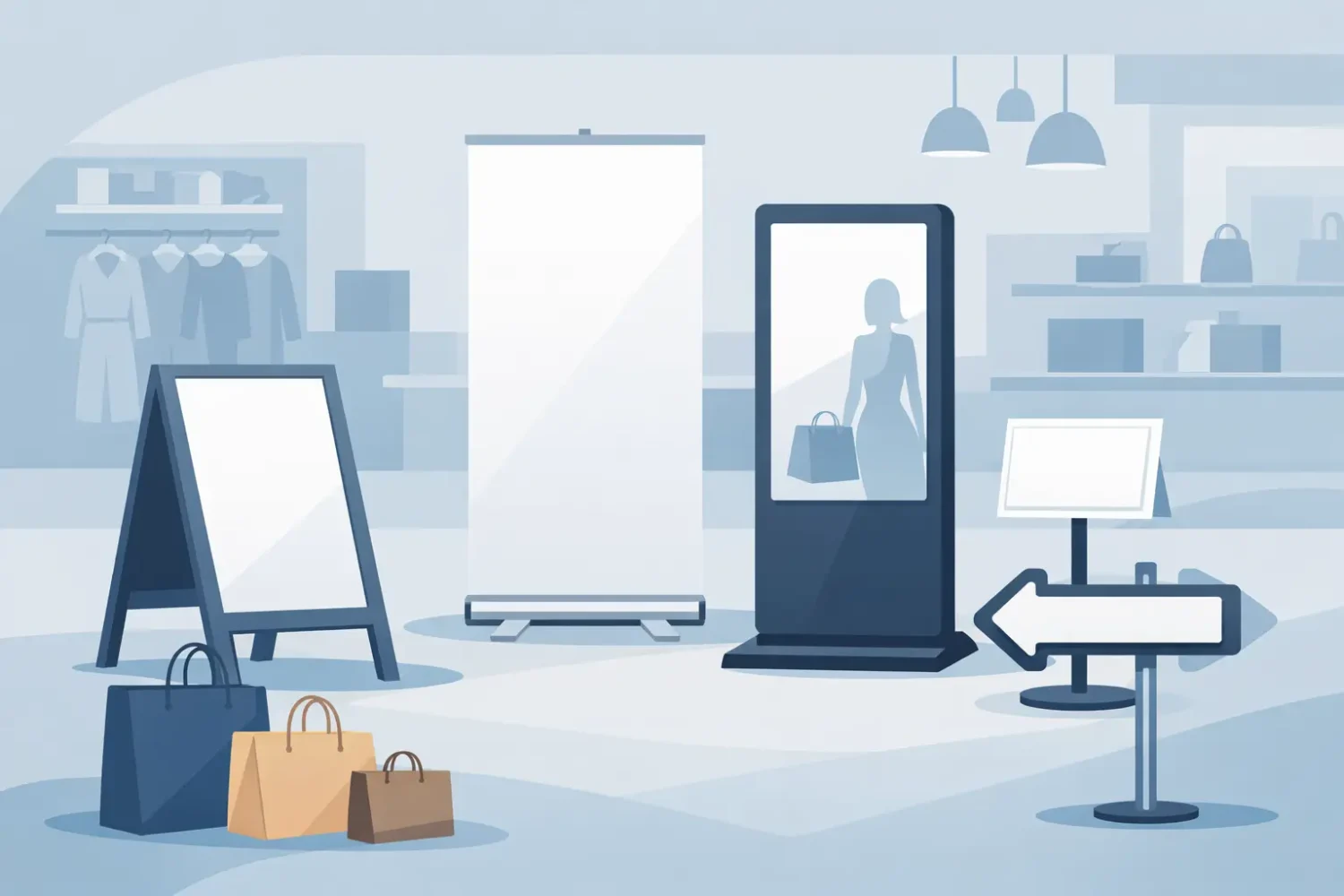
Roll-up stands remain one of the most practical retail formats because they are compact, familiar, and fast to install. For stores running weekly offers, membership drives, seasonal launches, or branded wayfinding, they cover the basic requirement well: one person can carry, set up, and remove them quickly.
They work best near entrances, cashier areas, aisle ends, and product demo corners. Standard PVC roll-up options are cost-effective for frequent promotions. Premium versions with better base stability and cleaner cassette finishing are more suitable when presentation matters more, such as cosmetics, electronics, or property showcase counters inside retail spaces.
The trade-off is visual scale. A roll-up stand is efficient, but it will not create the same presence as a wider backdrop or illuminated display. It also depends heavily on print accuracy and tension. If the artwork is low resolution or the material curls, the display looks weak immediately.
X-stands and lightweight banner stands for budget campaigns
If the campaign is short, the budget is tighter, or the signage is for lower-risk indoor use, X-stands and basic banner stands still have a place. They are easy to pack and inexpensive to replace, which matters for chains handling multiple outlets or repeated regional rollouts.
These formats suit simple promotional messages, directional use, and temporary product pushes. They are less ideal in premium retail environments because the hardware is visibly lighter and usually less refined. They can also be less stable in high-traffic areas where customers may brush against them.
For procurement teams, the advantage is scale. If you need multiple units across several locations, a lighter stand format can reduce total campaign cost without compromising basic visibility.
Best portable signage for retail promotions with more visual impact
When a campaign needs stronger branding than a single standee can deliver, wider display systems make more sense. Popup displays, fabric backdrops, and modular promotional walls are often used for in-store launches, brand takeover zones, sampling counters, and temporary retail events.
A popup display gives more surface area for graphics and photographs, which helps when the product needs visual storytelling. It also creates a better backdrop for staff engagement and customer interaction. Compared with a single banner stand, it reads as a campaign installation rather than a sign.
The trade-off is transport and setup complexity. Even portable popup systems are larger, and some require more care in packing and panel alignment. They are portable, but not as quick as a roll-up stand. For retail operators who regularly switch visuals, that extra effort should be justified by stronger campaign presence.
Promotional counters and branded podiums
Portable counters are often overlooked because buyers focus on vertical signage first. In practice, a counter can do two jobs at once: it extends branding and creates a useful touchpoint for leaflets, samples, registrations, or staff interaction.
For mall activations, roadshows, and product demos, counters work well with backdrop systems or flags. They are especially useful in cosmetics, telecom, banking promos, and FMCG sampling where a customer needs a place to stop. A branded counter on its own is not enough for long-distance visibility, but paired with a standee or wall, it completes the setup.
If your retail campaign includes human engagement, not just passive viewing, this format deserves more attention.
Beach flags for entrance visibility
Beach flags are more common in outdoor and event settings, but they can also work in retail environments with high ceilings, atrium space, or entrance frontage. Their main advantage is motion and height. They catch attention differently from flat signage.
For storefront campaigns, parking access areas, mall corridors, and temporary sales zones, they help guide traffic. They are not ideal for dense product messaging because the format is narrow and better for logos, short offers, or directional text.
They also depend on the correct base and environment. An indoor base and an outdoor base solve different problems. If the display is being used across both settings, hardware selection matters more than buyers sometimes expect.
When LED light frames are the better retail choice
Not every portable retail sign needs to fold into a carry bag. Some formats are portable in the practical sense that they can be repositioned, reused, and re-skinned across campaigns without becoming fixed construction. LED light frames fit that category.
For retail buyers selling premium goods, illuminated graphics can outperform standard print in visibility and perceived finish. They are effective for fashion, beauty, electronics, travel, and new product hero placement. Backlit visuals hold color well, especially when the artwork is prepared correctly for illumination.
The trade-off is obvious: power access, higher hardware cost, and less convenience compared with a basic stand. But if the objective is not just mobility but stronger in-store presence with reusable structure, LED frames can be the better investment.
Matching print method to display use
Hardware selection gets most of the attention, but print method and media have just as much impact on final performance. A portable sign is only as good as the graphic installed on it.
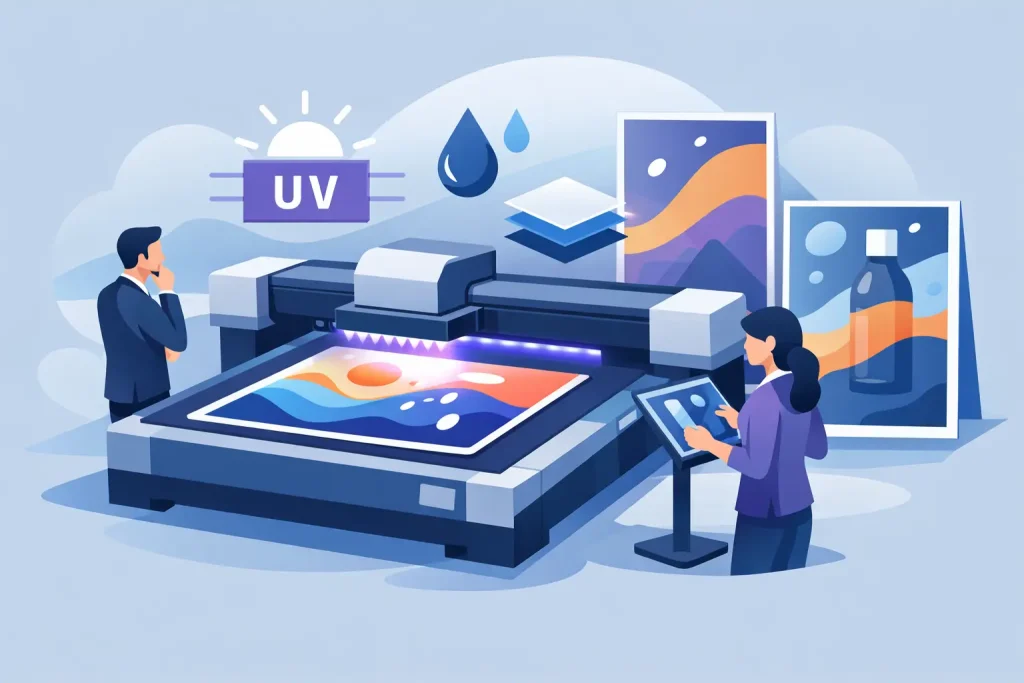
For roll-up stands and standard indoor promos, eco-solvent and latex output are common choices because they balance print quality and application range well. UV printing can be useful where stronger surface durability or different substrate compatibility is needed. Dye sublimation is often the better fit for fabric displays, especially where crease resistance and soft signage presentation matter.
Media choice also affects portability. A graphic that cracks, curls, or reflects too harshly under retail lighting will reduce display quality fast. PP white, synthetic media, and selected film-based materials can offer cleaner handling depending on the display system. For branded stickers, wayfinding panels, and promotional add-ons around the main hardware, material choice should match expected contact, lighting, and removal cycle.
This is where working with one supplier for both hardware and graphic production can reduce mistakes. The display format, print method, and finishing need to work together.
How retail buyers should choose
Start with the campaign cycle. If the sign moves every week, choose speed and replaceability. If it stays in place for a month and must support a stronger visual standard, move up to premium hardware or illuminated formats.
Next, check the footprint. Portable signage often fails because the selected base is too wide for the actual store layout. Entrance paths, gondola spacing, and counter flow matter more than catalog dimensions suggest.
Then look at message length. If you need one offer and one image, a roll-up stand is efficient. If you need branding, features, price tiers, and interaction, a wider backdrop or counter setup is more realistic.
Finally, think about transport between branches or campaign locations. Retail groups operating across Kuala Lumpur, Johor Bahru, Penang, or other city networks often need formats that can be packed, moved, and reinstalled by store staff without specialist handling. That usually favors standard portable systems with straightforward graphic replacement over custom-built fixtures.
The best portable signage for retail is rarely the most expensive option or the largest one. It is the format that fits the floor, suits the campaign length, and can be produced with the right print method for repeat commercial use. If the sign is easy to move, quick to install, and clear from a customer’s first glance, it is already doing the job it was bought for.
Related Posts