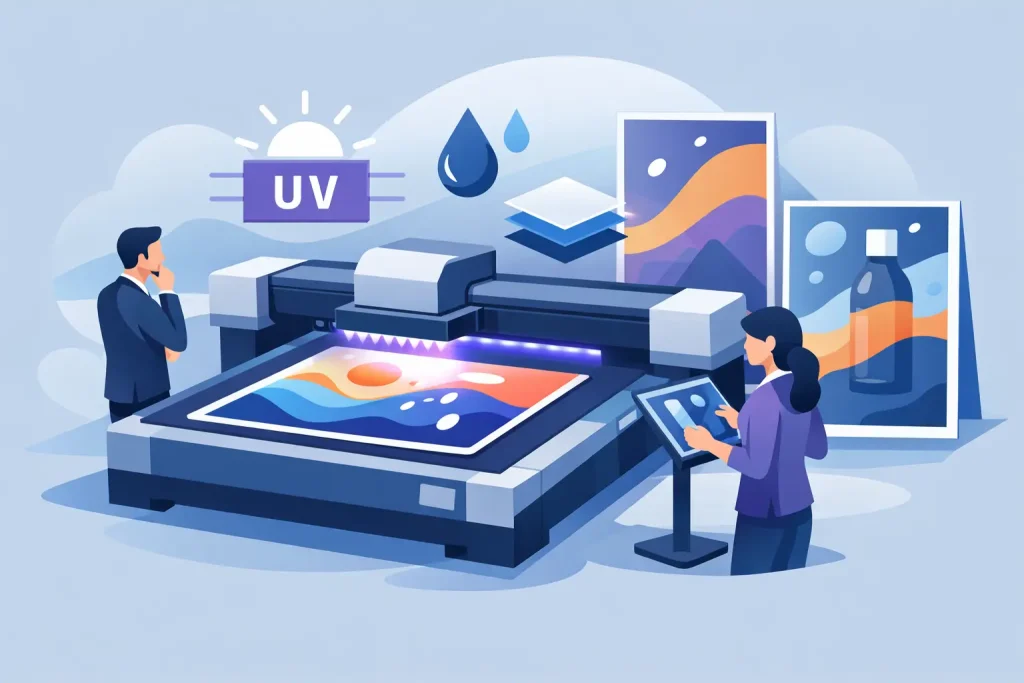
A product launch can look fully planned on paper and still fail on-site because the print setup is wrong. The booth is too crowded, the backdrop reflects badly under hall lighting, the counter wrap curls at the edges, or the sticker stock does not suit the surface. That is where brand activation print solutions matter – not as a broad marketing term, but as a practical mix of display format, print method, material, and finishing that fits the campaign environment.
For buyers managing activations, the real job is not just ordering branded graphics. It is selecting the right combination of hardware and print output so the setup works in a retail aisle, exhibition hall, mall concourse, roadside event space, or indoor roadshow. Different spaces create different demands, and the print decision affects visibility, setup time, durability, and how professional the activation looks once people start walking through it.
What brand activation print solutions actually include
In day-to-day procurement, brand activation print solutions usually cover both the display structure and the printed graphic components. That can mean roll-up stands for portable messaging, popup displays for larger branded walls, beach flags for outdoor visibility, promotional counters for sampling points, LED light frames for illuminated visuals, KT board stands for lightweight presentation, and barricade displays for route control or crowd-facing branding.
The print side is just as important. A campaign may need UV printing for rigid media, eco-solvent or solvent for durable large-format graphics, latex for specific indoor applications, or dye sublimation for fabric-based output. Material choices also vary depending on use. Some jobs need Mirrorkote for premium printed pieces, some need PP white for display graphics, and some require synthetic or transparent sticker media because the application surface or exposure conditions are less forgiving.
This is why one-size-fits-all buying usually creates waste. A product launch in a shopping mall and a trade show stand in a convention center can share the same artwork, but they should not automatically use the same hardware or substrate.
Matching the format to the activation
The first decision is usually format, not artwork. If the campaign requires portability and fast installation, roll-up stands and foldable counters are often the better choice than heavier custom-built structures. They are easier to transport, quicker to replace, and more practical when the activation team moves across multiple venues.
If the objective is stronger visual coverage, popup displays or larger framed visuals make more sense. They give the brand a defined backdrop and help create a cleaner footprint for product demos, sign-ups, or promotional activity. For high-traffic areas, barricade displays can do two jobs at once – managing movement while extending the branding area.
Outdoor activations shift the requirement again. Beach flags and weather-tolerant printed materials become more relevant because wind movement, sunlight, and uneven ground change how people see the setup. A format that looks sharp indoors may be the wrong choice outside if it lacks enough visibility at distance.
There is always a trade-off. Portable systems are efficient, but they may not create the same impact as larger custom visual structures. Bigger formats carry more presence, but they need more planning, transport space, and setup time. For most buyers, the best answer depends on campaign duration, venue rules, and whether the assets will be reused.
Print method affects more than image quality
A common mistake in activation buying is treating print method as a technical detail that only the supplier needs to worry about. In reality, the print process influences finish, durability, turnaround, media compatibility, and how the final graphics perform under real conditions.
Solvent and eco-solvent printing are often selected for large-format work where durability and strong color output matter. UV printing is useful when the job involves rigid materials or requires a print surface that benefits from cured ink performance. Latex printing can be the better fit for certain indoor display requirements, especially when buyers need a balance between print quality and application suitability. Dye sublimation is typically the stronger option for fabric graphics where smooth presentation and transport convenience matter.
The right choice depends on the display format and usage pattern. A short-term indoor promotion does not need the same print approach as a multi-location campaign that gets assembled, packed, moved, and reinstalled several times. If the display hardware is reusable, the graphic replacement cycle matters too. Some systems are built for simple graphic changes, which can reduce cost over repeated campaigns.
Material selection is where many activations are won or lost
Material choice tends to get less attention than stand type or artwork, but it often has a bigger impact on actual performance. Gloss media can look strong in one setting and produce bad glare in another. A sticker that works well on a flat panel may fail on a textured or high-contact surface. Thin material can lower cost, but it may also reduce stability or finish quality.
For branded labels, decals, or applied graphics, stock options such as synthetic, hologram, transparent, matt silver, and PP white each serve different uses. Transparent stickers can work well when the substrate should remain visible. Matt silver or hologram stock can suit promotional packaging or limited-run campaign pieces where shelf impact matters more than a neutral finish. Synthetic media is often chosen when better resistance is needed.
For display graphics, the material has to suit both the print process and the hardware tension or mounting method. This is especially relevant with framed displays, counters, and rigid boards. A good file printed on the wrong media still creates a poor result.
Why one-vendor sourcing helps on activation jobs
Brand activation work usually runs on short timelines. The more vendors involved, the more room there is for production mismatch, delivery gaps, and accountability problems. One supplier handles the stands, another prints the graphics, and a third manages finishing or mounting. If a panel size is off by a few millimeters, everyone points elsewhere.
That is why many buyers prefer a single source for display hardware and print production. It simplifies sizing, material compatibility, finishing, and replacement planning. If the job includes roll-up stands, popup displays, counter wraps, sticker output, and mounted boards, there is value in keeping those items under one production workflow.
For teams managing activations across Kuala Lumpur, Johor Bahru, or other commercial centers where event schedules move quickly, coordination matters almost as much as print quality. The less time spent reconciling specs across suppliers, the more time remains for campaign execution.
A practical way to plan brand activation print solutions
The most reliable approach is to start with the environment, then work toward the print specification. Ask where the activation will run, how long it will stay up, how often the assets will move, and whether the setup is being reused. Then match the hardware format to the footprint and traffic flow. Only after that should the print method and material be finalized.
For example, a weekend sampling roadshow in multiple retail locations may need lightweight counters, roll-up stands, and mounted promotional panels that can be packed quickly and replaced easily. A premium launch zone may justify LED light frames, cleaner rigid visuals, and higher-finish print materials because dwell time and photo visibility matter more. An outdoor promo booth may need flags, more durable printed output, and substrates that can tolerate handling and exposure better.
This is also where finishing becomes part of the solution rather than an add-on. Mounting, trimming, lamination, and fit-to-hardware accuracy are not minor details on activation work. They affect whether the final setup looks ready for public traffic or looks improvised.
When standard formats are the better option
Not every activation needs a custom build. In many cases, standard display formats are the smarter buy because they are proven, replaceable, and easier to roll out across multiple sites. Roll-up stands, standard counters, popup systems, poster frames, and KT board displays remain common because they solve repeat problems without adding production complexity.
Custom work has its place, especially for flagship launches or branded environments that need a stronger visual statement. But standard systems often deliver better operational value for recurring promotions, dealer activations, seasonal campaigns, and traveling events. They also make reordering simpler when marketing teams need consistency across locations.
For a supplier like My Inkjet, the advantage is not just having print capability. It is being able to provide the common hardware formats, the matching graphic production methods, and the material range needed to keep projects aligned from specification to output.
The best activation setup is usually not the most elaborate one. It is the one that fits the venue, supports the campaign objective, installs without friction, and still looks right halfway through the event. If the print solution helps the team execute faster and present the brand clearly, it is doing its job.
Related Posts