A roll-up stand at a trade show does not need the same print setup as a roadside banner or an LED light frame in a retail chain. That is the practical value of digital printing for signage. It gives businesses a way to match graphics, substrates, finishing, and display hardware to the actual environment instead of forcing one print method onto every job.
For procurement teams, marketers, and event buyers, the decision is rarely just about artwork quality. It is about lead time, surface type, viewing distance, installation method, durability, and whether the graphic is being mounted on a popup display, KT board stand, light frame, barricade, or wall panel. Good signage production starts when those details are handled together.
Where digital printing for signage makes sense
Digital print is the standard choice when signage needs flexibility. Campaigns change. Store promotions rotate. Event branding is often date-based. Product launches may require multiple sizes across different display systems. In those situations, digital production is more practical than methods built around long, fixed runs.
It also works across a wide material range. The same campaign may require PP white posters for indoor display, synthetic output for higher tear resistance, transparent stickers for glass, and matt silver or hologram stickers for promotional packaging or point-of-sale use. A buyer does not need one printing approach for all of them. The right setup depends on where the piece will be used and how it will be handled.
This is also why many businesses prefer to source both the print and the hardware from one supplier. A banner graphic is only part of the job. If it has to fit a roll-up mechanism, a popup frame, a beach flag pole set, or an aluminum light box, production tolerances matter. The print file, material choice, finishing, and final mounting all need to line up with the display format.
Print method matters more than most buyers expect
When people refer to signage printing, they often focus on size and resolution. That is only part of the decision. The print technology affects color behavior, surface compatibility, drying, odor, durability, and installation handling.
Solvent and eco-solvent
Solvent and eco-solvent are common for banners, adhesive vinyl, and other large-format applications. They are widely used for outdoor and semi-outdoor jobs because they hold up well and work across standard signage media. Eco-solvent generally suits buyers who want a cleaner option for many display graphics while still keeping broad media compatibility.
That said, suitability still depends on the use case. A short-term indoor promotion may not need the same durability profile as outdoor hoarding or storefront graphics exposed to heat and rain.
UV printing
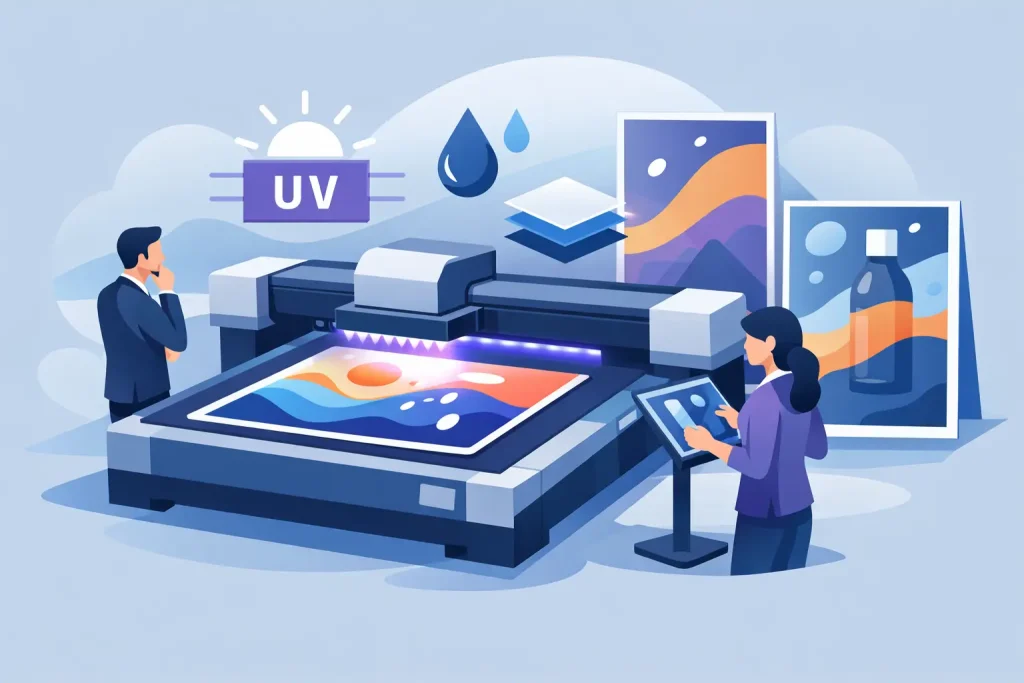
UV printing is useful when the job calls for crisp output on rigid or specialized surfaces. It is a practical option for boards, display panels, and applications where the ink cure process and surface performance matter. Buyers often choose UV when they need solid image quality on materials that are not ideal for other methods.
It can also simplify certain production paths for retail and exhibition graphics, especially where mounted presentation and clean finish are priorities.
Latex printing
Latex printing is often selected for display graphics where image quality, media flexibility, and indoor use are all part of the requirement. It suits many retail, corporate, and event applications. For brands managing interior signage programs, latex is often part of the conversation because it performs well across a range of media used in commercial displays.
Dye sublimation
Dye sublimation is the right fit when the output is fabric-based. This matters for soft signage, tension fabric systems, textile backdrops, and some event display graphics. If the hardware format is built around fabric skins rather than PVC or board, the print process changes with it.
The advantage is not just appearance. Fabric systems also affect packing, transport, and setup. For roadshows and exhibitions, those practical points can matter as much as print quality.
The material choice affects the result just as much as the printer
A common mistake in signage buying is approving a print method first and choosing the substrate later. In practice, the substrate usually drives performance.
PP white is a standard choice for posters and indoor promotional graphics where a clean printable surface is needed. Synthetic materials make more sense when the job needs added durability, especially if the signage will be handled repeatedly. Transparent stickers are suitable for glass and acrylic applications, while Mirrorkote may be chosen when a smoother premium surface is needed for specific branded pieces.
Sticker requirements can vary widely. A retail window decal, a product label, and a directional floor sticker may all be classed as stickers, but they do not perform the same way. Adhesion, opacity, finish, and viewing conditions all change the specification.
Rigid applications introduce another layer. KT board, foam board, mounted poster panels, and framed outputs need dimensional stability and clean finishing. If the board will be inserted into a stand, suspended, or fitted into a frame, small production inaccuracies can cause delays during installation.
Matching signage to display format
Signage is rarely purchased as a standalone print anymore. It is usually part of a display system. That changes how the job should be planned.
Roll-up stands and popup displays
Roll-up stands are built for speed, portability, and repeat use. The printed panel has to sit flat, retract correctly, and hold shape through transport and setup. Popup displays have a different requirement. Their graphics may span multiple panels or be fitted as a continuous visual wall, so alignment and panel consistency matter.
Beach flags and event formats
Beach flags, fabric backdrops, counters, and portable event systems are all format-driven products. The hardware determines the print size, finishing edge, pole pocket, or attachment style. For event buyers, this is where one-source supply becomes practical. It reduces the risk of receiving a correct print for the wrong hardware, or the right stand with an incompatible graphic.
LED light frames and retail display systems
Backlit graphics need a different approach from front-lit posters. The material, ink density, and image preparation all affect how the graphic looks once illuminated. A file that looks balanced on screen may appear uneven in a light frame if the print is not produced for backlit use.
Retail chains and in-store marketers usually need this handled as a repeatable specification, not a one-off experiment. Consistency across branches matters more than novelty.
What buyers should confirm before placing a signage order
For most commercial signage, the right question is not “What is your best print method?” It is “What print method fits this display, this material, and this environment?”
Artwork size and bleed are basic checks, but they are not enough. Buyers should also confirm whether the graphic is for indoor or outdoor use, whether it will be mounted or inserted into hardware, whether it needs lamination or protective finishing, and whether the job is short-term campaign signage or long-term branded display.
Lead time matters too. A simple poster run and a multi-format rollout are not the same production task. If one campaign includes stickers, roll-up graphics, counters, and large backdrop panels, coordination becomes part of the value. A supplier that can handle multiple print types and display products in one order flow usually saves more time than splitting the work across separate vendors.
This matters even more for buyers managing activations across multiple locations. A business rolling out signage in Kuala Lumpur, Johor Bahru, and Penang may need standardization across formats, not just fast printing. The operational issue is consistency – same materials, same dimensions, same finish, same fit.
Why range matters in digital printing for signage
A narrow print offering can force bad compromises. A buyer may end up using one material for every application simply because that is what the supplier carries. That usually creates problems later – glare in the wrong location, weak durability, poor fit in the display hardware, or unnecessary cost on temporary work.
A broader print catalog gives room to specify properly. That includes standard poster media, banner stock, adhesive materials, specialty sticker finishes, mounted boards, fabric output, and matching display hardware. It also allows procurement teams to group related items into one purchase rather than managing separate orders for structures, graphics, and finishing.
That is where a product-based supplier has a practical advantage. If the same source can provide UV output, eco-solvent graphics, dye sublimation fabric, sticker materials, roll-up stands, popup systems, counters, and frames, the buyer can build the signage package around actual use rather than supplier limitations. My Inkjet operates in that lane – broad display formats, multiple print methods, and production options that can be matched to commercial signage requirements.
The best signage jobs are usually the least dramatic. The graphic fits, the stand works, the colors hold, and the material suits the environment. If you are planning a new retail push, event setup, or multi-format campaign, start with the format and usage conditions first. The right print method tends to follow from there.
Related Posts