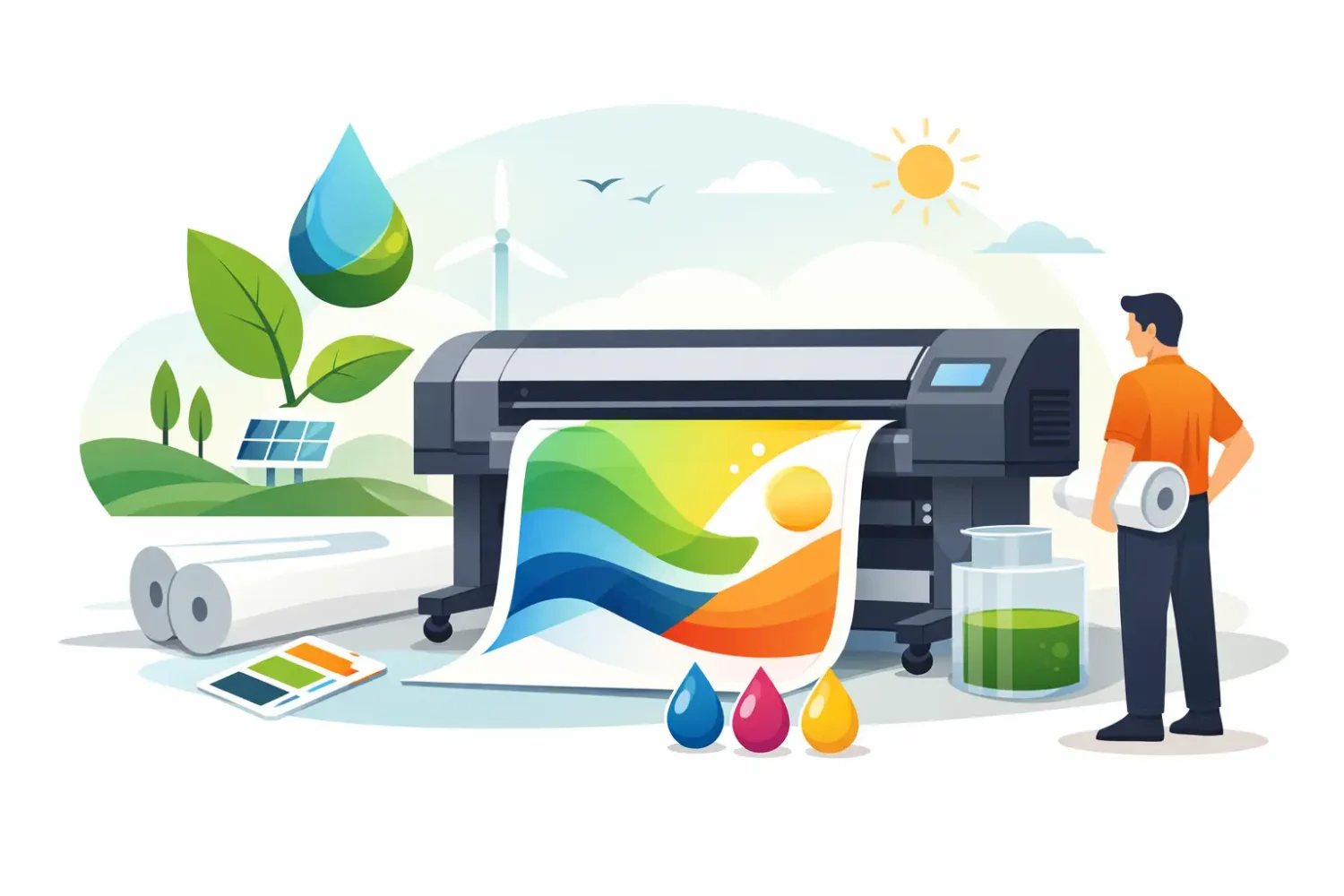
A banner that looks sharp on day one but fades, curls, or cracks halfway through a campaign is not a good buy. For retail promotions, event branding, roadside advertising, and display graphics, eco solvent banner printing is often the practical middle ground between visual quality, outdoor durability, and material flexibility.
For buyers comparing print methods, the question is usually not whether eco-solvent works. It does. The better question is where it fits, what materials it suits best, and when another method like UV or latex may be the better call.
What eco solvent banner printing is used for
Eco solvent banner printing uses solvent-based ink with a milder formulation than traditional full-solvent systems. It is commonly used for PVC banners, adhesive vinyl, posters, display graphics, and other large-format applications that need good durability and consistent color.
In commercial use, this method is popular because it covers a wide range of jobs without forcing the buyer into a specialty-only workflow. A marketing team may need one supplier for a hanging banner, a roll-up graphic, a window sticker, and a temporary promotional board. Eco-solvent printing can support many of those output types with reliable results.
That matters when the job is not just one banner. Many campaigns include multiple display formats across one launch or promotion. Matching graphics across banner material, sticker stock, and display panels is usually easier when production sits under one print capability range rather than being split across separate vendors.
Why businesses choose eco solvent banner printing
The main reason is balance. Eco-solvent gives strong print quality and outdoor suitability without being overly narrow in application. It handles everyday commercial graphics well, especially when the artwork includes brand color, product photography, pricing panels, and readable text viewed from short to medium distance.
Color performance is one of the main strengths. Eco-solvent output typically produces solid saturation and clean transitions, which works well for promotional banners that need to look sales-ready rather than temporary or low-cost. For storefront graphics, event backdrops, and campaign banners, that visual quality is often enough without moving into a more specialized print process.
Material compatibility is another advantage. Buyers are rarely sourcing only one substrate across a quarter or yearly campaign schedule. They may need frontlit banner, self-adhesive vinyl, synthetic sticker media, and mounted promotional graphics. Eco-solvent sits comfortably in that wider production mix.
There is also a cost logic. For many standard advertising jobs, it delivers durable output without pushing pricing into a premium category. That does not make it the cheapest method in every case, but it is often cost-effective for medium-term indoor and outdoor use.
Where eco-solvent banners perform well
Eco-solvent banners are commonly used in retail storefronts, mall promotions, exhibitions, roadshows, property launches, and point-of-sale campaigns. They are also suitable for fence banners, temporary branding, and event signage where exposure to weather is expected but not extreme to the point of requiring a more industrial solution.
For indoor use, the results are straightforward. Sales banners, hanging promotions, directional graphics, and branded backdrops generally hold up well and present clean color. For outdoor use, performance depends on material choice, finishing, placement, and how long the banner is expected to remain installed.
A short-term outdoor promotion and a semi-permanent roadside banner are not the same job. Both may use eco-solvent printing, but the media weight, hemming, eyelets, and installation method should be adjusted accordingly. This is where procurement decisions matter more than the print method alone.
Banner materials and finishing matter as much as the ink
Print method gets attention, but banner performance is heavily shaped by the base material. A standard PVC banner used indoors for a weekend event does not need the same construction as a larger outdoor banner exposed to sun, rain, and wind load.
In most banner projects, buyers should look at three things together: print quality, substrate strength, and finishing. If one is weak, the whole job suffers. A well-printed banner can still fail if the eyelets pull, the edges fray, or the material stretches under tension.
Finishing details such as hemming, welding, rope reinforcement, pole pockets, and grommet spacing are not minor extras. They affect installation speed and service life. Large banners in particular should be specified based on where they will hang and how they will be tensioned.
This is also why a product-first supplier model is useful. If the same vendor can produce the banner graphic and advise on display hardware or mounting format, there is less risk of size mismatch or unsuitable finishing.
Eco solvent banner printing vs other print methods
Eco-solvent is not the automatic answer for every banner job. It is a strong all-around option, but buyers should still compare it against UV, latex, and standard solvent depending on use case.
UV printing is often chosen when buyers need sharper rigid-media performance, broader specialty substrate support, or strong instant-cure handling. It can be a better fit for boards, panels, and certain premium display surfaces. For some banner jobs, however, eco-solvent remains a more common and economical choice.
Latex printing is frequently considered where lower odor and environmental handling are priorities, especially for indoor environments with fast turnaround requirements. Depending on equipment setup and application, it can be an excellent option. Still, not every buyer needs latex specifically if eco-solvent already meets the campaign requirements.
Traditional solvent printing has a place in harder-duty outdoor production, but many commercial buyers prefer eco-solvent for its cleaner operational profile and broad compatibility. The exact trade-off depends on expected lifespan, installation conditions, and budget.
The practical point is simple: there is no best print method in isolation. There is only the method that best matches the banner’s job.
How to specify the right eco-solvent banner job
If the artwork is already prepared, the next step is not just requesting a price. It is defining the banner’s real use conditions. Buyers should confirm whether the banner is for indoor or outdoor use, expected display period, final size, viewing distance, and installation style.
Resolution needs vary. A close-view retail banner with product visuals and pricing needs cleaner output than a large roadside branding piece seen from a moving vehicle. Both can be produced well, but they should not be treated as identical files.
Color expectations should also be realistic. Brand-critical jobs may require file setup discipline and print testing, especially if the campaign includes matching output across banners, stickers, popup displays, and roll-up stands. Consistency improves when one production source handles the wider graphic package.
For event and retail buyers managing multiple assets, this is often more useful than chasing a slightly different print method from a separate supplier. The time saved in coordination can outweigh small specification differences.
When eco-solvent is the wrong choice
There are cases where another method makes more sense. If a banner will face long-term outdoor exposure in harsh conditions, or if the project includes unusual rigid materials, heavy abrasion, or highly specific compliance requirements, eco-solvent may not be the best fit.
It may also be unnecessary for very short-term internal signage where a simpler production route would do the job at lower cost. On the other side of the spectrum, premium decorative graphics or specialized display environments may justify UV or latex depending on the substrate and finish required.
That is why banner buying should start with use case, not with a fixed preference for one technology.
Eco solvent banner printing for multi-format campaigns
One of the strongest reasons businesses continue to use eco solvent banner printing is that it supports broader campaign production. A single promotion may need a front counter graphic, a hanging sale banner, a roll-up stand, a sticker set, and an outdoor promotional panel. Buyers usually want those items produced with consistent color and practical lead times.
For commercial print procurement, the value is not only in the banner itself. It is in how easily the banner fits into the rest of the display package. That includes hardware formats, mounting options, and secondary printed materials.
This is especially relevant for event operators, retail chains, and marketing departments running activations across more than one location. In markets such as Kuala Lumpur or Johor Bahru, where campaign timing and installation windows can be tight, production convenience matters almost as much as print quality.
If the job needs durable graphics, recognizable color, common banner media compatibility, and straightforward commercial output, eco-solvent remains a dependable option. The best results come from matching the print method to the actual display environment, not from over-specifying the job. A banner works best when the material, finishing, and installation plan are handled with the same care as the artwork.
Related Posts