A roll-up banner that has only been used for a three-day exhibition should not automatically be treated as disposable. For buyers managing recurring promotions, the practical question is: can roll up banners be reused without compromising presentation quality? In many cases, yes. The stand and printed graphic can serve several campaigns, but only if the hardware, print material, and storage condition are suitable for repeat use.
Can Roll Up Banners Be Reused for Multiple Campaigns?
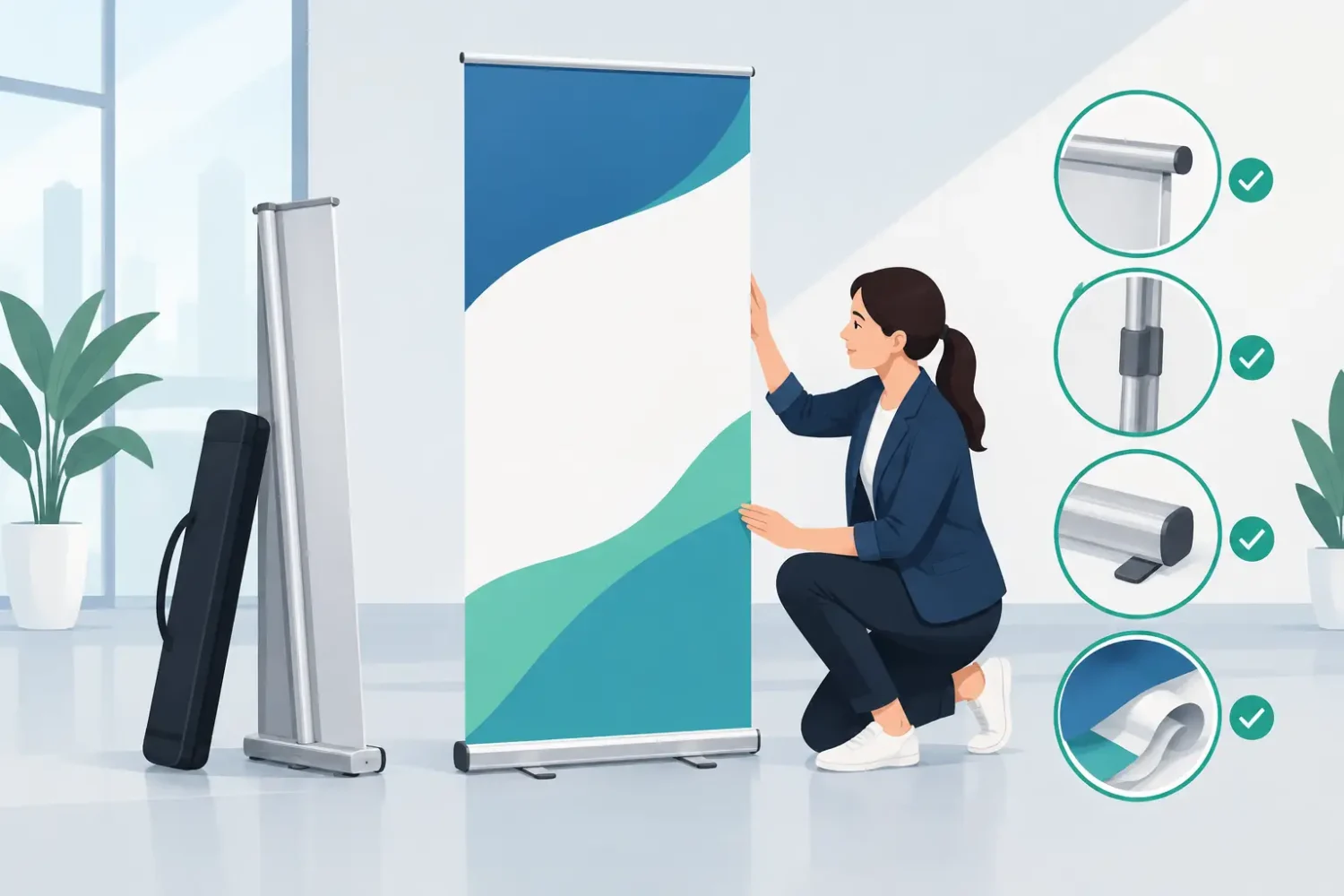
Most roll-up banners are designed for repeated setup and pack-down. The graphic retracts into an aluminum base, while the support pole and carry bag protect the unit during transport. A well-made stand can be used across exhibitions, retail activations, roadshows, product launches, and office presentations for years.
The limitation is usually not whether the unit can be used again. It is whether it still looks professional enough to represent the brand. A banner with a clean, flat graphic and a stable base can return to service immediately. One with curling edges, faded colors, a loose spring mechanism, or a bent pole may create more problems than it saves.
Reuse also depends on campaign timing. If the message, offer, QR code, product lineup, and contact details remain current, reusing the existing complete banner is the lowest-cost option. If only the message has changed, it may be possible to retain the hardware and replace the print graphic.
Check the Roll-Up Stand Before Reusing It
The retractable stand is the working component of a roll-up banner. Before scheduling it for another event, pull the graphic up slowly and inspect how the mechanism performs. The banner should extend evenly, lock at its full height, and retract with controlled tension when guided back into the base.
Do not allow the graphic to snap back uncontrolled. This can damage the print, loosen the top rail, or strain the internal spring. If the base feels unstable on a flat surface, check for loose end caps, damaged feet, or dents around the housing. A small dent can interfere with the roller inside.
Inspect the support pole and top rail
A segmented pole should connect firmly without excessive movement. Telescopic poles should tighten securely at the required height. If the pole bends, slips, or does not fit properly into the base, the banner may lean forward or display wrinkles.
The top rail should grip the graphic evenly from end to end. Separation at one corner can cause the banner to hang crookedly. Depending on the construction, a damaged top rail may be replaced, but it is often more practical to assess the complete stand and graphic together.
Test the base in the intended environment
An indoor roll-up stand is best used on level floors in exhibition halls, retail spaces, meeting rooms, and covered promotional areas. Standard roll-up banners are not built for strong wind, rain, or uneven outdoor ground. Reusing one outdoors without proper protection can damage the stand and create a safety issue.
For frequent transport or longer campaigns, a heavier-duty base is generally a better investment than an entry-level stand. The upfront cost is higher, but the hardware is more likely to withstand repeated deployment.
Evaluate the Printed Graphic
The print is what customers see first. Even when the stand is mechanically sound, the graphic may need replacement if it no longer delivers a sharp, current display.
Look for visible creases, edge curl, scratches, stains, fading, ink cracking, or rippling. These issues are easiest to spot under direct lighting, which is exactly where many trade show and retail displays are used. A graphic can appear acceptable in storage but look uneven once it is fully extended under LED exhibition lights.
PVC roll-up media is commonly selected because it is durable, opaque, and stable for retractable display use. Print quality and material selection matter. A properly produced graphic with suitable ink and finishing is more likely to retain color density and remain flat after repeated rolling. Cheap, thin, or unsuitable material may curl at the sides or show waves sooner.
If the banner has been stored for a long period, extend it and leave it upright for several hours before judging its condition. Minor roll memory can relax. Deep creases and permanent ripples generally will not.
Reusing the Stand With a New Graphic
Replacing only the graphic is often the best option when campaign information changes but the stand remains in good condition. This approach can reduce hardware waste and preserve consistency across multiple locations, especially when a business uses the same roll-up format for seasonal promotions or rotating product messages.
However, graphic replacement is not identical across all roll-up banner models. The bottom of the print is attached to the internal roller, and the top is fixed to a rail. Removing and fitting a new graphic requires correct alignment, tension, and attachment method. If the graphic is installed off-center, it may retract unevenly or rub against the side of the housing.
For this reason, buyers should confirm whether their specific stand is suitable for graphic replacement before ordering a new print. Provide the stand type, visible graphic size, base width, and photographs of the top rail and lower attachment where possible. A supplier can then assess whether a replacement graphic is practical or whether a complete new unit is the more reliable option.
A complete replacement may be preferable when the stand is old, the spring tension is weak, or the event is high visibility. For a flagship launch, a new stand and fresh print reduce the risk of last-minute setup issues. For an internal presentation or short-term store promotion, an existing stand with a replacement graphic may be fully appropriate.
Storage Determines How Long a Banner Lasts
Most premature damage happens between events, not during setup. Roll the banner fully into its base after use, remove the support pole, and return all parts to the carry bag. Store it upright or flat in a dry, climate-controlled location away from direct sunlight, excessive heat, and heavy items that could bend the case.
Avoid leaving a banner open for long periods near windows. UV exposure can fade printed colors over time, while heat can affect some print media and adhesives. Keep food, drinks, tape residue, and sharp tools away from the graphic during events. A single cut near the edge can spread when the material is repeatedly rolled.
When transporting multiple units, do not stack heavy display hardware directly on top of lightweight roll-up cases. The aluminum housing may look durable, but pressure can distort the roller area. Label each carry bag with the campaign name or artwork version so outdated graphics are not sent to an event by mistake.
A Practical Reuse Decision
Reuse the complete roll-up banner when the message is current, the print remains flat and clean, and the stand operates smoothly. Replace the graphic when the hardware is stable but the promotion, branding, pricing, or call to action has changed. Replace the full unit when the retracting mechanism, pole, base, or graphic condition makes the display unreliable.
For teams ordering several displays, standardizing on one banner width and stand grade makes future reuse easier. It simplifies artwork sizing, spare graphic planning, storage, and deployment across branches or event teams. It also helps procurement compare like-for-like hardware rather than mixing incompatible bases and print sizes.
A reused roll-up banner should still look intentional. If the stand opens cleanly, the graphic reads clearly from a distance, and the campaign information is accurate, it remains a cost-effective display format. If any of those points fail, replacing the relevant component before the next event protects the brand presentation as much as the budget.
Related Posts