A sticker that looks right on screen can fail fast once it meets heat, handling, moisture, or uneven surfaces. That is why custom sticker materials need to be selected based on actual use, not just artwork or price. For business printing, the material affects appearance, adhesive behavior, print clarity, finishing options, and how long the sticker stays presentable in the field.
For marketing teams, retailers, and event buyers, this usually comes down to a practical question: what surface is the sticker going on, and what will it need to survive? A short-term promo label on product packaging has different requirements from a window graphic, a branded equipment label, or a decorative sticker handed out at an event. If the material choice is off, the print can still be sharp, but the final result will not perform.
How custom sticker materials affect the job
In commercial printing, sticker material is not a cosmetic detail. It changes how ink sits on the surface, how colors read, whether the finish looks premium or basic, and how the piece handles cutting, lamination, and application.
Paper-based stocks are often suitable for indoor use, short campaigns, and controlled environments. They can be cost-effective and visually clean, but they are not the first choice for heavy handling or wet conditions. Film-based materials such as PP white, synthetic, or transparent stocks are usually better where durability matters. These materials resist tearing better, hold up more consistently in retail and event settings, and generally offer a more stable result when exposed to regular use.
There is also the visual side. A gloss white sticker and a matt silver sticker can carry the same design but communicate very different things. One may look straightforward and promotional. The other may look more technical, premium, or industrial. For procurement teams ordering by format, this matters because substrate choice affects brand presentation as much as the printed file does.
Common custom sticker materials and where they fit
The most practical way to select custom sticker materials is to match them to application conditions.
Paper stickers
Paper stickers are commonly used for short-term indoor labeling, packaging, promotional handouts, and campaign-based graphics where exposure is limited. They print well, keep costs manageable, and work for jobs that do not need strong water resistance or long service life.
The trade-off is durability. Paper can scuff, absorb moisture, and lose its clean appearance faster than synthetic stock. If a sticker will be refrigerated, handled often, or exposed to outdoor conditions, paper is usually not the safe default.
PP white and synthetic stickers
PP white and other synthetic sticker materials are often the standard choice for businesses that need a cleaner long-use result. They offer better tear resistance than paper, more stable handling during application, and reliable print output for retail, product labeling, and promotional use.
For many buyers, this is the practical middle ground. You get a professional finish and better durability without moving into a highly specialized material. If the sticker needs to stay intact through transport, shelf handling, or event setup, synthetic stock usually makes more sense than paper.
Transparent stickers
Transparent stickers are used when the design should appear printed directly onto glass, acrylic, plastic, or clear packaging. They are common for storefront graphics, bottle labels, branded partitions, and display surfaces where a white background would look too heavy.
These materials need more planning than standard white stock. Color visibility changes depending on the surface behind the print, and light colors can disappear if there is no white ink layer or supporting background. Transparent stickers look clean when used correctly, but they are less forgiving in artwork setup.
Matt silver and metallic-look stickers
Matt silver stickers are useful when the job needs a more technical or premium appearance. They are often used for equipment labels, branded packaging, product decals, and industrial-style identifiers where a standard white face stock feels too plain.
The main consideration is readability and color behavior. Metallic surfaces can alter how printed colors appear, especially lighter tones. Strong contrast and simple artwork usually work better than soft gradients or low-contrast designs.
Hologram stickers
Hologram sticker materials are typically selected for visual impact, limited-edition packaging, promotional items, or labels where attention is part of the job. They can also support branding that needs a more security-oriented or specialty finish.
They are not ideal for every design. Because the base material is visually active, fine text and subtle color work can become harder to read. Hologram stock works best when the design uses that reflective effect as part of the concept, not as an afterthought.
Matching the material to the environment
The fastest way to avoid rework is to assess the environment first. Indoor, outdoor, refrigerated, high-touch, temporary, and permanent are not minor details. They determine what kind of stock is realistic.
For indoor retail and event use, many materials can work well if the application period is short and the surface is clean. For outdoor use, the sticker needs more than good print quality. It needs material stability, suitable adhesive, and in some cases lamination to help with abrasion, weather, and UV exposure.
Window applications create their own set of requirements. A transparent sticker on glass may need reverse printing, white backing, or a finish that reduces glare. Product labels may need better resistance to rubbing, packaging movement, or moisture from storage. Promotional giveaway stickers, on the other hand, are often more about visual appeal and cost control than long service life.
This is where buyers benefit from working backward from use case instead of starting with finish names. The right answer is often less about what looks best in a sample book and more about what still looks acceptable after two weeks, two months, or repeated handling.
Print method matters too
Custom sticker materials are only one side of the specification. Print method also affects the final result.
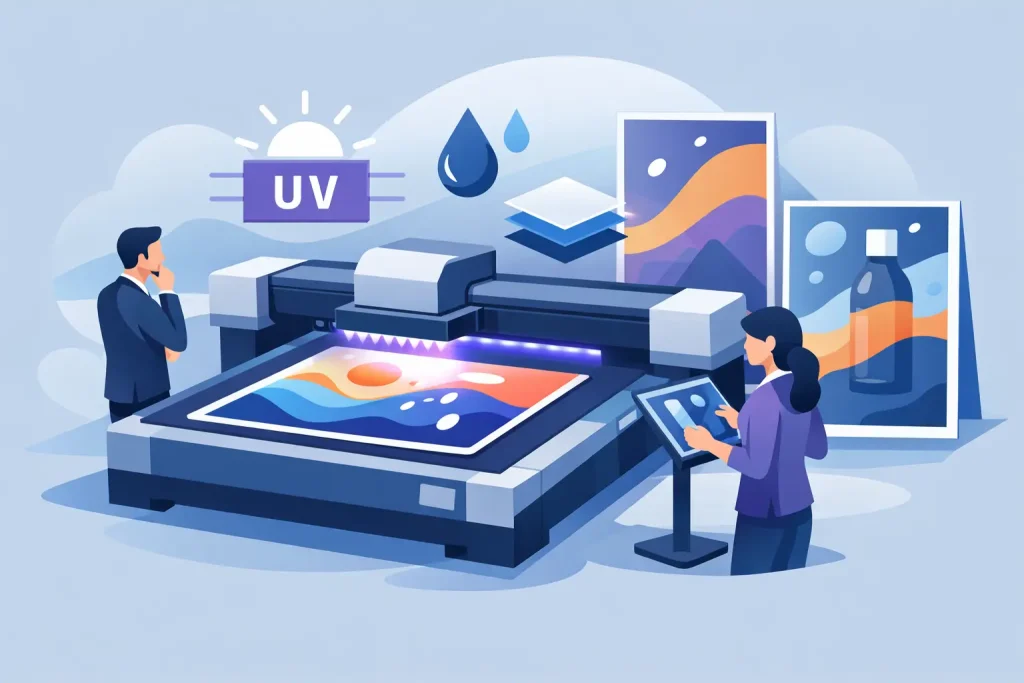
Solvent and eco-solvent printing are commonly used for graphics that need good durability and solid color performance across promotional applications. UV printing can be useful when a sharper surface result or broad substrate compatibility is required. Latex can be a strong option for certain retail and indoor branding applications where print quality and material flexibility matter.
The material and the print process need to match. Not every stock performs the same across every production method, and not every finish behaves the same once cut, mounted, or exposed to use. A sticker chosen purely on appearance may still become the wrong choice if the production route does not support the intended performance.
Finish, adhesive, and cutting are part of the material decision
Buyers often focus on the face material and forget that finish and conversion affect usability just as much. Gloss and matte finishes change glare, color perception, and the way fingerprints show. A gloss surface can make colors pop, while a matte finish may read more premium or reduce reflection under store lighting.
Adhesive choice also matters. Permanent adhesive is common, but removable options may be better for short campaigns, temporary retail promotions, or surfaces that cannot be damaged. The wrong adhesive can create complaints even when the print itself is correct.
Cut type is another practical detail. Kiss-cut sheets, die-cut singles, roll labels, and contour-cut decals each suit different fulfillment and application workflows. A product label program may need roll format for speed. Event stickers may be easier to distribute as individual die-cut pieces. Material selection should support how the sticker will actually be used after printing.
When lower cost is not lower risk
Price matters, especially on high-volume orders, but cheaper stock can increase total cost if it leads to failures, replacements, or complaints from stores and event teams. A paper sticker may save money upfront, but if it curls, tears, or marks easily in transit, the job becomes more expensive than a more suitable synthetic material would have been.
That does not mean the most durable option is always the right one. Some jobs are genuinely short-term, and paying for extra performance offers no real return. The better approach is to specify only as much material performance as the application needs. That keeps costs controlled without compromising the outcome.
For businesses ordering across multiple campaigns, consistency is often as important as unit price. Using the same material standard for repeat applications can reduce decision time and help maintain a predictable brand finish across packaging, retail graphics, and promotional stickers.
A practical way to choose custom sticker materials
If the sticker is for indoor short-term use, start with paper and only move up if handling or moisture is a concern. If the job needs better durability, synthetic or PP white is usually the safer base. If the design depends on the surface showing through, consider transparent stock, but review artwork carefully. If the look needs a specialty finish, matt silver or hologram may fit, provided readability and brand use are still strong.
For commercial buyers, the best results usually come from treating the sticker as part of a wider display or branding system, not a standalone item. The material should fit the product, the environment, the print method, and the campaign duration. That is especially true when stickers are ordered alongside displays, boards, frames, or event hardware through one supplier such as My Inkjet, where matching output across formats can save time and reduce inconsistencies.
A good sticker does not start with the design file. It starts with choosing a material that can do the job once the print leaves production.
Related Posts