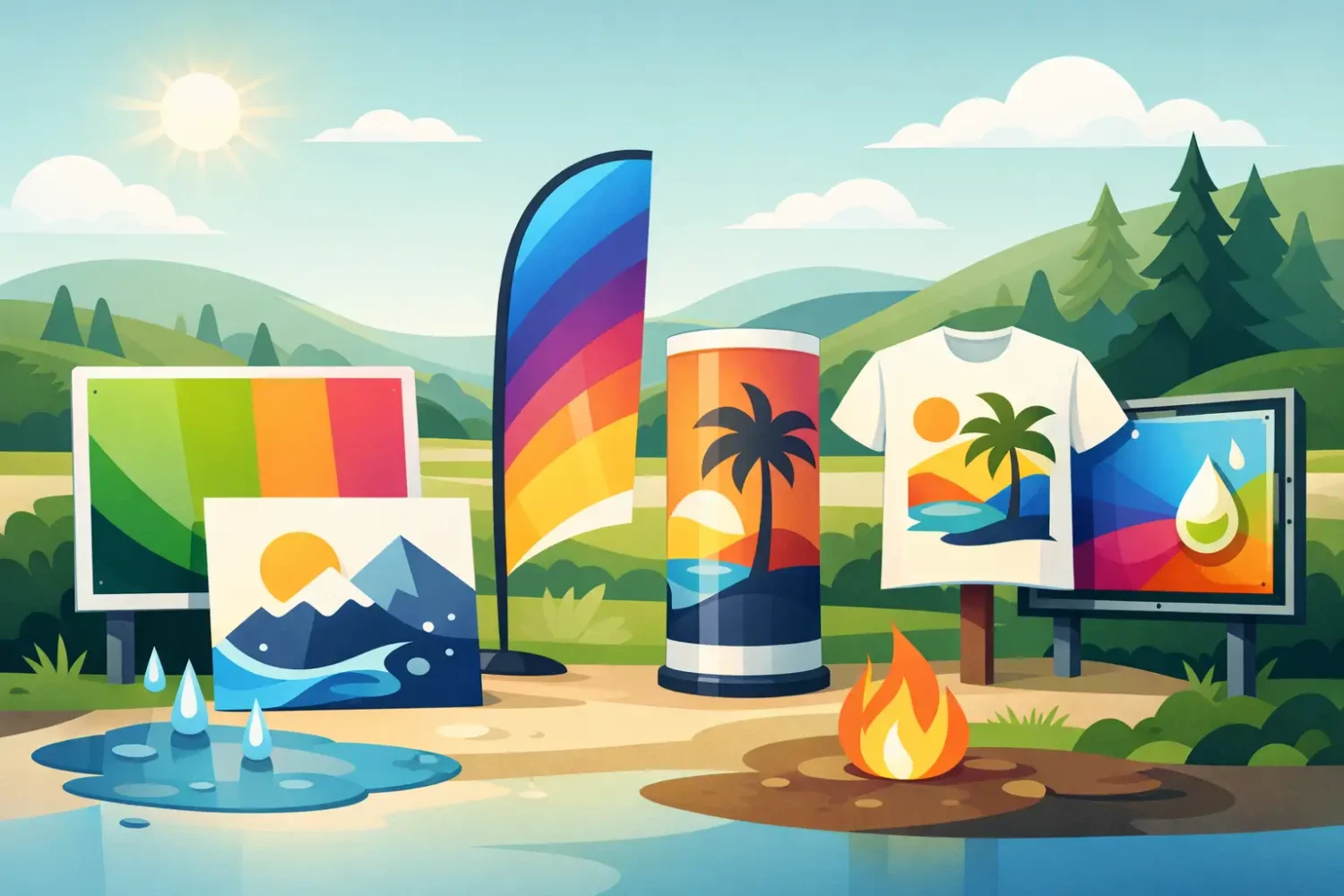
A banner that looks sharp on day one can fade, crack, or peel fast once it faces sun, rain, heat, and wind. If you are asking what printing method lasts outdoors, the real answer is not one method for every job. It depends on the display format, the material, the level of UV exposure, and how long the graphic needs to stay in service.
For business buyers, that matters because outdoor print is rarely just ink on a surface. It is a full combination of print method, substrate, finishing, and installation. A beach flag, a PVC banner, a barricade graphic, and a mounted board sign do not age the same way outdoors, even if the artwork is identical.
What printing method lasts outdoors in real use?
For most commercial outdoor applications, UV printing and solvent-based printing are the strongest starting points. Both are widely used for signage, banners, promotional displays, and retail graphics because they are built for exposure. They hold up better than indoor-focused methods when facing sunlight, moisture, and handling.
That said, “lasts outdoors” needs a time frame. A weekend event setup has different requirements than a six-month roadside banner or a long-term storefront display. If the print only needs to remain presentable for a short campaign, several methods can work. If it needs to maintain color and legibility for a longer period, the acceptable options narrow quickly.
Why outdoor durability is not just about ink
Buyers often compare print methods first, which makes sense, but the base material is just as important. A durable ink on the wrong substrate still fails outdoors. Paper-based media, for example, may look good at installation but will not perform like PVC, synthetic film, treated fabric, or rigid outdoor-rated board.
Finishing also changes lifespan. Lamination can improve scratch resistance and add another layer of protection against weathering. Mounting quality affects whether a rigid sign warps or stays flat. Hemming and eyelets affect whether a banner tears at the edges under wind load. So the better question is not only what printing method lasts outdoors, but what full production setup is appropriate for the environment.
UV printing for outdoor signs and boards
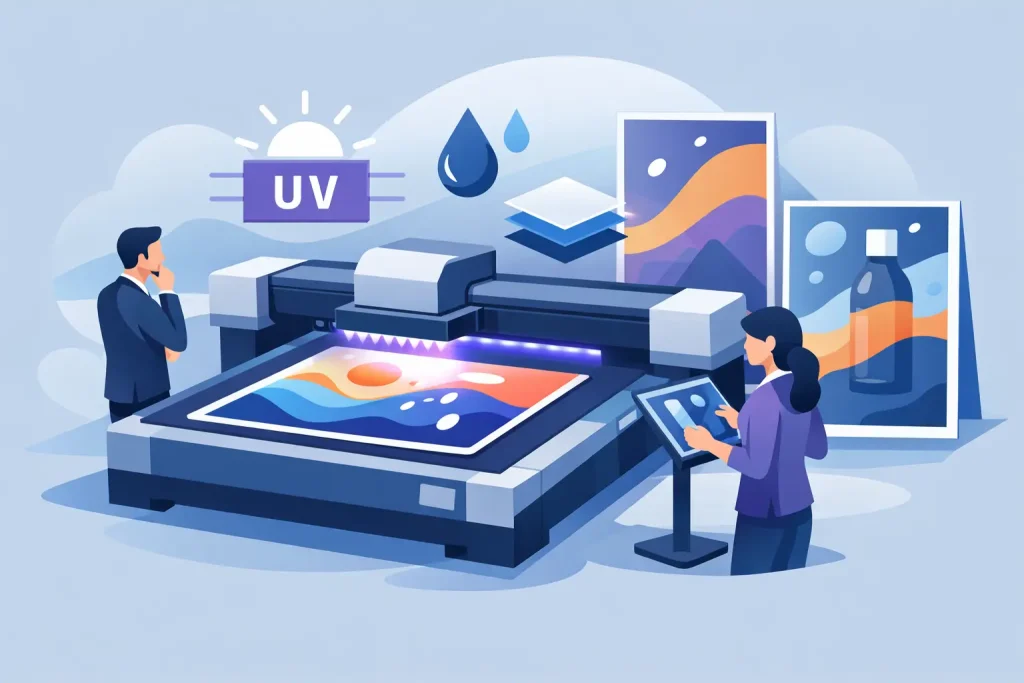
UV printing is one of the most durable options for outdoor commercial graphics. The ink cures instantly under ultraviolet light and forms a solid layer on the surface. That makes it a strong fit for rigid media, stickers, signage panels, promotional boards, and various display components used outdoors.
A practical advantage of UV is versatility. It can print on a wide range of materials, including rigid and specialty substrates used in retail and event branding. It also produces strong color density and sharp detail, which is useful for branding graphics that need impact from a distance.
The trade-off is that UV is not automatically the best choice for every flexible application. On some soft materials or items subject to repeated folding, the cured ink layer may not be as forgiving as other methods. For a mounted board, outdoor sticker, or hard signage panel, UV is a reliable choice. For products that bend, flex, or wave in constant wind, material and end use need closer review.
Solvent and eco-solvent for banners and flexible media
Solvent printing remains a standard outdoor solution, especially for banners, self-adhesive vinyl, and large-format promotional graphics. Solvent inks penetrate the media surface and are well known for weather resistance and strong outdoor life. For many practical sign jobs, this is the benchmark method.
Eco-solvent printing is a related option with lower odor and a cleaner production profile, while still delivering good outdoor performance on the right media. It is commonly selected for sticker applications, event graphics, and branding visuals where outdoor use is expected but the buyer also wants solid image quality.
For flexible media such as PVC banners, solvent and eco-solvent often make more sense than forcing a rigid-sign solution onto a format that moves. They also pair well with common commercial products like roll-up compatible prints used in covered areas, hanging banners, temporary campaign signage, and storefront vinyl.
Latex printing outdoors
Latex printing is a solid outdoor option, particularly when buyers want a balance of durability, color quality, and material compatibility. It performs well on many banner and vinyl substrates and is often chosen for branded graphics that may be installed in public or enclosed spaces because of its practical handling profile.
Outdoor lifespan with latex can be very good, especially for medium-term campaigns. In many real-world uses, it is competitive with eco-solvent for signage and display graphics. It is not usually selected because it is the single longest-lasting option in every case, but because it is dependable across a wide range of applications.
If the job includes retail branding, event promotion, and display graphics that move between indoor and outdoor use, latex can be a smart middle-ground production method.
Dye sublimation for flags and fabric
Dye sublimation is excellent for fabric graphics, but it is not the answer for every outdoor product. Where it does fit, it fits very well. Beach flags, soft signage, branded fabric backdrops, and textile display graphics often use dye sublimation because the print becomes part of the fabric rather than sitting heavily on top of it.
This matters for flags and tension fabric because they need flexibility. A stiff print layer can crack or limit movement. Dye sublimation keeps the material soft, which is why it is widely used for feather flags, promotional banners on fabric, and exhibition textiles.
The limitation is durability under prolonged direct outdoor exposure compared with harder-wearing solutions on vinyl or rigid media. Fabric products are often chosen for portability, visual appeal, and movement, not maximum lifespan. For short-term and repeat event use, dye sublimation is highly practical. For a long-term exposed outdoor sign, it is usually not the first choice.
Matching the method to the product
The best outdoor result comes from matching print method to display format. A barricade display or mounted board often benefits from UV printing because it needs rigidity, image clarity, and weather resistance. A PVC banner usually performs well with solvent, eco-solvent, or latex depending on duration and finish requirements.
A beach flag is different again. It is not only exposed to sun and moisture, but constant motion. Here, dye sublimation on suitable flag fabric is often the practical production route, even if another method might last longer on a completely different substrate.
Sticker jobs also vary. A synthetic or PP white sticker for semi-outdoor use may print well with eco-solvent, latex, or UV depending on application surface and expected wear. Transparent, hologram, matt silver, and other specialty sticker materials need method compatibility checked before production, especially if they are intended for exterior use.
How long does outdoor print actually last?
There is no honest universal number. A print facing direct sun all day in a hot, wet climate will age faster than the same print under a canopy or on a shaded storefront. Wind, pollution, abrasion, and installation quality all affect service life.
As a practical rule, short-term promotions have more flexibility in print method. Medium-term signage usually points buyers toward solvent, eco-solvent, latex, or UV, depending on substrate. Longer-term outdoor graphics generally favor more durable media and production setups, often with UV-resistant materials and finishing.
For buyers managing campaigns across multiple locations, this is where supplier capability matters. The job may require banners, flags, rigid boards, stickers, and display hardware in the same rollout. A vendor that can match each format to the right production method reduces the risk of using one print process for every application whether it fits or not.
The best answer for most buyers
If you need the shortest practical answer to what printing method lasts outdoors, start with UV or solvent-based printing. They are the most common dependable choices for outdoor commercial graphics. Then narrow by product type.
Choose UV for rigid signs, mounted boards, and many outdoor sticker or panel applications. Choose solvent or eco-solvent for banners, adhesive vinyl, and flexible promotional graphics. Choose latex when you want broad media compatibility and dependable outdoor performance across mixed campaign materials. Choose dye sublimation for flags and outdoor fabric displays where flexibility matters more than maximum weather life.
If you are ordering for retail, events, roadside promotion, or storefront branding, the strongest decision is usually not the most expensive print method. It is the method that suits the exact substrate, display hardware, and campaign duration.
A good outdoor print job should still look like your brand after exposure, not just after installation. That is the standard worth buying against.
Related Posts