A paper sticker looks fine until it meets condensation, a wipe-down cloth, or a few hours outdoors. If you are deciding which sticker material is waterproof, the short answer is vinyl and other plastic-based films outperform paper by a wide margin. The better answer depends on where the sticker will be used, how long it needs to last, and what kind of printing and finish it requires.
For business use, “waterproof” should not be treated as a generic label. A sticker may resist light splashes indoors but fail on an ice bucket, takeaway cup, storefront glass, or delivery box exposed to rain. Material selection matters as much as ink and finishing.
Which sticker material is waterproof for commercial use?
In most commercial applications, waterproof sticker materials are film-based substrates rather than paper-based ones. The most common examples are vinyl, polypropylene, and synthetic sticker stocks. These materials do not absorb water the way paper does, so they hold their shape, stay more stable, and keep the print surface intact when exposed to moisture.
Vinyl is usually the default answer because it balances water resistance, print compatibility, flexibility, and durability. It works well for product labels, window decals, outdoor promotions, equipment labels, and general branding use. If the job involves regular moisture, handling, or surface cleaning, vinyl is often the safest choice.
Polypropylene, often listed as PP white or transparent PP, is another strong option. It gives a cleaner label look than some vinyl grades and is widely used for packaging, bottles, jars, and retail labeling. It is water-resistant and suitable for many wet-use environments, especially when paired with the right adhesive and finish.
Synthetic sticker materials also perform well where tear resistance and moisture resistance are needed. These are often used for industrial labels, asset tags, menus, or instruction labels where paper would break down too quickly.
Paper stickers, including standard coated paper stocks, are usually not waterproof unless laminated in a way that fully protects them. Even then, edge exposure can become a weak point. For short-term indoor promotions, paper may still be fine. For wet conditions, it is not the first choice.
Vinyl is the standard waterproof option
If you need one material that covers the widest range of commercial uses, vinyl is the practical starting point. It resists water, handles outdoor conditions better than paper, and works across flat and slightly curved surfaces. It is also available in multiple finishes, including gloss, matte, transparent, and specialty looks.
For marketing and display work, vinyl is commonly used when the sticker must keep its appearance after exposure to rain, humidity, cleaning, or repeated handling. Think storefront promotions, branded decals, event graphics, vehicle-applied short-term campaigns, and outdoor product labeling. It also performs well when a cleaner, more durable presentation is needed than paper can provide.
That said, not all vinyl is the same. Calendared vinyl is common for general-purpose work and short- to medium-term use. Cast vinyl is thinner, more conformable, and generally better for curves or longer-term outdoor use, though it is not always necessary for standard sticker jobs. The right grade depends on application, not just budget.
PP white, transparent, and synthetic films
For packaging and retail labeling, polypropylene is often the better fit than heavier vinyl. PP white stickers offer a solid opaque base and a clean printed look. Transparent PP is useful when you want a no-label appearance on bottles, jars, or product packaging. Both options resist water better than paper and are widely used in consumer-facing applications.
Synthetic stickers are useful when the sticker must survive more than moisture. They typically offer a good combination of water resistance, tear resistance, and dimensional stability. In practical terms, that means they keep working in environments where labels get rubbed, bent, or wiped down often.
These materials are especially relevant for businesses ordering labels in volume. A restaurant chain, cosmetics brand, bottled product manufacturer, or retail operator may need different sticker materials for shelf packaging, refrigerated use, and shipping labels. Waterproof performance is only one part of the spec, but it is often the one that prevents rework later.
Waterproof does not always mean outdoor-proof
This is where buyers often compress too many requirements into one word. Waterproof simply means the material can tolerate water exposure. It does not automatically mean UV-resistant, scratch-resistant, chemical-resistant, or suitable for long-term outdoor use.
A sticker on a cold drink bottle and a sticker on an outdoor barricade face different conditions. The bottle label needs to handle condensation and refrigeration. The outdoor sticker may need to resist rain, sunlight, temperature swings, and cleaning. Both may need waterproof material, but they may not need the same construction.
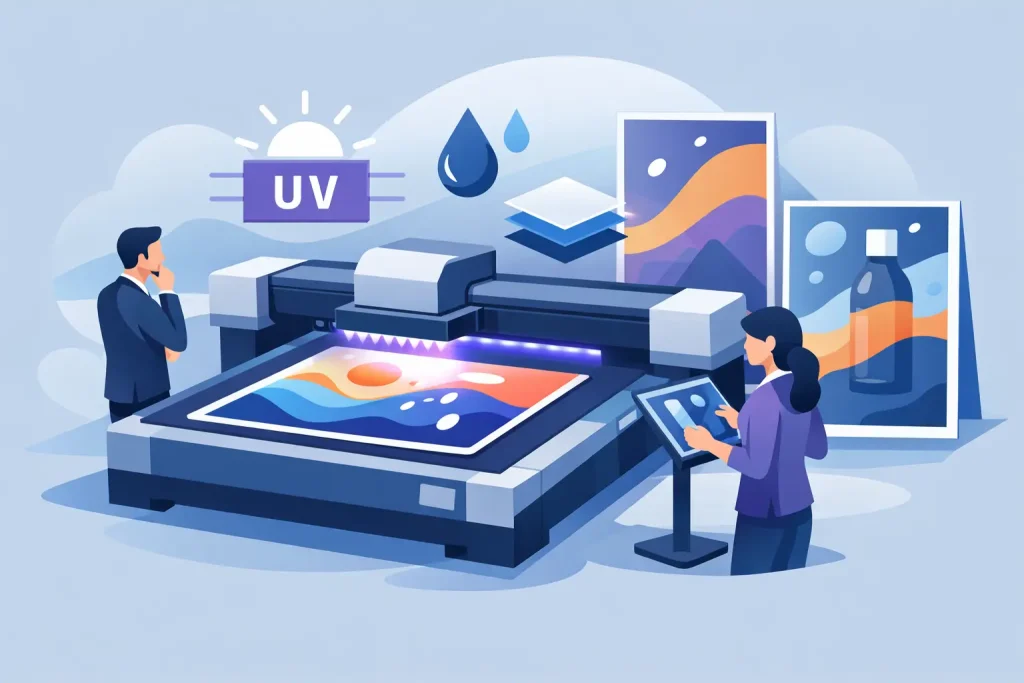
For exterior use, print method and finishing matter just as much. Solvent, eco-solvent, UV, and latex printing can all be suitable depending on the substrate and lifespan required. A laminate may also be needed if the printed surface will face abrasion, frequent handling, or stronger weather exposure.
Adhesive and laminate matter too
A waterproof face stock can still fail if the adhesive is wrong. This is a common issue in commercial environments. The sticker itself may resist water, but if the adhesive cannot bond properly to glass, plastic, metal, or textured packaging, edge lift starts early and the job fails.
High-moisture settings often need more than a standard permanent adhesive. Cold surfaces, low-energy plastics, or frequently washed items may require a more specific adhesive choice. Removable adhesive can also be useful for temporary promotional campaigns, but it may reduce performance in wet conditions depending on the surface.
Lamination adds another layer of protection. It helps protect the print from scuffing, cleaning chemicals, and general wear. For stickers used on products handled daily, laminate often makes the difference between a label that still looks presentable after a week and one that looks damaged after a few touches.
When paper stickers still make sense
Paper is usually not the answer to which sticker material is waterproof, but that does not make it obsolete. It is still a cost-effective option for dry, indoor, short-term use. For carton sealing labels, temporary price marks, event handouts, or packaging that will not face moisture, paper can be the right commercial decision.
The mistake is using paper where moisture is predictable. If a label will go on chilled products, bathroom products, takeaway containers, outdoor bags, or retail items that are cleaned or wiped, paper is often a false economy. The lower unit price disappears once labels wrinkle, peel, or look worn before the campaign ends.
How to choose the right waterproof sticker material
Start with the actual use case, not just the word waterproof. Ask where the sticker will be applied, how long it needs to stay in place, whether it will be used indoors or outdoors, and what kind of handling it will face. A bottle label, machinery label, retail window sticker, and event decal may all need different constructions even if all of them need water resistance.
Surface type is the next filter. Smooth glass and sealed plastic are easier than textured walls, untreated surfaces, or flexible packaging. If the sticker will be exposed to sunlight, grease, refrigeration, or frequent cleaning, that should be specified upfront.
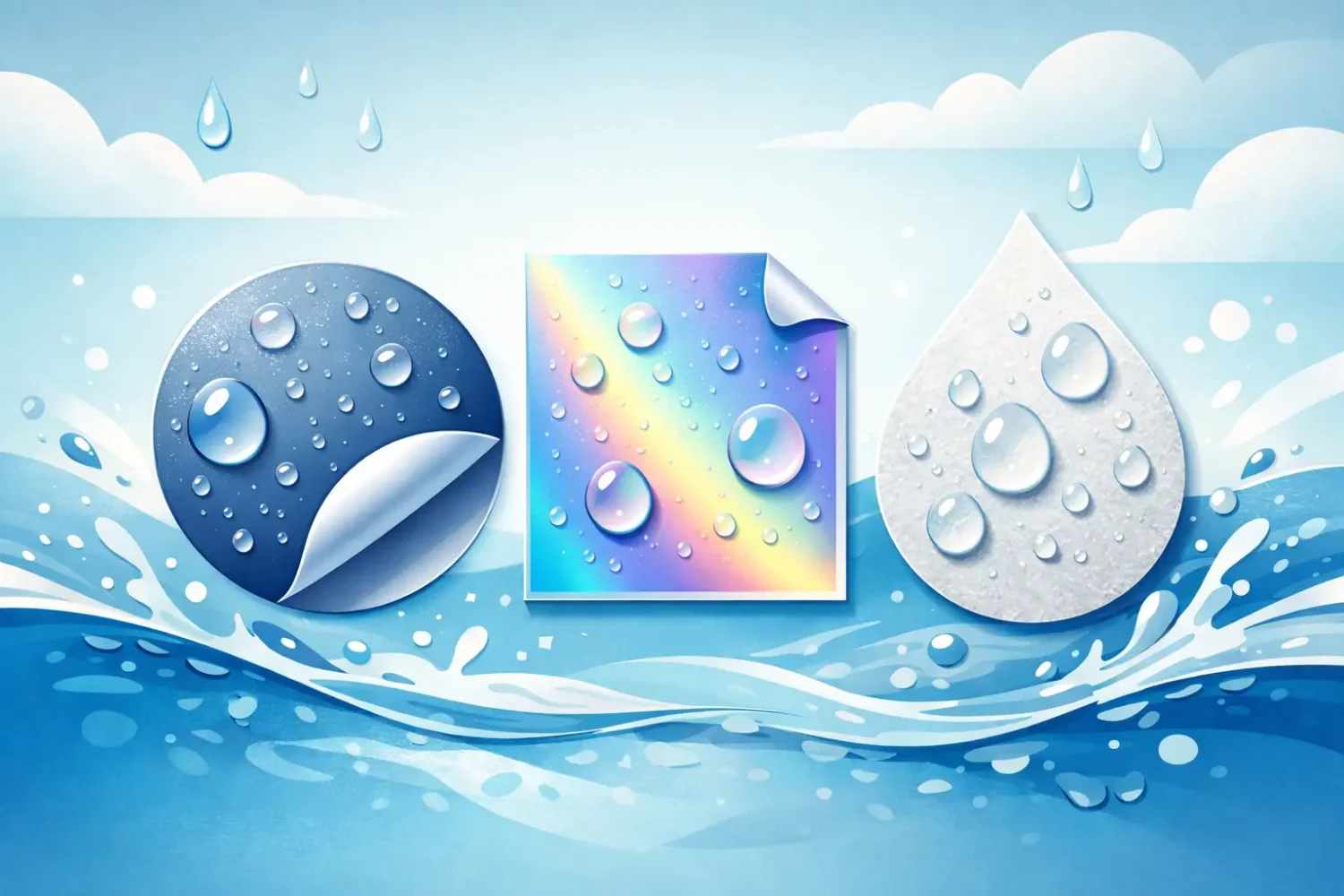
Then look at appearance requirements. White PP, transparent PP, matte silver, hologram, and other specialty films can all support brand presentation, but they behave differently in print and application. A premium look is useful, but only if the substrate can perform in the target environment.
For many standard business jobs, a good rule is simple. Use vinyl for broader durability and general waterproof performance. Use PP white or transparent PP for many packaging and label applications. Use synthetic stocks when tear resistance and moisture resistance both matter. Avoid standard paper where water exposure is expected.
For print buyers managing multiple campaign assets, it also helps to keep production in one workflow. A supplier that handles sticker substrates alongside large-format graphics, promotional displays, and print finishing can align materials more efficiently across a rollout. That matters when the same campaign includes shelf labels, window graphics, counters, and event hardware.
If you are still comparing options, the safest move is to match the material to the failure risk. When moisture, handling, or outdoor exposure can affect the result, film-based stickers are the professional choice. Picking the right waterproof material up front is cheaper than replacing a full run after the first rain or the first refrigerated delivery.
Related Posts