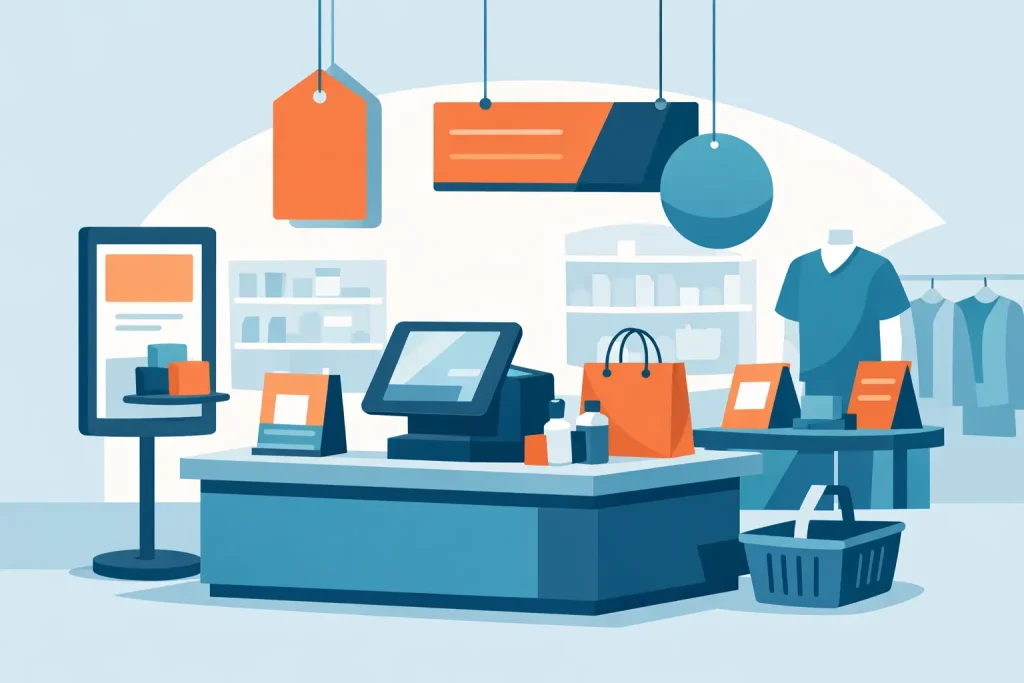
A promotion display that gets ignored is wasted floor space. The best retail promotion display ideas are the ones that match the offer, fit the store layout, and can be produced fast without turning setup into a separate project. In retail, visibility matters, but placement, print finish, hardware type, and replacement speed matter just as much.
For store operators, marketing teams, and procurement buyers, the right display is usually not a single format. It is a combination of entrance visibility, shelf-level messaging, promotional focal points, and checkout reinforcement. That is where display hardware and print production need to work together.
What makes retail promotion displays work
A good retail display does one of three jobs clearly. It stops foot traffic, explains an offer fast, or pushes a buying decision near the product. If it tries to do all three in one small space, the message usually gets diluted.
The practical starting point is to match the display to the shopper’s distance from it. Large-format items like beach flags, roll-up stands, and hanging promotional panels work best when customers need to notice a campaign from outside the store or from the main aisle. Mid-range formats like poster frames, LED light frames, and KT board stands work better when the customer is already near the category. Smaller print pieces, stickers, shelf strips, and counter cards are best for price communication and last-step conversion.
Print material also changes performance. Glossy stock can help bold promotional graphics stand out, while matte surfaces reduce glare under strong retail lighting. Synthetic media and mounted boards tend to hold up better in high-traffic environments. If a promotion changes often, replaceable graphics on reusable hardware will usually be more cost-effective than building one-off displays each time.
Best retail promotion display ideas for different store zones
1. Roll-up stands for entry promotions
Roll-up stands are still one of the most practical retail formats because they are compact, easy to move, and quick to replace. They work well for seasonal campaigns, member pricing, bundle offers, and product launches placed at the storefront or just inside the entrance.
Their main advantage is speed. A store can rotate one message this week and another next week without changing fixtures. The trade-off is that they need clean design discipline. Too much text turns them into background clutter.
2. Window graphics for first-contact visibility
If the promotion needs to catch walk-by traffic before customers enter, window graphics do more than a stand placed behind the glass. Printed transparent film, solid promotional decals, or cut-to-size campaign stickers can turn unused glass into active selling space.
This works especially well for limited-time offers, festive campaigns, opening announcements, and clearance messaging. The key is not to block too much visibility into the store unless privacy or strong visual takeover is the goal.
3. LED light frames for premium product campaigns
LED light frames are useful when the product category needs a cleaner, more polished presentation. Cosmetics, electronics, property showcases, and branded launches benefit from backlit graphics because color saturation and image contrast stay strong in controlled retail interiors.
They cost more than basic poster holders, so they are better suited to recurring campaigns or premium zones rather than short one-week promotions. For stores running frequent branded visuals, the higher hardware cost can make sense because the frame remains in place while graphics are updated.
4. KT board stands for lightweight focal displays
KT board stands are a practical choice for aisle-end promotions, directional messaging, or product callouts where a rigid printed panel is enough. They are lighter and usually more economical than permanent fabricated structures.
This format works well when the campaign needs shape-cut visuals, category headers, or standees that support a themed launch. The limitation is durability. In very high-contact areas, a more robust mounted or framed option may last longer.
5. Shelf-edge strips and promo stickers
Not every retail promotion needs a large-format footprint. Shelf-edge strips, product stickers, and short-run promotional labels are often where conversion actually happens. They help customers identify discounts, new arrivals, product features, or buy-more-save-more offers right at decision point.
For fast-moving consumer goods, this can outperform larger branding displays because the message appears exactly where the hand reaches. Materials matter here. Synthetic stickers and durable adhesive media usually hold up better in stores with heavy handling or chilled sections.
6. Counter displays for last-step conversion
Checkout counters, service desks, and payment points are strong positions for add-on offers, vouchers, QR-led promotions, and small-format product launches. A compact printed counter display can support impulse buying without taking up much room.
This format works best when the message is simple and price-led. If the offer needs explanation, it is better placed earlier in the shopper journey.
Display ideas that suit campaign-heavy retailers
7. Popup displays for larger in-store activations
Popup displays are not only for trade shows. In larger retail footprints, they can create short-term campaign zones for launches, demos, or festive promotions. They are useful when a brand wants a stronger visual wall than a single stand can provide.
Because they take more space, they need a defined promotional area. In smaller stores, they may feel oversized. In department stores, atriums, and event-based retail spaces, they can create a more complete branded environment.
8. Promotional counters for sampling and roadshows
When the promotion includes staff interaction, product sampling, or assisted selling, a branded counter gives the campaign structure. It provides a visible touchpoint, storage, and a clean print surface for logos and offer messaging.
This is especially useful for mall activations, weekend product pushes, and rotating roadshows. Buyers planning regional campaigns across cities such as Kuala Lumpur, Johor Bahru, and Penang usually benefit from portable counter systems that can be packed, moved, and reused across multiple locations.
9. Beach flags for outdoor-to-indoor pull
Beach flags are usually associated with events, but they are also effective outside retail lots, along walkways, or near temporary entrances. They help direct traffic toward a promotion before the shopper reaches the storefront.
They are best for broad messages such as sale, opening, clearance, or event day. Fine detail is lost at distance, so the design needs to stay bold and minimal.
10. Barricade displays for queue lines and controlled spaces
Barricade displays are useful in malls, launch events, and managed retail spaces where traffic flows through designated lanes. Instead of leaving queue barriers blank, printed sleeves or panel graphics can carry campaign messaging, sponsor branding, or wayfinding.
This is a strong option when the store already has high dwell time in lines or waiting areas. It turns passive infrastructure into usable promotional inventory.
How to choose the right format instead of ordering everything
The best retail promotion display ideas are not always the biggest or newest formats. They are the formats that fit the campaign duration, store traffic, replacement frequency, and print budget.
If the promotion changes every two weeks, reusable hardware with replaceable printed graphics is usually the better route. Roll-up stands, poster frames, and light frames make more sense than custom-built one-time structures. If the campaign is tied to a major brand launch with a fixed run, more customized mounted boards, standees, and shaped panels can justify the spend.
Store environment also matters. High-touch areas need stronger materials. Sunlit window zones need print methods and substrates that maintain image quality. Premium categories often benefit from cleaner finishing and sharper image output, while discount-led campaigns can be more price-efficient and volume-driven.
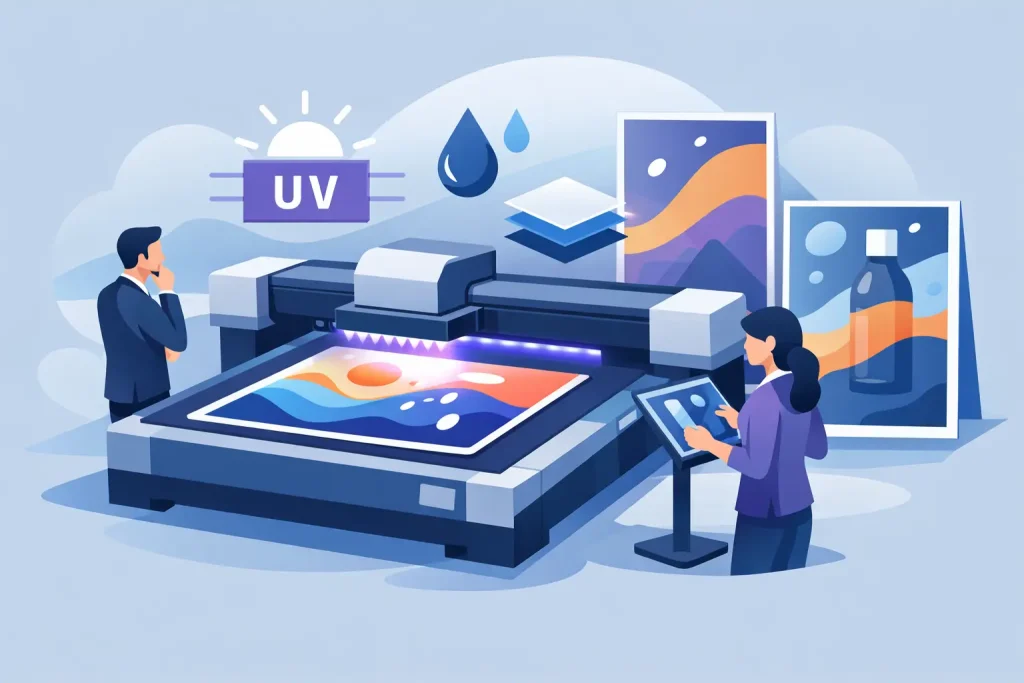
Print method should not be treated as a technical afterthought. UV, eco-solvent, latex, and dye sublimation each suit different media and usage conditions. The right production choice affects color density, durability, surface compatibility, and turnaround planning. For retail buyers managing multiple SKUs and campaign assets, getting both the display hardware and printed graphics from one supplier reduces mismatch between visual size, finishing, and installation fit.
Common mistakes that weaken retail promotions
The most common problem is overcrowding. One display tries to show prices, product features, branding, social media prompts, and a QR code all at once. Customers do not process that much in motion.
The second problem is wrong scale. Small prints are placed in long-view zones, and oversized displays are forced into narrow aisles where they interrupt traffic. The third is poor refresh planning. A display system may be fine, but if changing the graphic takes too long or costs too much, outdated promotions stay on the floor longer than they should.
There is also a simple operational issue many teams underestimate: consistency. A campaign built from mixed vendors can result in different reds, different material finishes, and different fitting tolerances across stands, stickers, counters, and mounted boards. For multi-location retail, that inconsistency becomes visible fast.
A better approach is to build the promotion around clear zones – entrance, aisle, shelf, and counter – then assign one display job to each zone. That keeps the message cleaner and the buying decision easier.
Retail displays do not need to be complicated to perform. They need to be visible, replaceable, and suited to the space they occupy. If the format matches the promotion and the print production matches the environment, the display does its job without asking the store team to work around it.
Related Posts