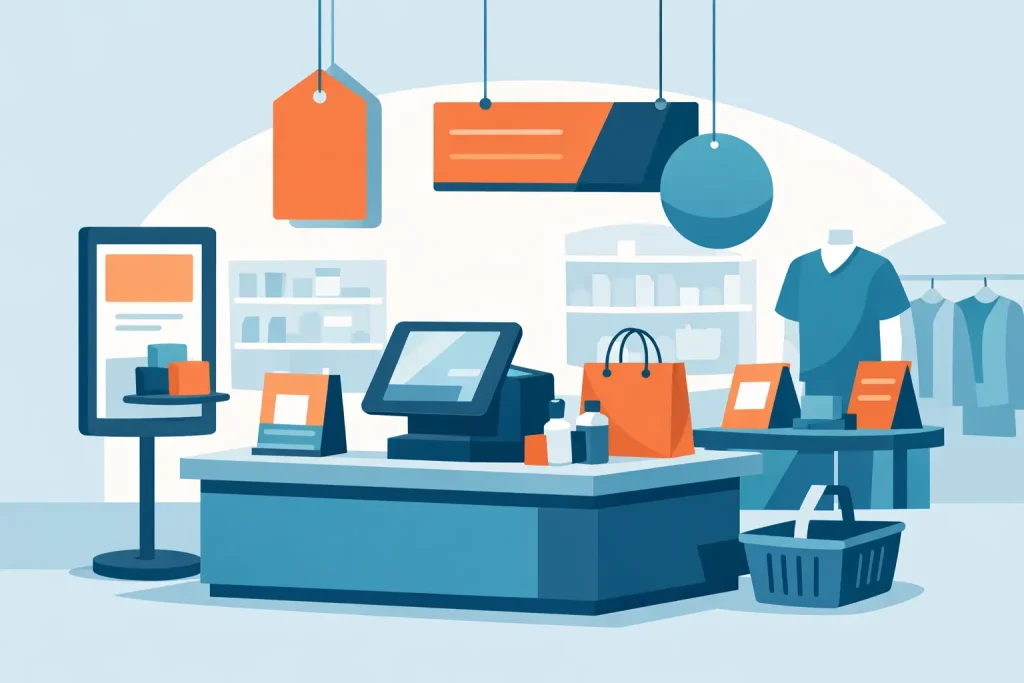
A storefront can lose sales before anyone walks in. If the glass looks blank, dated, or hard to read from the road, the message is already weak. That is why window sticker printing Kuala Lumpur is usually less about decoration and more about visibility, promotion, privacy, and brand control at the point where customers actually make decisions.
For business buyers, the main question is not whether to print on glass. It is which sticker material, print method, finish, and cut style fit the site and campaign. A short-term promo on a retail window needs a different setup than a permanent office logo, a mall kiosk visual, or a restaurant operating-hour decal. Getting that match right saves reprint cost and avoids the common problem of graphics looking good in file preview but underperforming on actual glass.
Choosing window sticker printing Kuala Lumpur for the job
Glass graphics are used across retail shops, showrooms, F&B outlets, corporate offices, clinics, event venues, and temporary activation spaces. The format is simple, but the production decision is not always simple. Buyers usually balance four things – viewing distance, intended lifespan, installation surface, and removal expectations.
If the sticker is meant to stop foot traffic, color density and legibility matter more than subtle finishing. If the purpose is privacy, material opacity and coverage become the priority. If the job is brand signage on a clean office entrance, edge quality and alignment are often judged more harshly than the print itself.
In Kuala Lumpur, many installations also deal with heat, strong daylight, and high-traffic commercial settings. That affects how colors appear on transparent material and how long an adhesive graphic needs to hold without lifting at corners. A cheaper option can still work, but only if the campaign duration and placement are realistic.
Common sticker materials for glass applications
Transparent sticker stock is one of the most requested options for window use because it keeps the glass look while carrying logos, store hours, promotional text, or layered graphics. It works well when the design relies on selective placement instead of full coverage. The trade-off is that light backgrounds and pale colors can lose contrast on clear glass, especially when viewed against a bright interior or outdoor reflection.
White PP sticker is a more direct option when the message needs stronger visibility. Sales promotions, operating notices, directional graphics, and bold brand blocks generally read better on a white base because the artwork is not competing with the background. For campaign-led retail use, this is often the safer choice.
Synthetic sticker material is useful when a job needs more durability and better resistance to handling or environmental exposure. It suits commercial settings where cleaning, moisture, or heavy contact can affect standard stock. For longer-running applications, that extra durability can be worth the added cost.
There are also specialty materials such as hologram, matt silver, and other effect-based sticker stocks, but these only make sense when the brand presentation calls for them. On glass, visual effect materials can look sharp for cosmetic, tech, gifting, or premium product campaigns, though readability needs to be checked carefully. A finish that looks impressive up close can become hard to interpret from a distance.
Print method matters more than many buyers expect
The same artwork can produce very different results depending on print method. For window graphics, solvent and eco-solvent are common choices for general commercial sticker output. They are practical for many retail and promotional uses and offer dependable color for standard branding jobs.
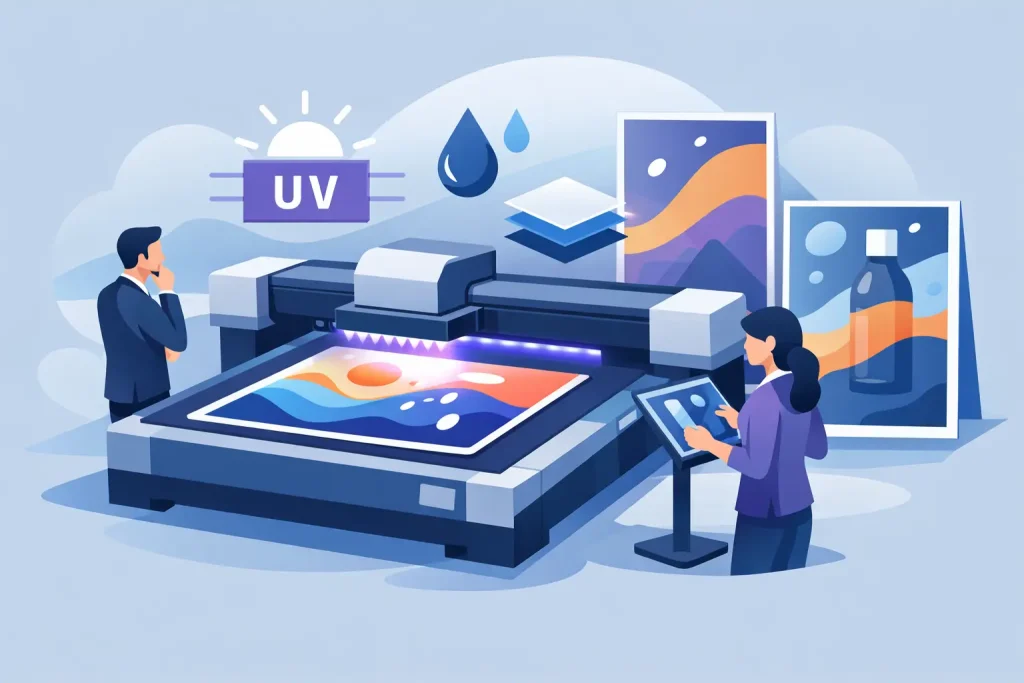
UV printing is often chosen when buyers want stronger ink performance, sharper output on compatible substrates, or a more premium production route for certain graphic requirements. For specific applications, UV can help when opacity and surface response are important. Still, the best choice depends on the sticker material and how the final piece will be mounted.
Latex printing can also be a good fit for indoor branded environments where print quality, material compatibility, and production needs point in that direction. There is no single best print method across every glass application. The file, substrate, usage period, and site conditions all affect the recommendation.
This is why product-first suppliers with multiple print capabilities are easier to work with than vendors limited to one machine setup. If a buyer needs transparent stickers for glass, plus roll-up stands, LED light frames, or mounted promotional boards for the same campaign, it is more efficient to align material and print decisions through one source rather than splitting procurement across several shops.
Design choices that affect actual performance
A good-looking layout is not always a good window graphic. Small text, low-contrast colors, and over-detailed visual elements often fail once applied to glass and viewed from outside. Reflection, tinted glass, indoor lighting, and street distance all change what the customer sees.
For promotional windows, bold pricing, short wording, and clear hierarchy usually outperform heavily designed layouts. If the message is seasonal, the design should also allow easy removal and replacement without damaging the surface or leaving heavy residue.
For office branding, cleaner execution tends to matter more than marketing-style impact. A frosted-look effect, a precise cut logo, or simple operating text can be enough. In these cases, the quality benchmark is usually straight application, accurate spacing, and a clean finish around the edges.
Reverse application may also be needed for some inside-glass installations. This protects the print from direct handling and weather exposure, but it changes how the artwork needs to be prepared. Buyers who already have artwork should confirm this before final production, not after the file is approved.
When full coverage works and when it does not
Full-window graphics are useful when the goal is maximum campaign visibility, privacy, or a complete storefront refresh. They are common for launches, vacancy masking, renovation covers, and heavy retail promotion periods. They also give more room for product visuals and pricing blocks than smaller decals.
The downside is obvious. Full coverage costs more, takes longer to install correctly, and can make a site feel closed if the design is too dense. For active retail frontage, blocking too much natural visibility can reduce walk-in confidence, especially for food, beauty, and service businesses that benefit from showing activity inside.
Partial coverage is often the better commercial decision. A band across eye level, side-panel promos, or door decals can carry the message without fully closing off the view. It depends on whether the business needs openness, privacy, or campaign dominance.
What buyers should confirm before ordering
Most problems with window sticker jobs start before print. Measurements are off, glass conditions are not checked, artwork is supplied at the wrong scale, or the buyer assumes all stickers remove the same way. They do not.
For a straightforward job, confirm the glass dimensions, whether the installation is inside or outside, whether the graphic is temporary or permanent, and what level of opacity is required. It also helps to specify if the site is a street-facing storefront, indoor mall lot, office partition, or event venue panel. Those details affect material recommendation.
Cut style should be discussed early as well. A simple square cut is faster and more economical. Die-cut logos and contour-cut promotional shapes look better for certain brand applications, but they increase production handling and require cleaner file preparation.
If the order is part of a wider rollout, it is practical to align all branded outputs together. A campaign might need glass stickers, foam board signs, standing displays, counter wraps, and event backdrops produced under one color direction and schedule. That is where a supplier with wide-format print, sticker materials, finishing, and display hardware brings actual purchasing value.
My Inkjet fits that type of workflow because the requirement is usually not just one sticker. It is a set of coordinated visual pieces that need to work across store, roadshow, office, or exhibition use.
Window sticker printing Kuala Lumpur for retail and event use
Retail and event environments move fast, so print selection should be based on turnaround, material suitability, and replacement frequency. A weekend promo decal does not need the same build as a six-month brand panel. An exhibition glass panel inside a venue has different exposure conditions than an exterior shopfront facing daily heat and cleaning.
For short-run campaign work, speed and message clarity usually win. For longer installations, durability and cleaner finishing matter more. Buyers who know the campaign timeline from the start usually make better material decisions and avoid over-specifying a temporary job or under-specifying a permanent one.
The practical approach is simple. Match the sticker to the glass, the message, and the duration. If the requirement includes other branded display items, coordinate them at the same time so the output is consistent and the procurement process stays efficient.
A window is not just empty glass. It is one of the cheapest branded surfaces a business already owns, and when it is printed correctly, it starts working before your staff says a word.
Related Posts