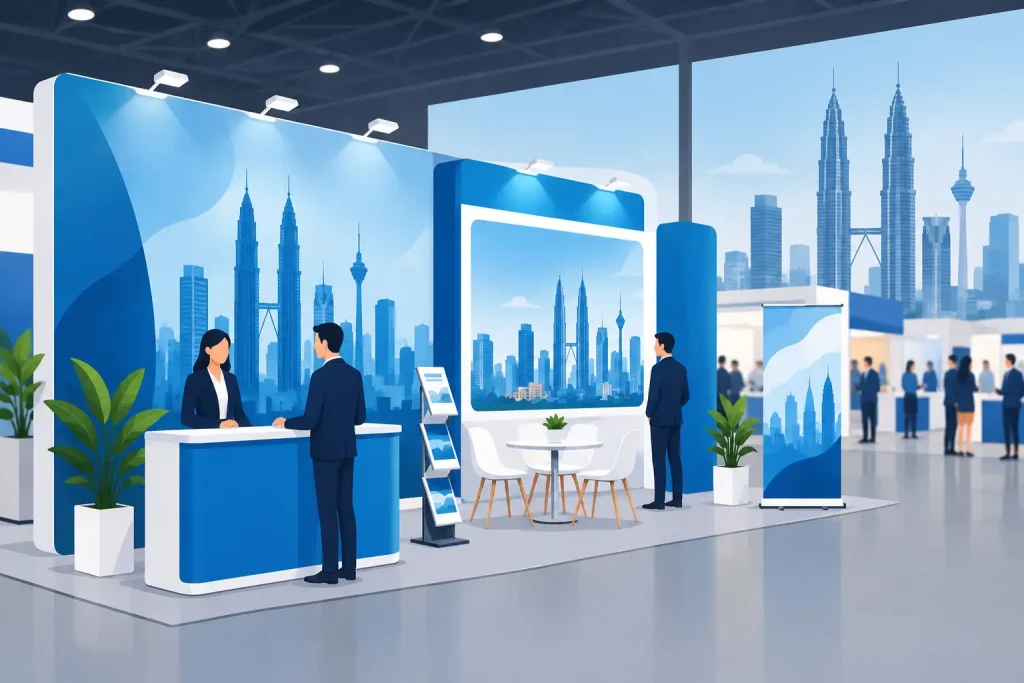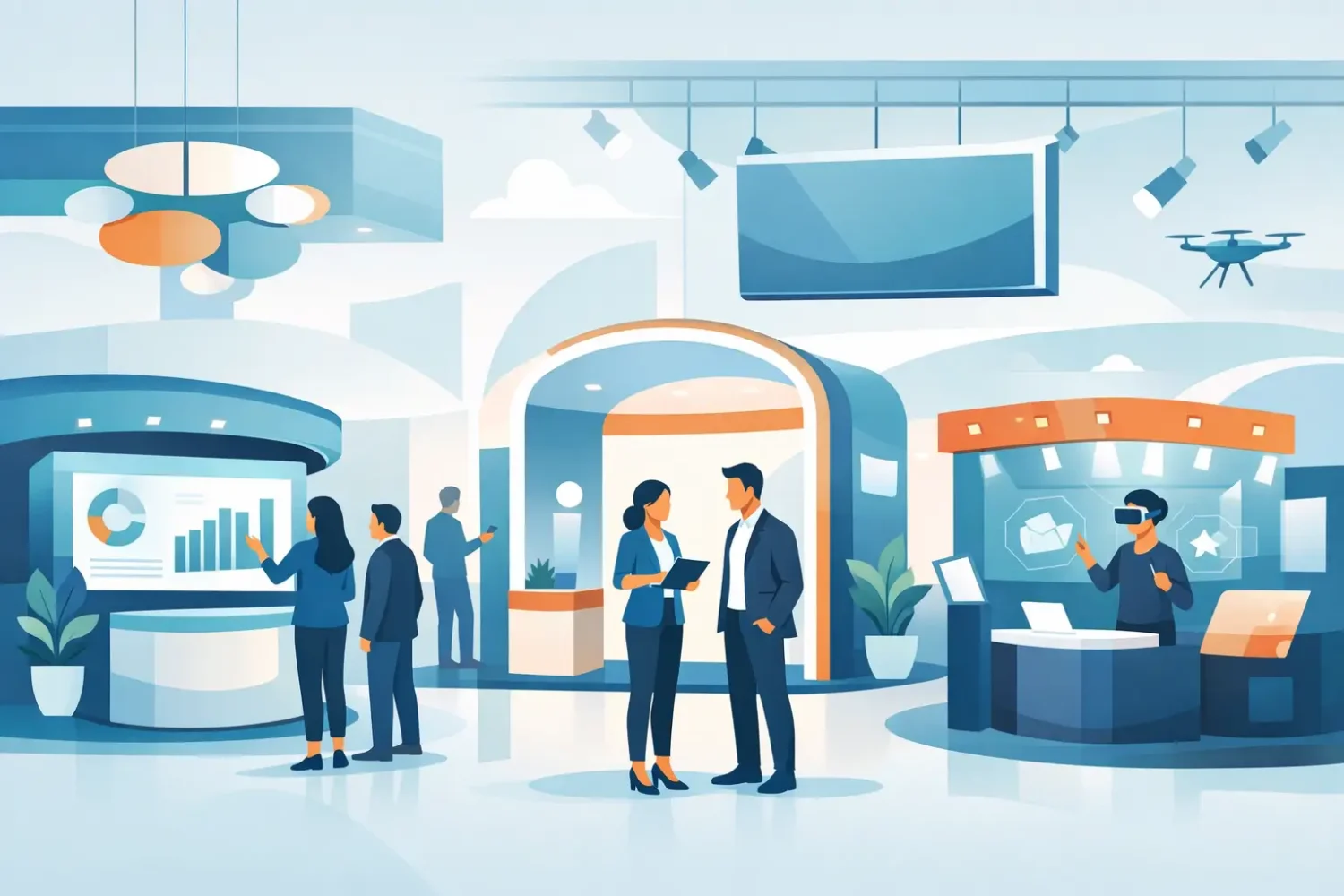
A 10-foot booth with one roll-up stand and a tablecloth can still work for a small event. It will not, however, carry the same visual weight as a coordinated display system with height, lighting, clear messaging, and a planned visitor path. That is the practical shift behind event display trends 2026: buyers are selecting display components as a working system, not as separate promotional items.
For exhibitors, retail teams, roadshow organizers, and agencies, the priority is not novelty for its own sake. The requirement is to create a display that installs quickly, fits the venue, photographs well, and can be used again with new graphics. The best setup depends on booth size, campaign duration, transport limits, and how often the branding will change.
Event Display Trends 2026: Reusable Hardware First
Reusable display hardware is becoming the base of event planning. Aluminum frames, popup systems, roll-up stands, counters, fabric walls, and LED light frames can remain in service across multiple campaigns while the printed graphic is replaced as needed.
This approach helps marketing teams avoid purchasing a completely new display package for every launch. A company that attends trade shows in Kuala Lumpur, runs mall promotions in Johor Bahru, and supports dealer events in Penang may use the same frame systems while changing the messages, product images, and call-to-action for each location.
The trade-off is that reusable hardware needs to be selected correctly at the start. A low-cost stand may be suitable for occasional use, but frequent travel, repeated installation, and large graphics place more demand on the mechanism, base, poles, and carry case. For recurring campaigns, it usually makes sense to specify commercial-grade hardware rather than treating the stand as disposable.
Modular Displays Are Replacing One-Purpose Booths
A modular layout can expand or reduce based on the available footprint. A straight fabric wall may be enough for a 3-meter booth. Add side panels, a counter, a product shelf, or a second frame, and the same system can support a larger activation.
This flexibility is useful when event spaces are inconsistent. A corner booth needs a different visual treatment from an inline booth. A product demonstration area needs room for staff movement and visitor flow. Rather than forcing one large backdrop into every venue, buyers are combining compatible modules to fit the actual site.
Popup displays and aluminum frame systems remain useful for large branded walls because they create a clean background with fewer visible structural elements. Roll-up stands still have a place too. They are fast to deploy, easy to move, and effective for entrance messaging, price promotions, directions, and supporting graphics around a main booth.
LED Light Frames Move From Premium Feature to Practical Tool
Bright exhibition halls, shopping centers, and indoor launch venues can flatten standard printed graphics. LED light frames address that issue by illuminating the image from behind, helping brand colors, product photography, and high-contrast messages remain visible at a distance.
The 2026 direction is not to light every surface. It is to use illuminated graphics where they have a job to do: a hero wall, a new-product announcement, a premium retail zone, or a focal point behind a reception counter. One well-positioned LED light frame can be more effective than several competing banners.
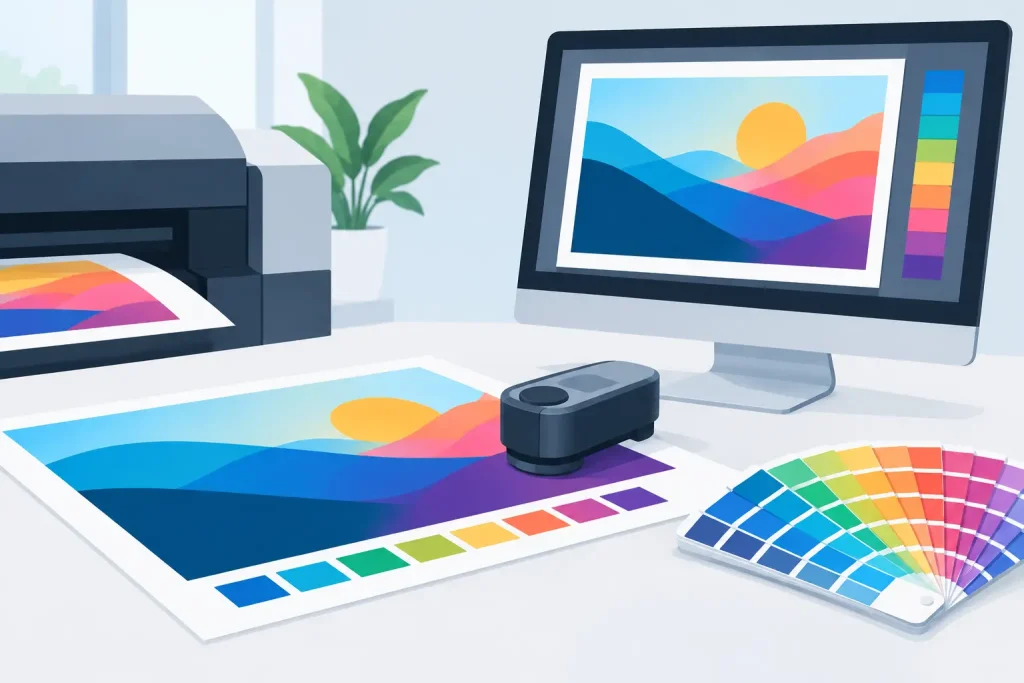
Backlit fabric and film graphics require careful print preparation. Dark images, weak contrast, and low-resolution files become more noticeable when illuminated. Artwork should be reviewed for brightness, black density, color balance, and image quality at final display size. The print method and material must also be compatible with the light frame system.
Power access is another practical consideration. Before ordering, confirm the venue’s electrical rules, cable routing, setup times, and whether the display will operate for several hours or several days. An LED frame is valuable when it supports visibility, but it adds equipment, handling, and venue coordination compared with a standard printed wall.
Shorter Messages, Larger Type, Better Viewing Distance
Event visitors do not read a booth the way they read a brochure. They scan it while walking past, talking to colleagues, checking schedules, or moving through a crowd. The main message should be understood in a few seconds from several feet away.
This is pushing display design toward fewer words, larger type, and stronger hierarchy. A booth should answer three basic questions quickly: who is presenting, what is being promoted, and what visitors should do next. Product specifications, detailed service descriptions, and long company statements can be available on a brochure, screen, sales sheet, or follow-up material.
Large-format print makes this discipline more important. A logo that looks large on a laptop may disappear on a 20-foot wall if it is surrounded by too much text. Likewise, a QR code can support lead capture, but it must be large enough to scan, placed at a comfortable height, and accompanied by a reason to use it.
Design for the Camera as Well as the Aisle
A display will often appear in staff photos, attendee posts, press coverage, and short event videos. That does not mean every booth needs a photo wall. It means the primary visual area should look complete from the angles people are likely to use.
Avoid placing a key message where it will be blocked by a table, product rack, or staff member. Keep logos clear of frame joints and folds. If a backdrop includes a repeated pattern, test it with people standing in front of it. What works as a flat graphic may look cluttered in photographs.
Materials and Print Methods Need to Match the Job
The display trend that matters most is better material selection. There is no single best print method or substrate for every event item. The correct choice depends on indoor or outdoor use, expected handling, lighting, required finish, installation method, and campaign life.
For example, PVC roll-up graphics are a familiar option for portable banner stands and directional displays. Fabric graphics can suit frames and backdrops where a softer finish and compact packing are priorities. KT board can support mounted signs, product information, and temporary point-of-sale displays, although it is not intended for heavy impact or long outdoor exposure.
UV, eco-solvent, solvent, latex, and dye sublimation production each serve different applications. UV printing can be useful for selected rigid materials and display boards. Latex and eco-solvent output can suit a broad range of graphics, depending on material requirements. Dye sublimation is commonly selected for fabric graphics where color and finish matter. Production should be chosen after the display format and environment are confirmed, not before.
For specialty promotional items, sticker material also changes the final result. PP white, synthetic, transparent, hologram, Mirrorkote, matt silver, and other sticker stocks create different looks and levels of durability. A transparent sticker may be effective on glass, while a matt silver label can support an industrial or technical product presentation. The material should reinforce the campaign rather than simply add an effect.
Outdoor Displays Must Solve Wind, Weather, and Visibility
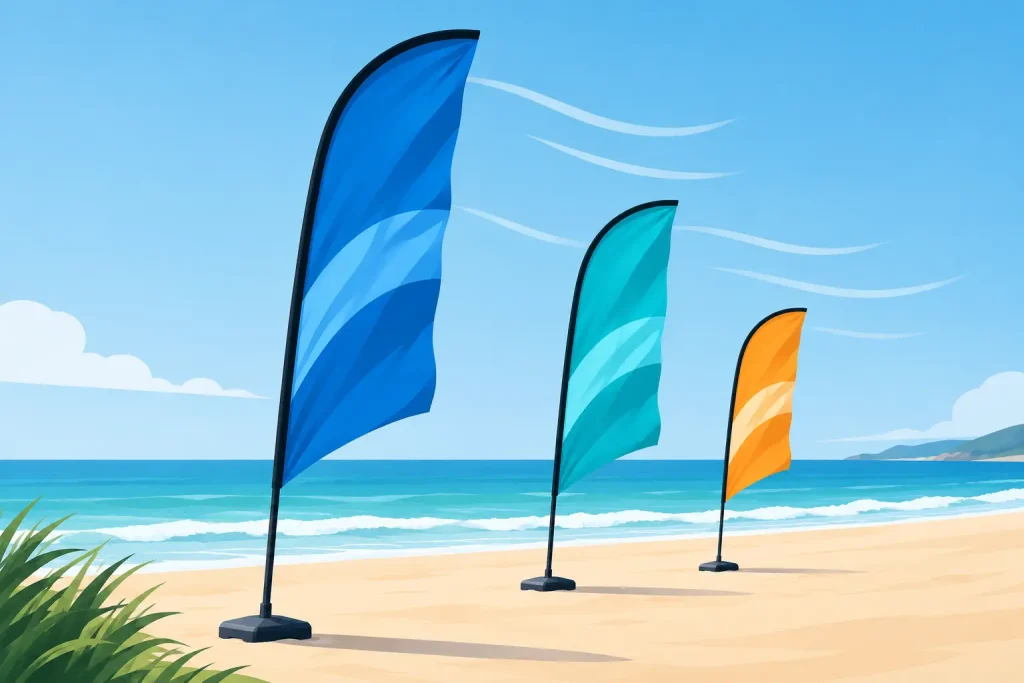
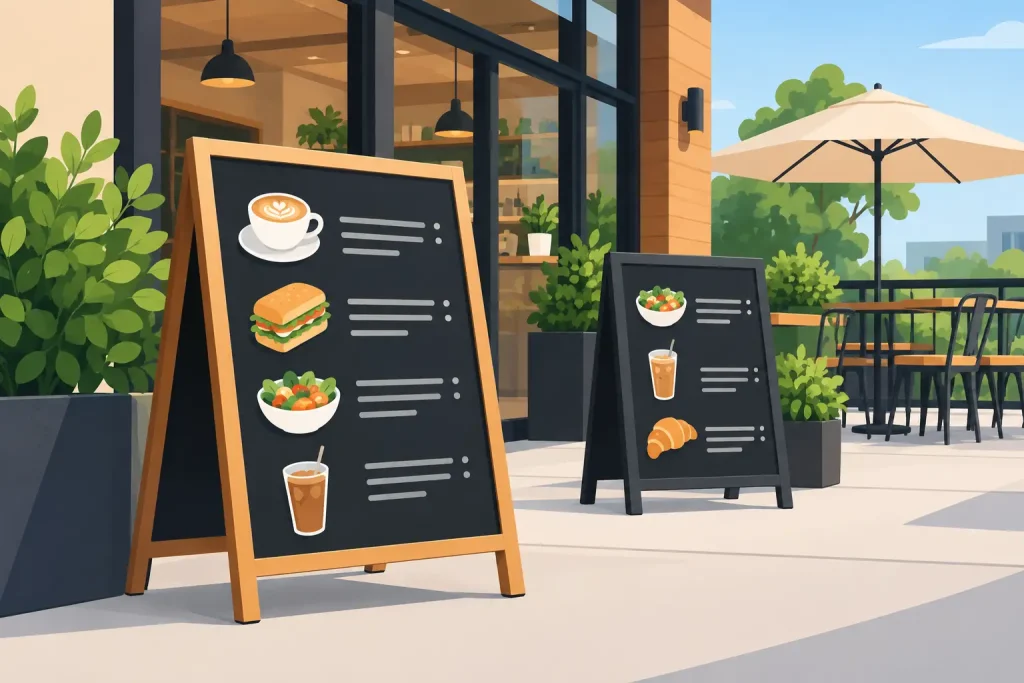
Beach flags, barricade displays, outdoor frames, and directional signs remain essential for roadshows, sports events, property launches, and open-air promotions. Their value is simple: they extend visibility beyond the booth and help guide visitors toward the activation.
Outdoor display planning needs more than a good graphic. Base selection, ground conditions, wind exposure, rain resistance, and safe placement determine whether the hardware performs as intended. A flag base suitable for a sheltered entrance may not be appropriate for an exposed open area. Barricade graphics need secure mounting and readable messages that work from a moving vehicle or walking path.
Color selection also matters outdoors. Fine details and pale tones can disappear under direct light. Strong contrast, bold shapes, and clear branding generally perform better. Where regulations or venue rules limit the height and position of displays, use multiple smaller directional elements rather than relying on one oversized sign.
Build an Event Kit Instead of Ordering Item by Item
The most efficient event buyers are standardizing a core kit. This does not mean every event looks identical. It means the hardware, artwork sizes, packing process, and reprint requirements are organized before the next deadline arrives.
A practical kit may include a main backdrop, two roll-up stands, a branded counter, directional signs, product boards, and a small number of outdoor flags where needed. For larger activations, add modular frames or an LED light frame as the focal element. Keeping artwork templates for each format reduces last-minute resizing errors and helps maintain consistent branding.
Before production, confirm four operational details:
- Final display dimensions and visible graphic area
- Venue rules, booth position, ceiling height, and power access
- Print material, finishing method, and intended campaign duration
- Transport, storage, installation, and replacement graphic requirements
My Inkjet can support this type of order by combining display hardware with large-format graphics and specialty print materials through one production source.
The strongest event displays in 2026 will not necessarily be the largest or most expensive. They will be the ones that use the right hardware, the right print finish, and one message people can recognize before they walk past.
Related Posts