A 10-foot booth with a small tabletop sign can look unfinished. A full wall graphic can fix that, but only if it fits the venue, message, and installation plan. The popup display vs backdrop decision is not simply about choosing the larger product. It is about selecting a display system that gives your brand enough visibility without creating unnecessary transport, setup, or printing costs.
For trade shows, roadshows, product launches, retail promotions, and media photo areas, both formats can carry large-format printed graphics. Their structure, use case, and visual result are different. A popup display is generally a portable exhibition wall with an expandable frame. A backdrop is a broader category for a large background graphic, usually used behind people, products, counters, or a presentation area.
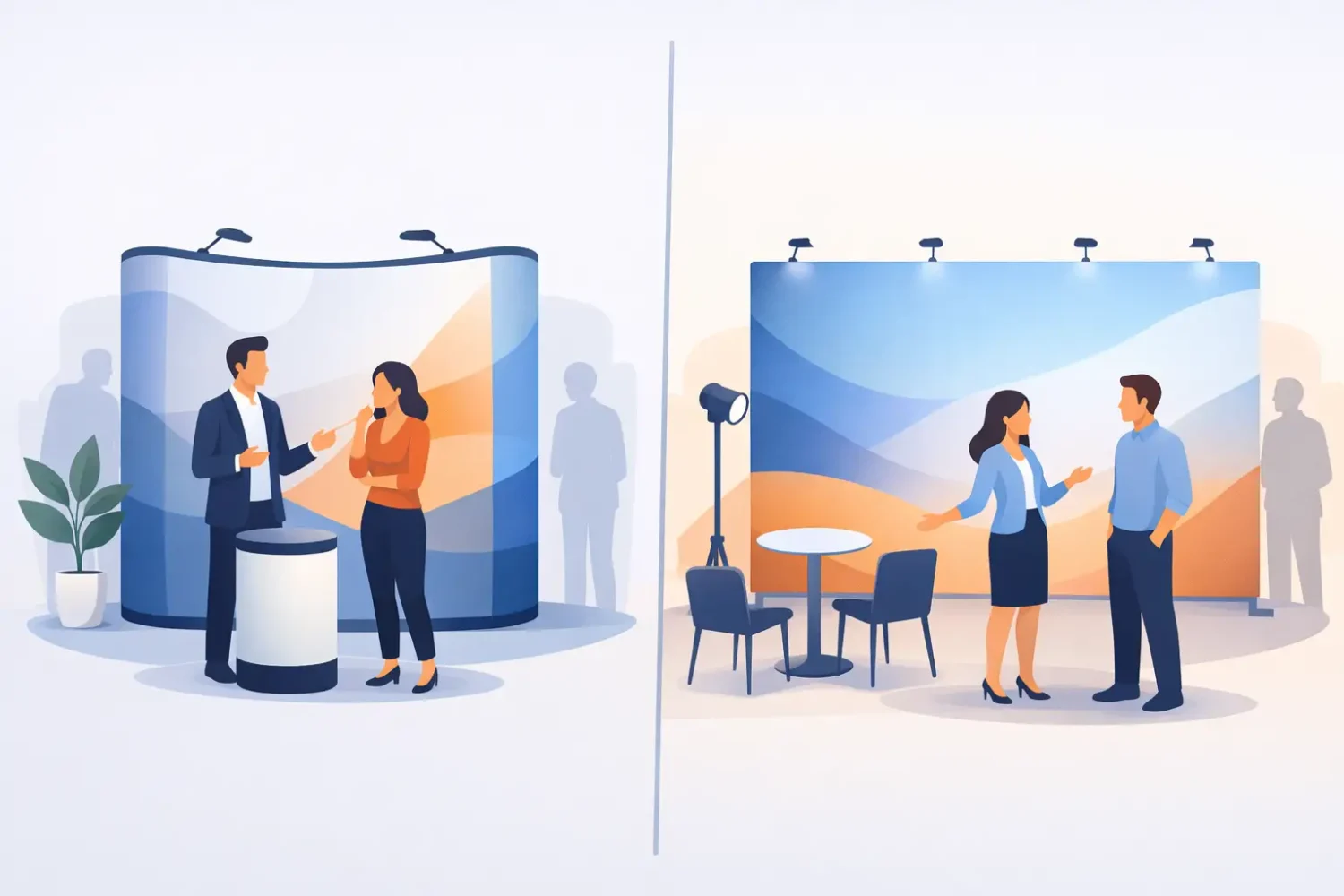
Popup Display vs Backdrop: The Practical Difference
A popup display uses a folding or expandable frame that opens into position. Magnetic graphic panels, fabric graphics, or fitted print sections attach to the frame, creating a freestanding wall. It is designed as a reusable exhibition system and typically packs into a wheeled case or carry bag.
A backdrop is defined more by its role than by one hardware type. It may be a tension-fabric wall, a fabric banner on a tube frame, a PVC banner fixed to a support structure, a step-and-repeat wall, or a printed panel mounted behind a counter. Some backdrops are portable. Others are built for a specific site or event and may need more installation work.
The terms can overlap. A fabric popup wall can function as a backdrop for photographs, presentations, or product demonstrations. The useful distinction is this: choose a popup display when portable, repeat-use exhibition hardware is the priority. Choose a backdrop when you need a background tailored to a particular space, wall width, photo zone, or visual installation.
When a Popup Display Is the Better Choice
A popup display suits teams that attend multiple events and need a controlled setup process. The frame creates its own support, so you are not dependent on a venue wall or separate mounting points. This matters in exhibition halls, hotel ballrooms, shopping mall activations, and temporary roadshow spaces where site conditions can change.
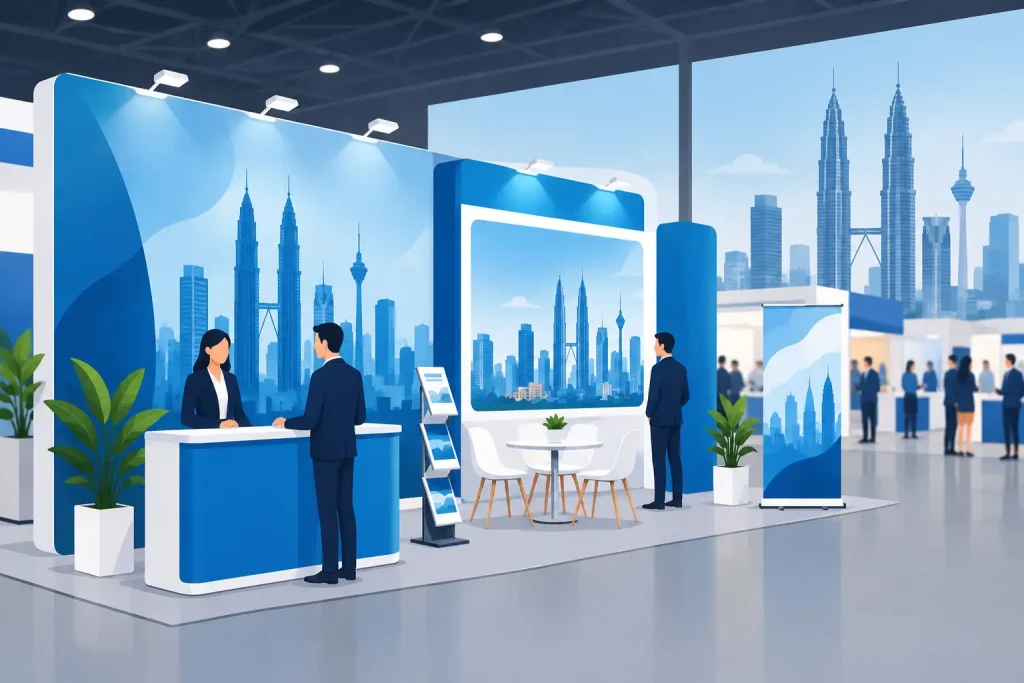
Its main advantage is repeatability. Staff can open the frame, attach the printed graphics, and create a consistent branded wall from one event to the next. For a standard booth, a popup display also provides a defined visual center. It can sit behind a reception counter, product table, or consultation area without requiring a custom build.
A straight popup wall works well when copy, product images, and logos need to read clearly from the front. A curved format can add depth to a small booth, although it is less suitable when the design relies on straight architectural lines or large blocks of text. Both require artwork prepared for the exact system size and graphic panel layout.
Popup systems are not always the lightest option. The frame, graphic panels, and case add weight compared with a simple fabric backdrop. They also need careful handling. Damaged magnetic strips, bent panels, or poorly packed graphics can affect the finished appearance. For frequent use, a durable frame and replacement graphic option are usually worth considering.
When a Backdrop Is the Better Choice
A backdrop is the practical choice when the wall needs to fit a specific purpose rather than a standard exhibition footprint. A press conference may need a wide logo wall. A retail launch may need a branded background behind a product display. A photo area may require repeated logos arranged for camera coverage rather than sales copy.
Fabric backdrops are common for this work because they create a clean, low-glare surface and can be produced at larger sizes. A tension-fabric system gives a smooth finish when installed correctly. This is useful for photography, video, and indoor events with direct lighting, where folds, reflected light, and visible panel joins can be distracting.
PVC or other banner materials can be suitable where cost, short-term use, or outdoor durability is the main concern. However, a banner backdrop may need a supporting frame, wall fixing, or truss structure. Confirm what the venue allows before production. A display that cannot be mounted safely is not a useful display, regardless of print quality.
Backdrops also give more freedom with dimensions. If the available wall is 16 feet wide or the event stage needs a specific height, a custom backdrop can use that space more effectively than forcing a standard popup system into the area. The trade-off is that custom sizes may be harder to reuse at different venues.
Compare Setup, Transport, and Storage Before Ordering
For a single team member traveling by car, a popup display can be a sensible all-in-one unit. The frame, graphics, and case stay together, and the assembled display has a predictable footprint. Setup time is usually manageable once staff have practiced the process.
A fabric backdrop on a lightweight aluminum frame can be just as convenient, especially if the frame uses numbered tubes or tool-free connections. It may also weigh less than a traditional magnetic-panel popup system. But this depends on size. A large backdrop frame can involve many parts, and keeping those parts organized is essential.
For a custom banner backdrop, installation can be the deciding factor. Ask who will supply the frame, attach the print, and dismantle the display after the event. If the venue requires an overnight build, loading dock booking, or professional installer, include those operational costs in the comparison.
Storage is often overlooked. Popup graphics should be kept dry, flat where appropriate, and protected from crushed corners. Fabric backdrops should be folded cleanly and stored away from moisture. If the display will be used only once, a simple printed backdrop may provide better value than purchasing reusable hardware that will sit in storage.
Graphic Design Requirements Are Different
Both products need high-resolution artwork, correct dimensions, and bleed or finishing allowances. The design approach changes with the display format.
A popup display should be designed around its visible panel sections, frame edges, and any joins. Keep small text, QR codes, faces, and product details away from panel breaks. If the system uses end caps or a curved structure, check how images and backgrounds flow across the sides. A plain color or pattern can hide minor alignment variation better than a detailed image spanning several panels.
A backdrop can support a larger, more continuous graphic. For product launches, this makes it suitable for one strong campaign image with a short headline. For photo backdrops, repeated logos should be sized and spaced so they remain visible behind groups of people. Logos placed too low will be blocked by guests, furniture, or product displays.
Lighting affects material selection. Glossy surfaces can reflect spotlights and camera flash. Matte fabric or matte banner material generally performs better for photo walls and presentations. For retail areas, UV, eco-solvent, latex, dye-sublimation, and other production methods should be selected according to the material, color requirement, indoor or outdoor use, and expected display period.
Choose Based on the Job, Not the Product Name
Use a popup display if you need a reusable, freestanding exhibition wall with standard dimensions and predictable setup. It is a strong fit for trade show booths, sales events, and recurring promotions where the same brand message will run across several locations.
Use a backdrop if the main requirement is a large branded background, a custom width or height, a photo wall, or a site-specific installation. It is often the better format for stage areas, media events, retail campaigns, and branded photo zones.
Before approving artwork, confirm five practical details: the final display size, the viewing distance, the hardware or mounting method, the transport plan, and whether the graphic will be reused. These answers usually make the popup display vs backdrop choice clear faster than comparing product photos alone.
For buyers ordering hardware and printed graphics together, keeping the frame specification and artwork file under one production plan helps prevent size mismatches. My Inkjet can support this type of display requirement with large-format print output and presentation hardware for event, retail, and promotional use.
The best display is the one that arrives at the venue ready to install, reads clearly from the right distance, and can be used again only when reuse actually serves the campaign.
Related Posts