A retail promotion can fail before a customer reaches the shelf. A faded window sticker, a counter sign that falls over, or an oversized display that blocks a walkway creates avoidable friction. When selecting a retail signage supplier in Petaling Jaya, the practical question is not simply who can print a graphic. It is whether the supplier can match the right display hardware, substrate, print method, finishing, and quantity to the actual retail environment.
For store launches, seasonal promotions, product demonstrations, mall activations, and permanent point-of-sale communication, the best result usually comes from planning the display system and printed panel together. That avoids the common problem of receiving a good-looking print that does not fit the frame, stand, wall surface, or available floor space.
What a Retail Signage Supplier Needs to Deliver
Retail signage has to work at close range. Customers may read a price card from two feet away, notice a hanging banner across an aisle, or see a window graphic while walking past the storefront. Each viewing situation requires a different format.
A supplier should be able to provide both the physical display item and the printed graphic. This matters because the finished size, graphic bleed, eyelet position, mounting method, and panel material must suit the hardware. Ordering a roll-up stand from one vendor and its banner from another can work, but it adds compatibility risk and can slow down replacement work.
For most retail buyers, the requirement falls into one of three groups: short-term campaign displays, reusable hardware with replaceable graphics, or longer-term branded fixtures. A weekend sampling event may only need a roll-up stand, promotional counter, and a few foam board signs. A chain store campaign may need repeated window graphics, shelf-edge messaging, barricade displays, and identical promotional units across several locations.
The right choice depends on campaign duration, foot traffic, storage conditions, and how often the message will change. There is no single best material or print process for every sign.
Choose the Format Before Choosing the Print
A clear format list helps a supplier quote correctly and prevents last-minute substitutions. Start by identifying where every sign will be placed and what it needs to do.
Floor Displays and Entrance Areas
Roll-up stands are practical for entrances, cashier queues, promotions, and product launches because they are portable and quick to set up. PVC roll-up systems are commonly used for recurring promotions, while a wider display may be more suitable when a campaign needs a stronger visual block at the front of a store.
Popup displays work better for large backdrops, roadshows, and launch zones where a roll-up banner would look too narrow. Beach flags can be effective outside a retail lot, at an event entrance, or near a temporary promotion, but they need appropriate bases for the surface and local weather conditions. A light indoor base is not automatically suitable for an exposed outdoor location.
Promotional counters give staff a working surface while carrying branding on the front panel. They are useful for product sampling, registration, and mall activations. Confirm whether the counter includes storage, what panel material it uses, and whether replacement graphics can be ordered later.
Wall, Window, and Shelf Messaging
Window graphics need a different approach from banners. Transparent stickers allow light through and can preserve visibility into the store, while PP white stickers give stronger color coverage and more solid messaging. Frosted or specialty finishes may suit privacy or decorative applications, but the final choice should follow the visibility requirement rather than appearance alone.
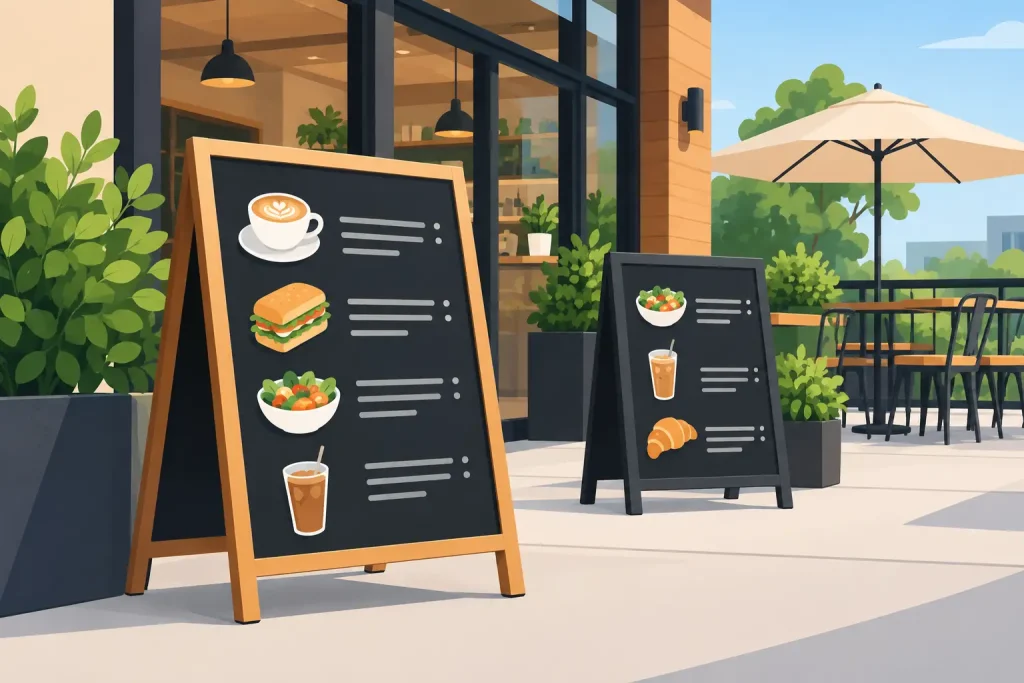
For indoor wall promotions, KT board stands and mounted boards create a rigid presentation for menus, price messaging, directional signs, and campaign visuals. They are useful where a flexible banner would curl, wave, or look temporary. Aluminum and wooden frames provide more permanent presentation options, especially for branded visuals that are expected to remain in place beyond one promotion cycle.
LED light frames are suited to high-visibility retail areas where backlit graphics can separate a message from surrounding visual noise. They cost more than a standard printed board, so they make most sense for hero products, premium retail zones, or campaigns with long enough running periods to justify the hardware.
Print Method Should Match the Sign’s Job
A retail signage supplier in Petaling Jaya should ask where the sign will be used before recommending a print method. The print process affects color, durability, surface suitability, and cost.
Solvent and eco-solvent printing are widely used for banners, vinyl graphics, and signage applications where practical durability is required. Eco-solvent output can be a suitable option for many indoor and outdoor promotional graphics, depending on the chosen media and finishing.
UV printing is useful for rigid materials and applications that need direct print output on selected boards or surfaces. It can suit display panels, rigid point-of-sale signs, and specialty materials. Latex printing may be considered where fast turnaround, indoor display use, or particular media requirements are priorities. Dye sublimation is generally associated with fabric graphics and is a strong option for fabric displays where a softer finish and portability are required.
Resolution alone should not decide the job. A close-viewing countertop display may benefit from high-detail output, while a large banner viewed from across a driveway does not need the same file treatment. A supplier should check the intended viewing distance before pushing a higher-cost specification that adds little visible value.
Materials and Finishing Affect How Long a Sign Stays Presentable
The printed face is only one part of the order. Lamination, mounting, trimming, eyelets, folding, and panel finishing determine whether a display remains usable through transport, setup, and daily retail activity.
Sticker stock should be chosen around the surface and removal requirement. PP white, synthetic, transparent, hologram, matt silver, and Mirrorkote options each have different visual and functional roles. A transparent sticker may look refined on glass but can lose legibility if the store interior is bright or cluttered. A white-backed material may give stronger contrast but blocks the view through the window.
For banners, check the hem, eyelet spacing, pole pocket, or stand cassette requirement. For mounted boards, confirm thickness, edge finishing, and whether a stand or wall mounting method is included. These details are not extras. They determine whether the graphic can actually be installed as intended.
If the sign will be moved between stores or reused for multiple events, request a carry bag, protective packaging, or a more durable hardware grade. A lower-cost stand may be appropriate for one campaign. For repeated use by a marketing team, stronger hardware often reduces replacement cost over time.
Send a Complete Brief for Faster Production
Most production delays are caused by incomplete information rather than printing time. A useful order brief should identify the item type, final size, quantity, print side, material, finishing, delivery requirement, and artwork status. If the campaign is going into multiple outlets, separate the quantities by location and note whether every site receives the same artwork.
Artwork should be supplied at the correct size and with enough resolution for the display format. Include bleed where trimming is needed and keep critical text away from trim edges, stand clamps, eyelets, or frame borders. For roll-up banners, do not place a logo or price message at the bottom where the cassette may conceal it.
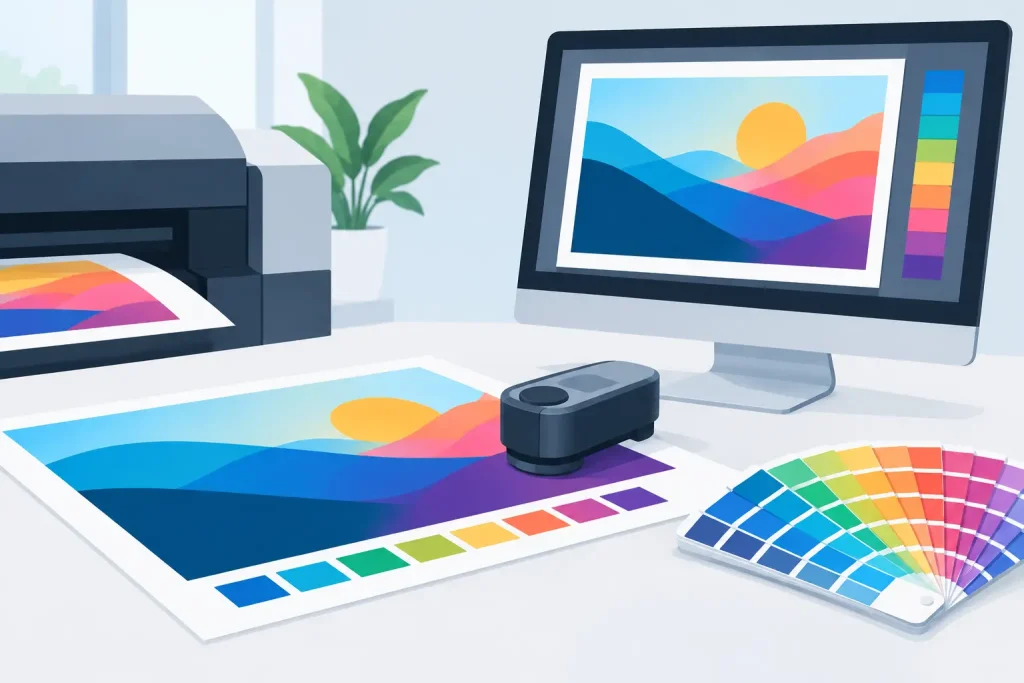
Color should also be discussed when a campaign includes multiple formats. A window sticker, PVC banner, fabric backdrop, and UV-printed board will not always reproduce color in exactly the same way because the materials and ink systems differ. For brand-critical jobs, use approved color references and request a proof process appropriate to the order value.
One Supplier, Fewer Compatibility Problems
Using one source for display hardware and printed output makes purchasing simpler for retail operators and event teams. The supplier can prepare graphics to the correct visible area, advise on the best material for the item, and keep specifications consistent when replacements are needed.
My Inkjet supports commercial buyers with display formats such as roll-up stands, popup displays, beach flags, counters, LED light frames, KT board stands, frames, and barricade displays, alongside large-format and specialty print options. This is particularly useful when a campaign combines several sign types rather than relying on one banner format.
Before placing the order, measure the actual placement area, confirm the campaign dates, and decide which items must be reusable. A sign that fits the store, carries a readable message, and uses the right hardware will do more for a retail campaign than an expensive graphic ordered without an installation plan.
Related Posts