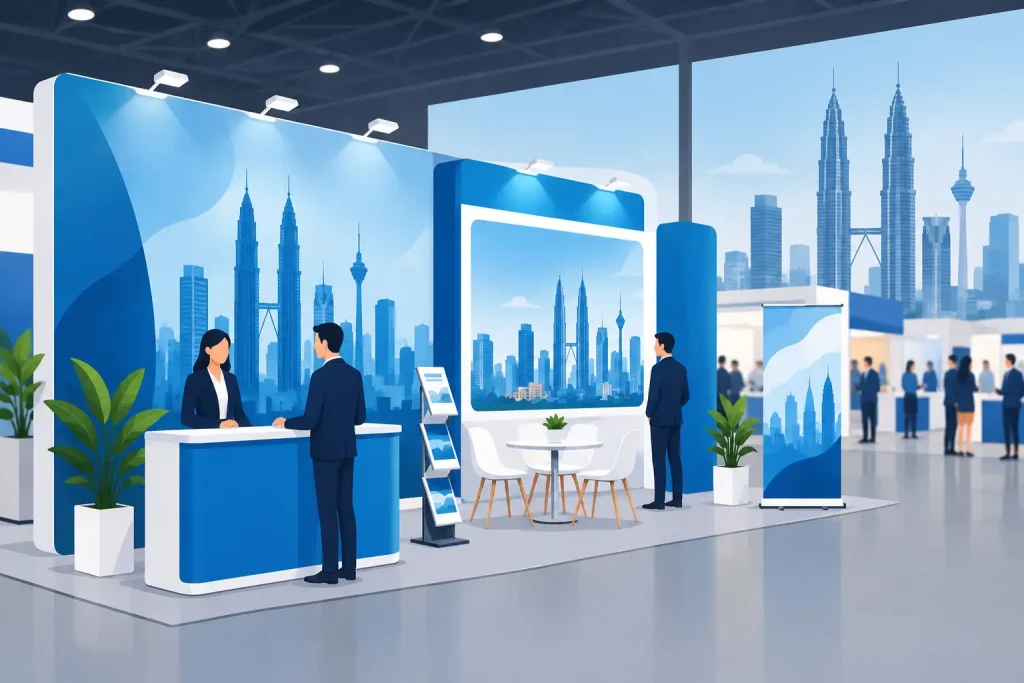
A backdrop that is too narrow makes a 10 x 10 ft booth look unfinished. One that is too large can block neighboring exhibitors, create installation problems, or leave excess material behind the frame. When deciding what size backdrop for booth use, start with the usable display area, not just the booth size printed on the floor plan.
For most trade show and promotional setups, the backdrop should cover the main rear-facing visual field while leaving room for counters, product demonstrations, staff movement, and required access points. The right size also depends on whether you are using a popup display, tension fabric frame, pipe-and-drape system, modular wall, or a simple banner stand arrangement.
Start With the Booth Footprint
A standard 10 x 10 ft booth is the most common starting point for exhibitions. Its rear wall is typically 10 ft wide, but the actual printable backdrop width may need to be slightly less depending on the frame, side supports, venue rules, and neighboring booth boundaries.
For a full rear-wall presentation, a 10 ft wide backdrop is usually the practical choice. A height of 7.5 to 8 ft works for many popup and tension fabric systems, while 8 to 10 ft high structures create a stronger presence in halls with sufficient ceiling clearance. The key point is that hardware dimensions control the finished graphic size. Do not order a 10 x 8 ft print for a frame until the visible graphic area and bleed requirements are confirmed.
Larger booth spaces need a different approach. A 10 x 20 ft inline booth may use one continuous 20 ft wide wall, two 10 ft displays, or a central feature wall with supporting roll-up stands. The best option depends on transport, setup time, image resolution, and whether the campaign will be reused at smaller events.
What Size Backdrop for Booth Layouts?
Use the booth type to narrow down the specification before choosing material or print method.
- 10 x 10 ft inline booth: Use a 10 ft wide backdrop, commonly 8 ft high, for full rear-wall branding.
- 10 x 20 ft inline booth: Use a 20 ft wide backdrop or separate 10 ft sections when flexibility and easier replacement matter.
- Corner booth: Use a full rear wall plus a secondary side wall only when the event layout allows it. An L-shaped display can improve visibility from the aisle.
- Island booth: Use freestanding or double-sided structures rather than a single rear backdrop, since visitors approach from multiple directions.
These are working sizes, not automatic rules. Some venues provide 8 ft pipe-and-drape back walls. Others permit taller structures but require approval for anything above a set height. Always check the exhibitor manual before production, especially for large-format fabric walls, LED light frames, and overhead elements.
Choose Coverage Based on Viewing Distance
Backdrop size affects how people read your message. A small backdrop can work at close range in a retail activation or product sampling booth. On a busy trade show aisle, attendees may first see the display from 20 to 50 ft away. In that setting, a full-width wall gives the brand name and main message enough scale to register before someone reaches the booth.
A useful rule is to make the brand name the largest element, followed by one core message or product category. Fine details, long paragraphs, and small contact information should not carry the design. Increasing backdrop size will not fix a layout that contains too much copy.
For an 8 ft high backdrop, place critical text and logos in the center viewing zone. Keep essential content clear of the bottom area, where it may be hidden by a counter, chairs, product racks, or visitors standing in front of the display. Also keep key artwork away from frame edges, zipper seams, and panel joins.
Match the Backdrop to the Hardware
The graphic and the stand must be planned as one system. A printed panel may look correct in a digital proof but fit poorly if the hardware uses side returns, hook-and-loop attachment, tensioning, magnetic channels, or fabric sleeves.
Popup displays are a practical choice for standard exhibition booths because they provide a broad branded face with relatively compact storage. Common configurations are close to 8 ft wide for smaller setups and 10 ft wide for a full 10 x 10 ft booth wall. Curved popup frames soften the profile, while straight frames maximize usable design space.
Tension fabric backdrops create a clean, continuous surface and are suitable for repeated campaigns. They are often selected for 8 ft or 10 ft wide booth walls, but larger modular fabric frames are available for wider spaces. Confirm whether the artwork wraps around the frame sides. If it does, the finished print must include side-panel graphics and additional bleed.
Roll-up stands work best as supporting displays rather than the main backdrop for a full-size booth. Two or three roll-up banners can form a low-cost background for a compact activation, but visible gaps between units reduce the effect of a single branded wall. They are more useful for price lists, product features, directional messaging, or promotions positioned beside the main display.
For premium retail launches and high-visibility events, LED light frames can give graphics more impact than a standard printed wall. Their size should still follow the available wall or booth width. A bright 10 ft frame can become the central feature, but it needs power access, suitable transport planning, and artwork prepared for backlit material.
Allow for Furniture, Products, and Staff
A backdrop should frame the operating area, not compete with it. A reception counter generally occupies the lower center of the booth, while shelving, sample tables, and demonstration equipment may cover more of the graphic. If products must sit against the back wall, consider a taller backdrop or move the main logo upward.
For a photo booth, the size calculation is different. The background needs to cover the camera frame and allow several people to stand in front of it without revealing the edge. An 8 x 8 ft or 8 x 10 ft backdrop is commonly suitable for small group photos. A wider 10 x 8 ft background gives more room for posed groups, but only if the venue has enough clear wall space and the camera can be positioned far enough back.
Do not confuse a photo backdrop with a trade show booth backdrop. A photo setup prioritizes the camera crop. An exhibition backdrop prioritizes aisle visibility, brand hierarchy, and the physical structure of the booth.
Select Material for the Job
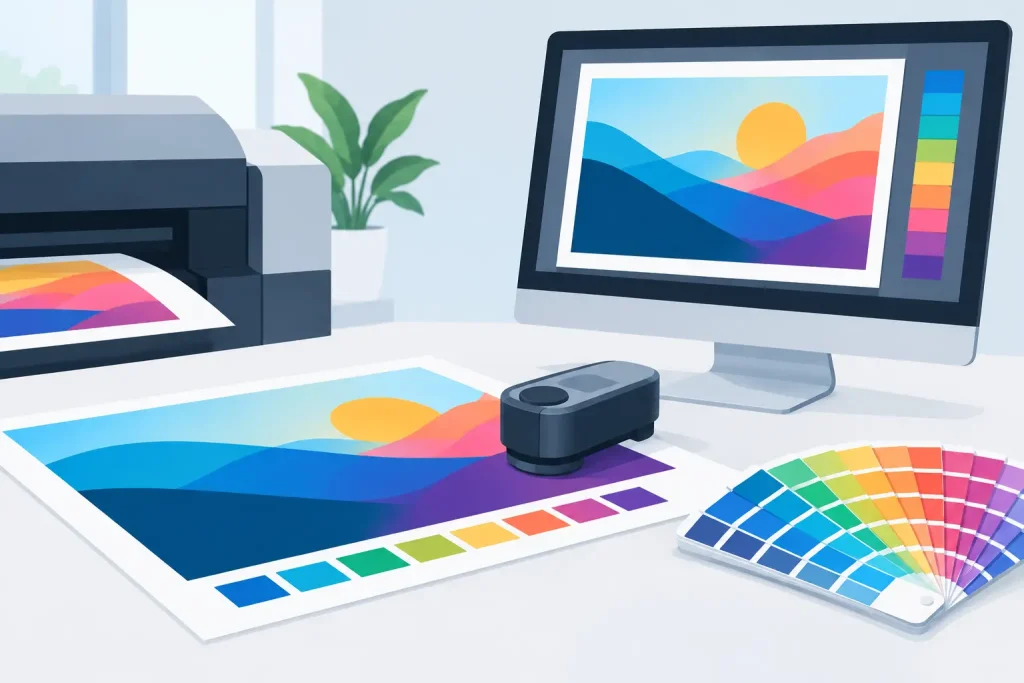
Material choice affects both appearance and operating conditions. Fabric is often preferred for tension frames and reusable backdrops because it is lighter, folds for transport, and reduces glare under exhibition lighting. Dye sublimation printing is commonly used for fabric graphics, producing color that is integrated into the material rather than applied as a surface layer.
PVC or similar banner material can be a cost-effective option for temporary backdrops, especially when used with a pipe-and-drape system or as a mounted panel. It can deliver strong color and sharp graphics, though reflections may be more visible under direct spotlights. For rigid presentation walls, printed boards or mounted panels provide a flat surface but require more careful handling and storage.
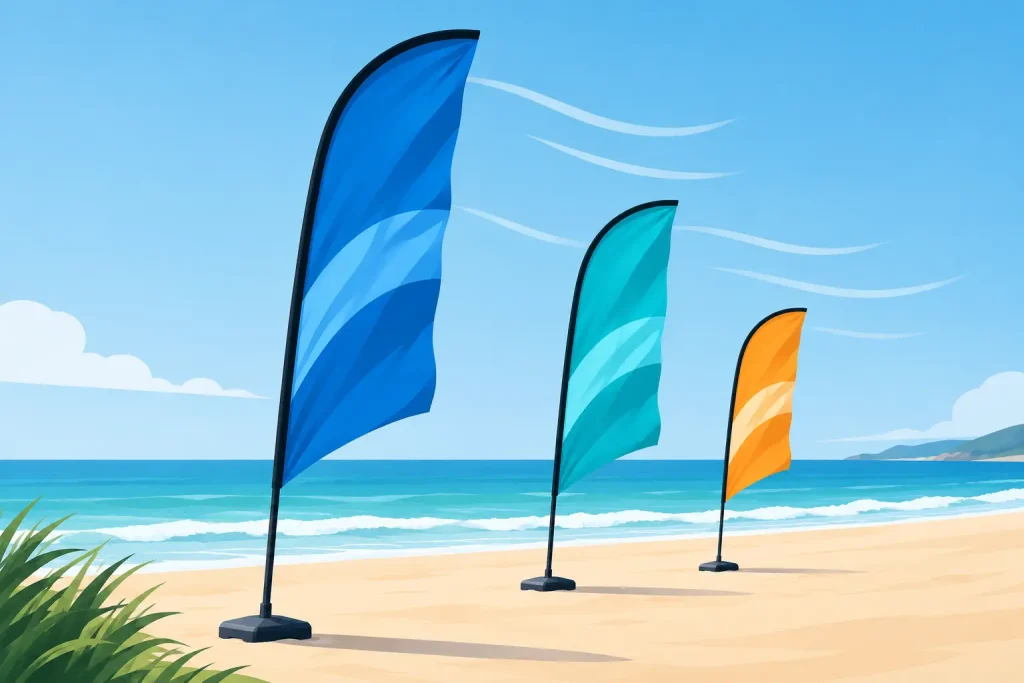
If the backdrop will be used outdoors, consider wind exposure, frame stability, water resistance, and weighted bases. An indoor exhibition wall should not be treated as an outdoor event structure simply because the printed graphic is durable.
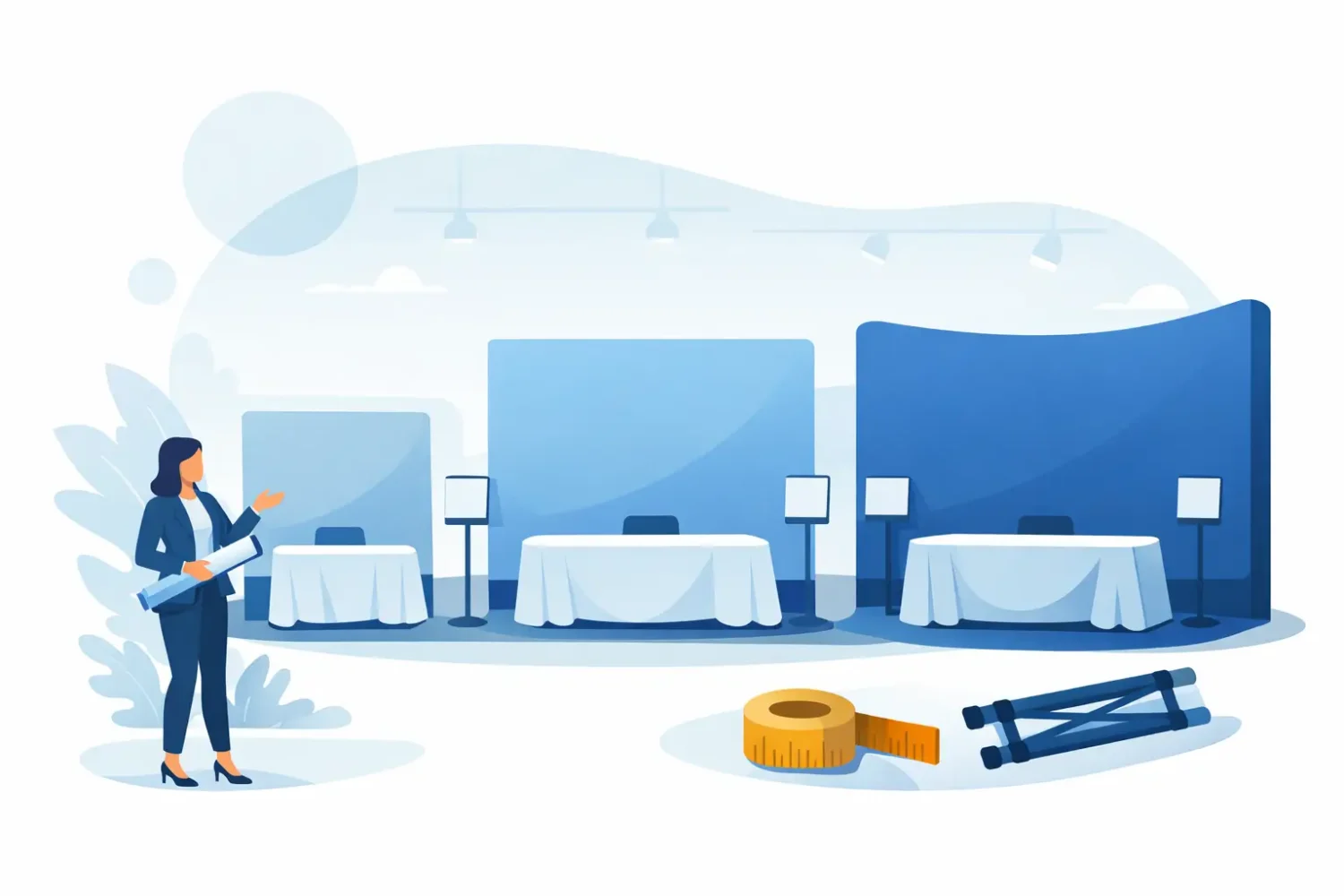
Measure Before Artwork Approval
Before sending artwork to print, verify the frame model, overall hardware dimensions, visible graphic area, graphic finish size, bleed, safe area, and required resolution. Ask whether the file needs panel breaks, wrap areas, grommet positions, pole pockets, or a mirror-image side panel. These details prevent the usual problems: cropped logos, text hidden in seams, and graphics that do not tension correctly.
For a standard 10 x 10 ft trade show booth, a 10 ft wide by 8 ft high backdrop is usually the most effective starting specification. From there, adjust for the actual frame, venue restrictions, booth furniture, and campaign purpose. A clear measurement sheet and a hardware-first production plan will do more for the finished result than simply choosing the largest backdrop available.
Related Posts