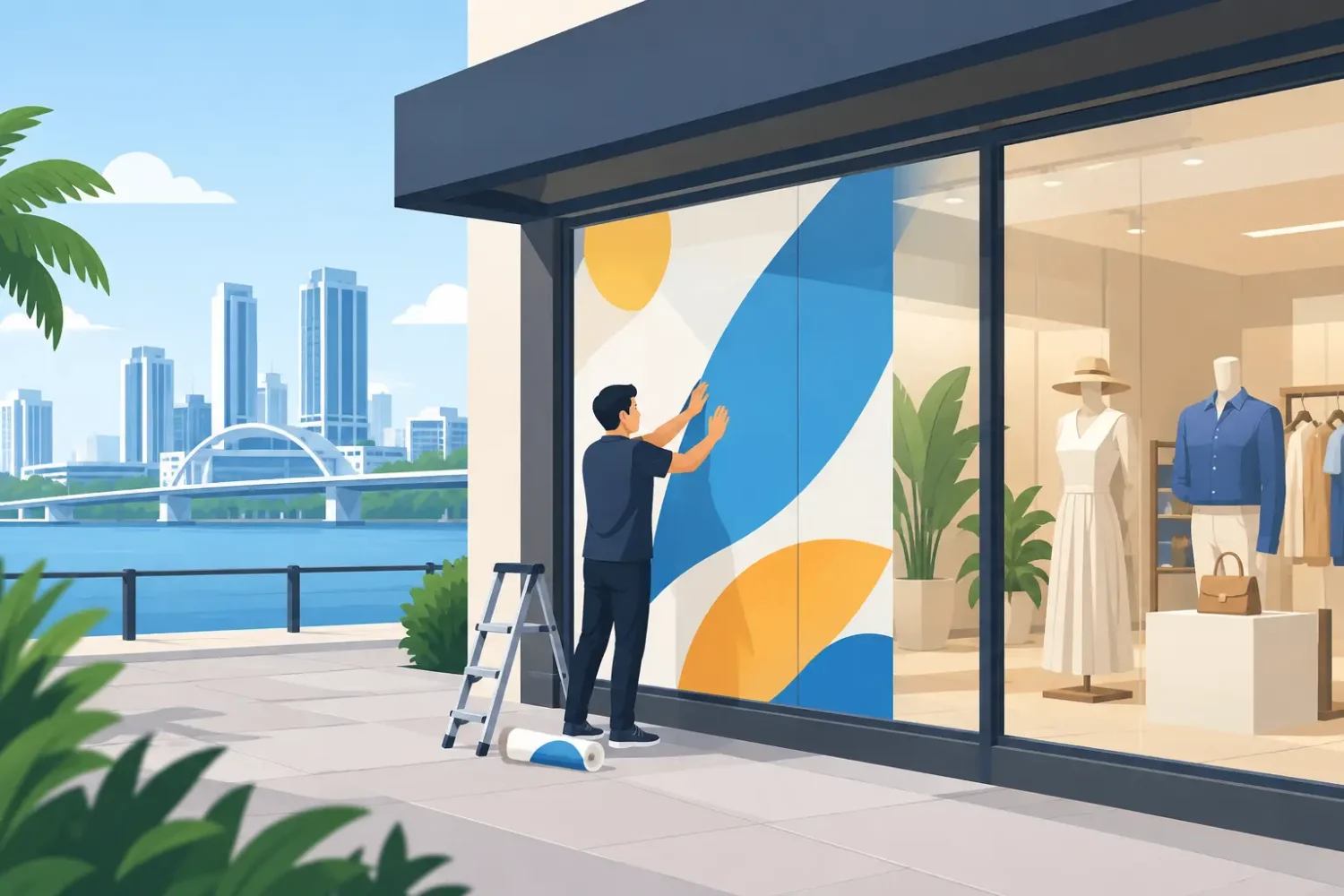
A storefront window is valuable advertising space that many businesses leave underused. This Johor Bahru window graphics guide covers the practical decisions behind printed window displays: what customers need to see, how much natural light to retain, which material fits the site, and how the graphic will be installed and removed.
For retail operators, restaurants, showrooms, property sales galleries, and event venues, window graphics can do more than display a logo. They can announce a promotion, screen an interior from public view, direct foot traffic, reinforce brand colors, or turn plain glass into a campaign surface. The right specification depends on the window, viewing distance, campaign duration, and the condition of the glass.
Start With the Job the Window Must Do
Before selecting a film or sticker, define the primary purpose. A full-color retail sale message needs a different solution from a privacy graphic for an office meeting room. Trying to make one window carry every message often produces a crowded result that is hard to read from the street.
For a storefront promotion, prioritize one commercial message: a seasonal offer, new product category, opening date, or price point. Keep logos, contact details, and supporting copy secondary. A passerby may only have a few seconds to read the display, particularly near busy roads, malls, or transport areas in Johor Bahru.
For branding, consider using a repeated pattern, frosted treatment, or large visual rather than a dense list of services. For directional use, such as a glass entrance at a showroom or roadshow venue, high-contrast arrows, opening hours, and entry notices are generally more useful than decorative visuals.
The window also needs to work from both sides. A graphic viewed from outside may look acceptable in artwork but appear washed out indoors if it receives strong backlighting. Ask whether the internal view matters. In offices and retail spaces, staff and customers may need daylight and outward visibility even where branding is required.
Materials in This Johor Bahru Window Graphics Guide
Window graphics are not one product category. The substrate affects opacity, finish, installation method, durability, and what people can see through the glass. Matching material to use case prevents avoidable replacements.
Transparent Sticker for Glass Effects
Transparent sticker is suitable when the glass itself should remain visible and the artwork needs a lighter, less blocked appearance. It works for logos, operating hours, small promotional decals, and designs that use open space as part of the layout.
Color printed directly onto transparent material can appear less saturated than color printed on white media, especially against a bright interior. White ink can improve visibility where available, but it should be specified during production planning. Transparent graphics are less suitable for a large photo-heavy promotion that must remain vivid from a distance.
White Vinyl or Opaque Sticker for Strong Promotion
White opaque sticker gives printed colors a solid base and is the standard choice for bold window sale graphics, product images, campaign headers, and temporary retail branding. It is useful when the objective is to cover the view through the glass and make the message visible from outside.
Use opaque material selectively on windows that provide useful daylight. A fully covered shopfront can make an interior feel closed or darker during business hours. A center panel, lower-half graphic, or framed window sections may achieve the promotional goal without blocking the entire frontage.
Frosted Film for Privacy and Permanent Branding
Frosted film is commonly used for office partitions, clinics, salons, meeting rooms, and glass doors where privacy is required but light should remain available. It creates a diffused finish and can be cut or printed with logos, patterns, department names, and safety markers.
This is usually a longer-term application than a campaign sticker. It needs accurate measurements around door handles, glass joints, existing decals, and access-control hardware. Frosted material can also support a more restrained brand treatment when a full-color retail look would not suit the premises.
One-Way Vision Film for Exterior Viewing
One-way vision film has perforations that allow people inside to see outward while presenting a printed graphic to viewers outside. It can be effective on vehicle windows and selected storefront glass, but performance depends on light conditions. The side with stronger light tends to dominate the visual effect.
At night, a brightly lit interior can reduce privacy and make the perforated pattern more noticeable. It is not the automatic answer for every large window. Review its use on site, especially for businesses operating after dark.
Size the Graphic for Real Viewing Distance
A window graphic should be measured as a production item, not estimated from a phone photo. Record the glass width and height in millimeters, then note frames, mullions, door gaps, handles, hinges, and any sections that cannot be covered. Measure each pane separately when frames divide the frontage.
Artwork should also allow for installation tolerance. A full-bleed print normally needs extra material for trimming, while cut lettering needs spacing that prevents characters from running too close to glass edges. If the design aligns across multiple panes, the installer needs clear panel order and alignment references.
Text size follows viewing distance. A short headline can be large enough to read from across a corridor or parking area. Fine print, QR codes, terms, and social media handles need close viewing and should not carry the main campaign message. If a customer cannot understand the offer without standing directly at the glass, simplify the layout.
For multi-location campaigns, do not assume every branch has identical glass dimensions. A standardized design may need adapted panel sizes for each storefront. Keep core visuals consistent while allowing the production layout to change by site.
Choose Print Method and Finish by Application
Large-format production methods are selected according to material, run size, expected durability, color requirement, and environment. Eco-solvent and solvent printing are widely used for adhesive vinyl applications. UV printing can suit specific rigid or specialty material jobs, while latex printing is often considered where odor and indoor production requirements are important.
The choice should not be made from a print-method label alone. Confirm the actual media, adhesive type, laminate requirement, and expected service period. A short campaign inside a mall may not need the same protection as an exterior window exposed to heat, rain, frequent cleaning, and direct sun.
Lamination can add protection against scuffing, moisture, and fading, particularly on high-contact door graphics or long-running exterior campaigns. Gloss laminate can make colors appear more vibrant but may create reflections under strong lighting. Matte laminate reduces glare and can make text easier to read. Neither is universally better; the window position and design decide the better finish.
Prepare Files and Approve Before Production
Supply artwork at final scale where possible, using high-resolution images and vector files for logos, type, icons, and cut lines. A small web image may look adequate on screen but break down when expanded across a large glass panel. Product photos should be checked at output size, not only at 100 percent view on a laptop.
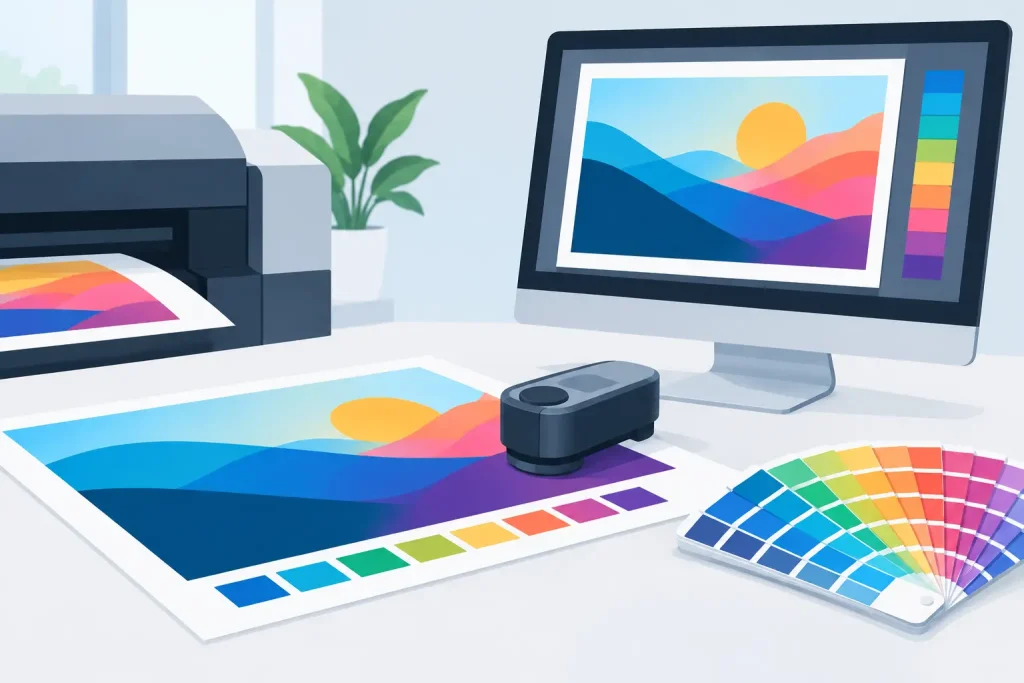
Set brand colors carefully. Printed color can vary by media and printing process, and translucent or transparent materials can alter the result further. For a campaign with strict corporate colors, provide approved references and request a proof or sample when timing allows.
The approval stage should confirm more than the visual design. Check dimensions, panel count, material, finish, front or reverse application, cut contour, installation location, and delivery deadline. If graphics are being applied from inside the glass for external viewing, the artwork may need to be reverse printed. This detail cannot be corrected after production without reprinting.
Installation and Removal Affect the Final Result
Clean, dry glass is essential. Dust, silicone residue, oil, or moisture can cause bubbles, weak adhesion, and visible contamination under clear material. New paint, renovation dust, and recently washed glass should be considered before booking installation.
Large panels need controlled application. Installing over uneven surfaces, cracked glass, deep seals, or hardware can compromise the result. Doors also need special attention because graphics must not obstruct handles, safety markings, or visibility where it affects normal use.
Plan the removal date when ordering a temporary campaign. Adhesive that remains in place through prolonged heat can become harder to remove, and poorly removed stickers can leave residue. A short-term promotion should use a material and adhesive appropriate for short-term use, not simply the lowest-cost available option.
For businesses sourcing graphics alongside display hardware, the same campaign can be carried from the window to a roll-up stand, PVC roll-up, LED light frame, counter, or event backdrop. My Inkjet can support this type of coordinated print requirement, helping buyers keep campaign colors, material choices, and production timing under one order plan.
A window graphic earns its space when it gives people a clear reason to enter, ask, or act. Start with that one message, specify the material around the actual glass conditions, and leave enough visual breathing room for the design to work from the street.
Related Posts