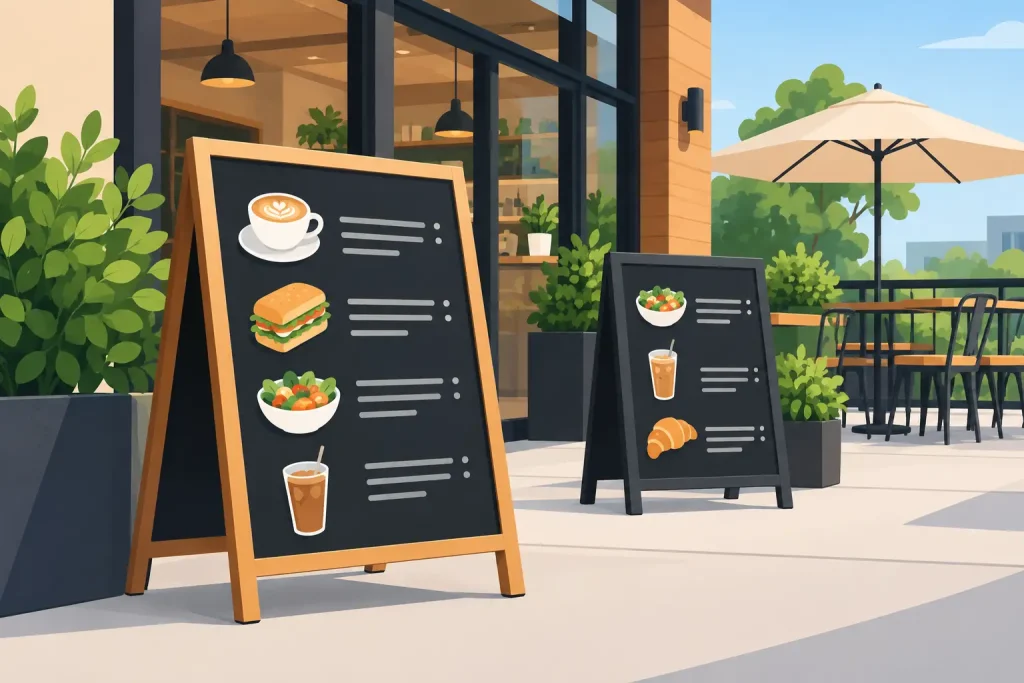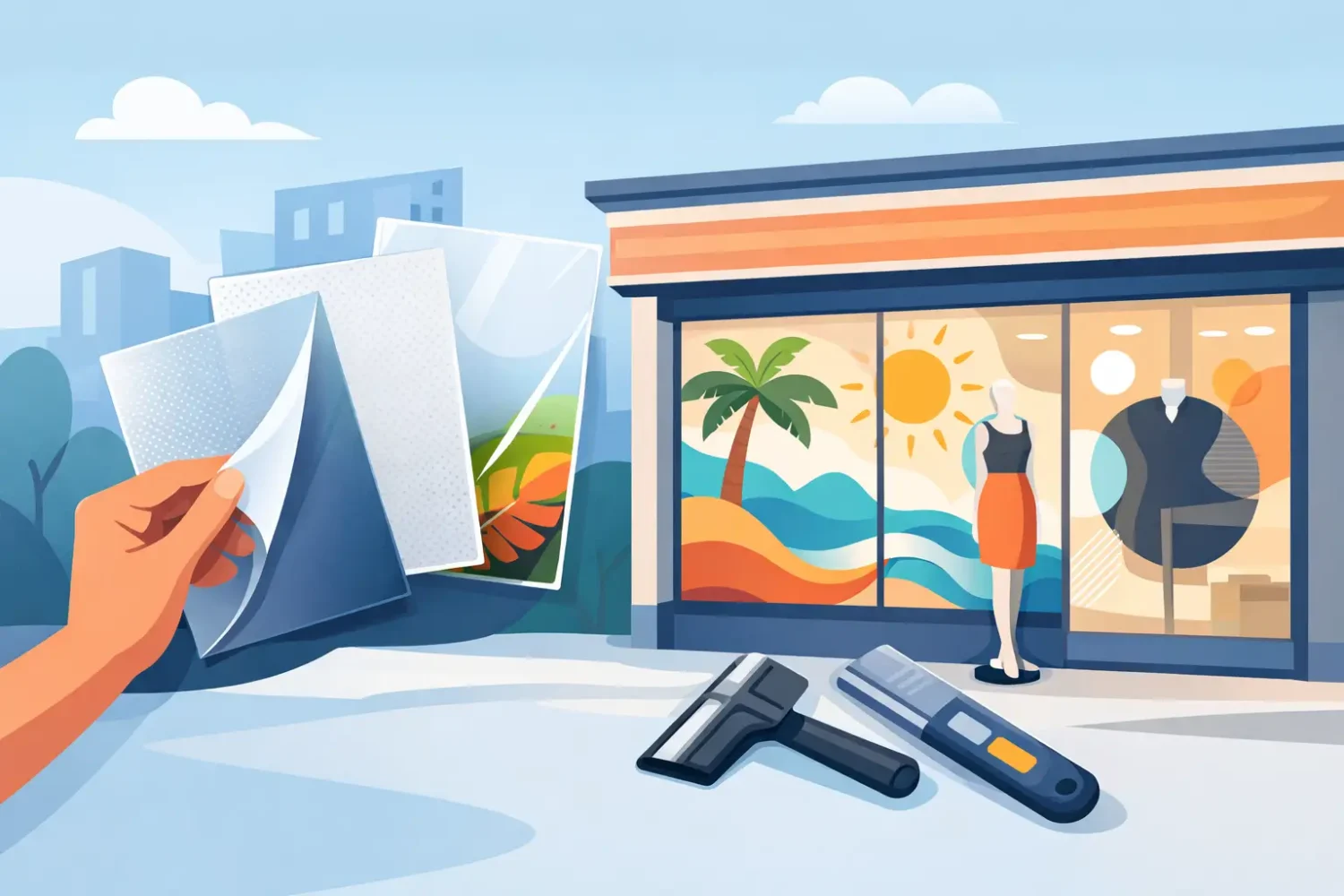
A storefront window is valuable advertising space, but the best window graphic materials depend on what the graphic must do. A one-week retail promotion, a permanent brand treatment, a privacy panel, and a full-window product image require different films, adhesives, and print finishes. Choosing by appearance alone can lead to poor readability, difficult removal, trapped bubbles, or graphics that fade before the campaign ends.
For business buyers, the practical decision starts with four questions: Is the graphic applied inside or outside the glass? How long will it remain in place? Does it need to let light or visibility through? And will the graphic be removed, replaced, or updated regularly?
Best Window Graphic Materials by Application
There is no single material that suits every glass surface. The material should match the campaign duration, viewing direction, cleaning conditions, and installer access. For retail windows, the visual requirement also matters: some graphics need bold, opaque coverage, while others must maintain a clear view into the store.
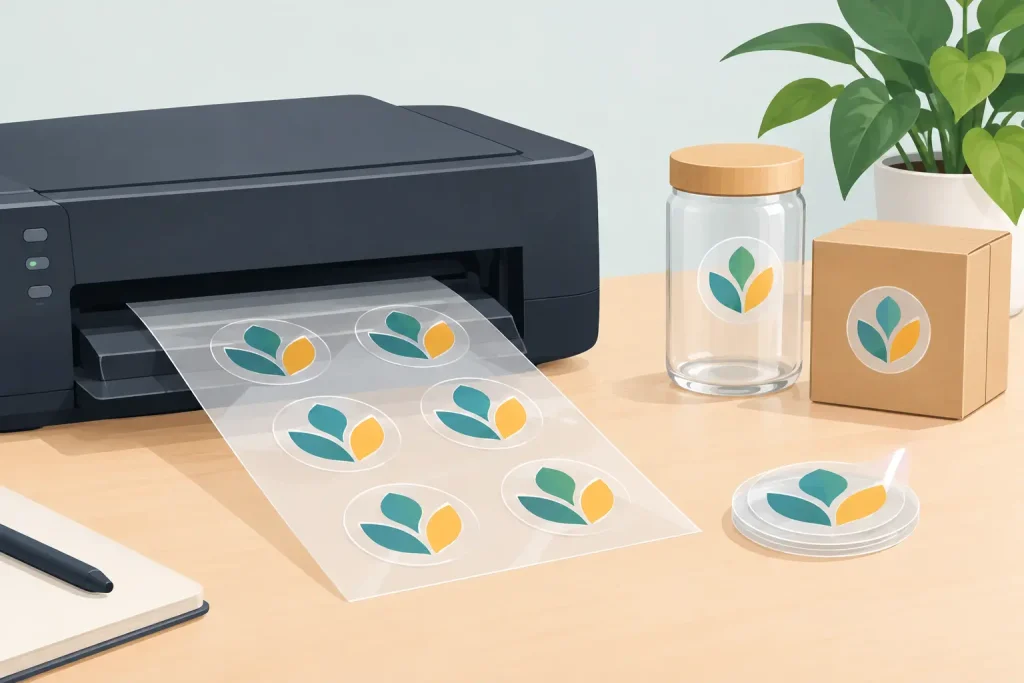
Clear vinyl for glass labels and transparent designs
Clear vinyl is used when the glass itself should remain visible around the design. It works well for logos, business hours, directional markings, safety notices, and product decals where white ink or a white backing layer can define selected artwork.
Without white ink, printed colors on clear vinyl can appear translucent, especially against bright interiors or daylight. This can be useful for a subtle effect, but it is not the right choice for high-impact window advertising. Clear vinyl is also sensitive to what sits behind the glass. A dark interior, shelving, or a moving background can change how the image reads from outside.
Use clear vinyl for permanent or medium-term branding where transparency is part of the design. Confirm whether the artwork needs white ink, spot white, or a full white flood layer before production.
White self-adhesive vinyl for bold promotional coverage
White self-adhesive vinyl is the standard choice for opaque window graphics. It produces strong color, clear text, and dependable contrast on storefront glass. It is suitable for sale announcements, new-store launches, seasonal campaigns, operating information, and branded panels.
The key choice is the adhesive. Permanent adhesive vinyl is better for long-term applications where removal is not expected soon. Removable adhesive vinyl is more suitable for campaign graphics that will change after a sale period, product launch, or event. Removable does not mean risk-free after extended exposure. Heat, direct sun, surface contamination, and the length of installation can make any adhesive harder to remove.
For a full printed window panel, white vinyl gives the most predictable output. It can be produced with solvent, eco-solvent, UV, or latex printing depending on the required finish, durability, and production workflow.
One-way vision film for retail windows
One-way vision film uses perforations to show a full image from the outside while allowing people inside to look out through the window. It is commonly used on shopfronts, office glass, vehicle windows, and interior-facing glazing where outside branding is required without completely blocking visibility.
This material works best when the outside is brighter than the inside. At night, the effect changes if the interior is brightly lit, so it should not be treated as a privacy solution. The perforated surface also reduces fine-detail clarity. Small text, thin lines, and dense product information can become difficult to read.
Use one-way vision film for large images, bold messages, and broad color fields. Keep critical copy large and place it away from window frames, handles, and heavily perforated viewing areas. A laminate may be appropriate for exposed exterior installations, depending on the film specification and expected service life.
Frosted film for privacy and premium branding
Frosted vinyl gives glass a sandblasted appearance without replacing the glass. It is a practical choice for meeting rooms, clinics, offices, salons, restaurants, and retail partitions. The material reduces direct visibility while still allowing natural light through.
Frosted film can be used as a full panel, cut lettering, stripes, patterns, or branded privacy bands. It is less suited to vivid photographic advertising because its value is texture and diffusion rather than color impact. For a more branded result, combine frosted areas with printed color, cut vinyl lettering, or clear sections.
For commercial interiors, frosted film often has a longer useful life than short-term promotional graphics. It should be applied to properly cleaned glass and measured carefully around doors, handles, joints, and existing safety markings.
Static-cling film for short promotions
Static-cling material adheres without conventional adhesive. It is intended for short-term graphics such as temporary offers, event notices, vehicle permits, and reusable window messages. It can be removed and repositioned more easily than adhesive vinyl when handled carefully.
Its limitation is holding power. Static cling performs best on clean, smooth glass in sheltered conditions. Heat, moisture, dust, textured surfaces, and frequent handling can cause edges to lift. It is not the preferred material for long outdoor campaigns or large panels exposed to wind and direct sun.
Choose static cling when easy removal and short usage are more important than maximum durability. It is especially useful when a business needs to update window messaging often without leaving adhesive residue.
Inside-Glass or Outside-Glass Installation
The installation side affects both durability and artwork setup. A graphic applied to the outside of glass is exposed to weather, cleaning, abrasion, and direct contact. It is easier to see in many situations, but it needs a material and finish rated for exterior exposure.
Inside-glass installation protects the graphic from rain and physical wear. However, the artwork must be printed in reverse if it is intended to be viewed from outside. Clear materials may also need a white ink layer so colors remain visible through the glass. This detail should be confirmed before printing, particularly for logos, text, QR codes, and directional graphics.
For high-traffic storefronts, inside-glass graphics can reduce maintenance. For windows with tint, reflective coatings, or heavy interior lighting, request a material recommendation or a small test piece before committing to a full run.
Print Method and Finish Matter
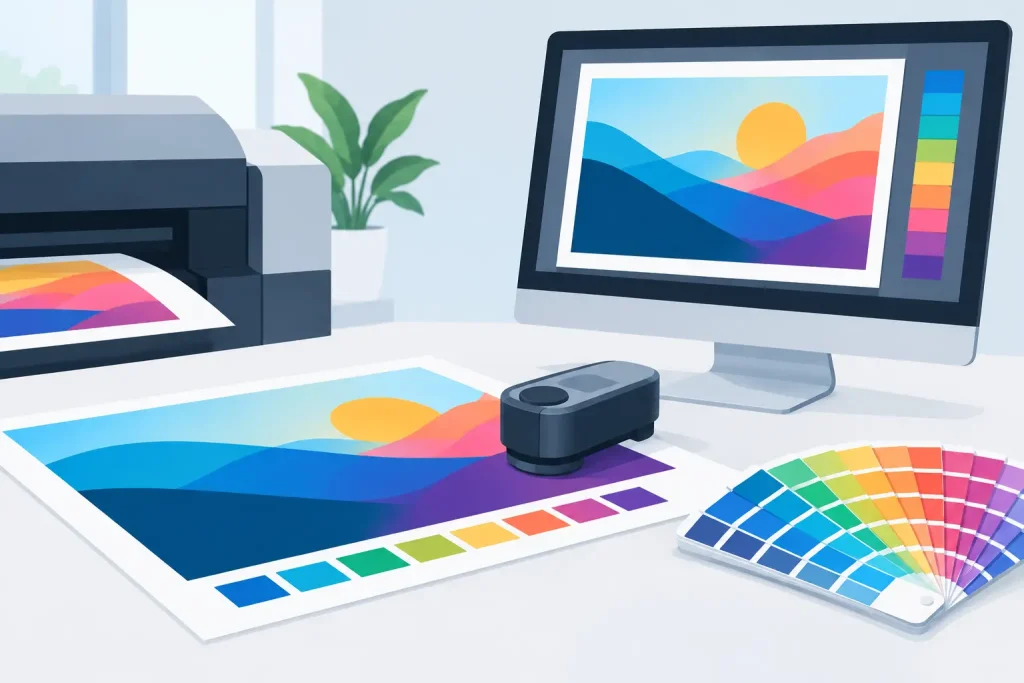
Material selection is only part of the job. Print technology and finishing affect color, scratch resistance, drying time, and outdoor performance. Eco-solvent and solvent printing are commonly used for vinyl graphics and can provide durable color for commercial signage. UV printing offers strong ink adhesion and can support selected specialty substrates. Latex printing is useful where low odor and fast finishing are priorities, especially for interior retail and office projects.
Lamination can add protection against scratches, moisture, and cleaning. Gloss laminate increases color intensity but can create glare on glass. Matte laminate reduces reflections and is easier to read under strong lighting, although colors appear less glossy. For one-way vision film, use only a compatible laminate if the application requires it, as an incorrect finish can block perforations or affect visibility.
Do not specify a laminate automatically. A short indoor campaign may not need one. A street-facing graphic near door handles, carts, or regular cleaning usually benefits from added surface protection.
Artwork Rules for Window Graphics
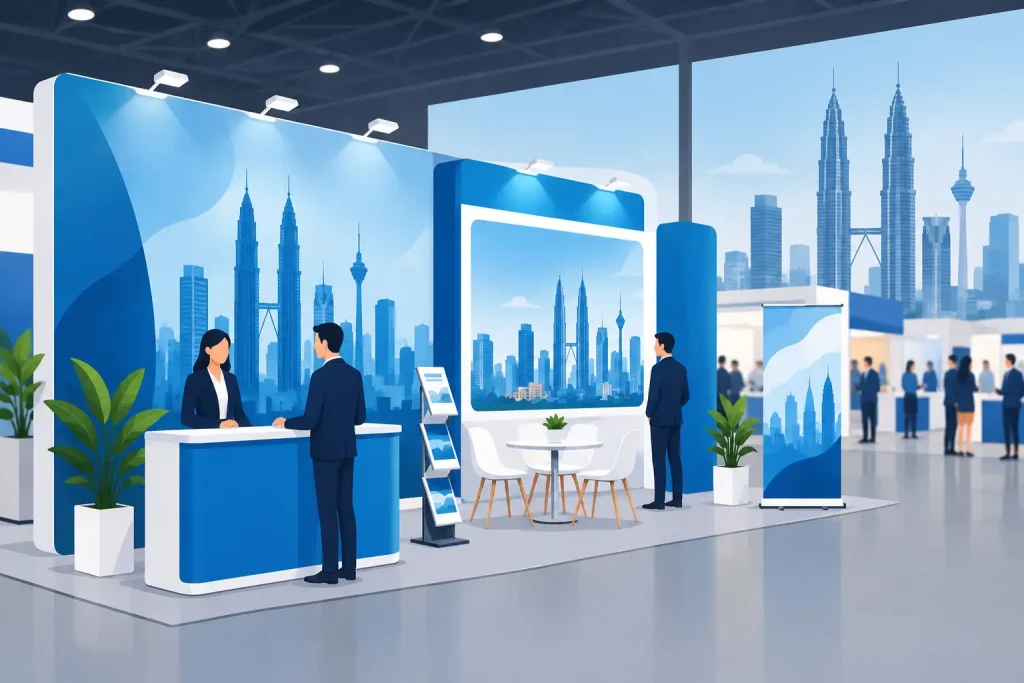
Window graphics are often viewed at an angle, through reflections, or from across a parking area or walkway. Designs that look detailed on a monitor may not work at storefront distance. Use strong contrast, large type, and a clear primary message. For promotional windows, one offer and one call to action are usually more effective than a crowded product list.
Avoid placing essential text over perforations, door seams, handles, or dark interior areas. If the window includes multiple panes, account for mullions and gaps in the artwork. A measurement taken only from the overall glass width can produce a logo split across a frame.
For a chain rollout or multi-location campaign, standardize the material, finish, panel sizes, and installation instructions. This reduces color variation and makes replacement graphics easier to reorder.
Choosing the Right Material for the Job
For bold retail promotions, removable white vinyl is usually the most practical starting point. For graphics that need outside visibility from inside the store, one-way vision film is the better fit. For offices and glass partitions, frosted vinyl provides privacy with a clean professional finish. For temporary notices, static cling keeps changeovers simple. Clear vinyl is best when the design depends on transparency or when printed elements need to sit directly on visible glass.
The best result comes from specifying the job before selecting the substrate: campaign duration, installation side, required visibility, lighting conditions, print method, and removal plan. My Inkjet can match these production details to the intended display use, whether the requirement is a single storefront panel or coordinated graphics for a wider retail campaign.
Before sending artwork to print, inspect the actual glass, photograph the viewing conditions, and confirm the installation timeline. That small step prevents the most common material mismatch and helps the finished window graphic work as hard as the space it occupies.
Related Posts