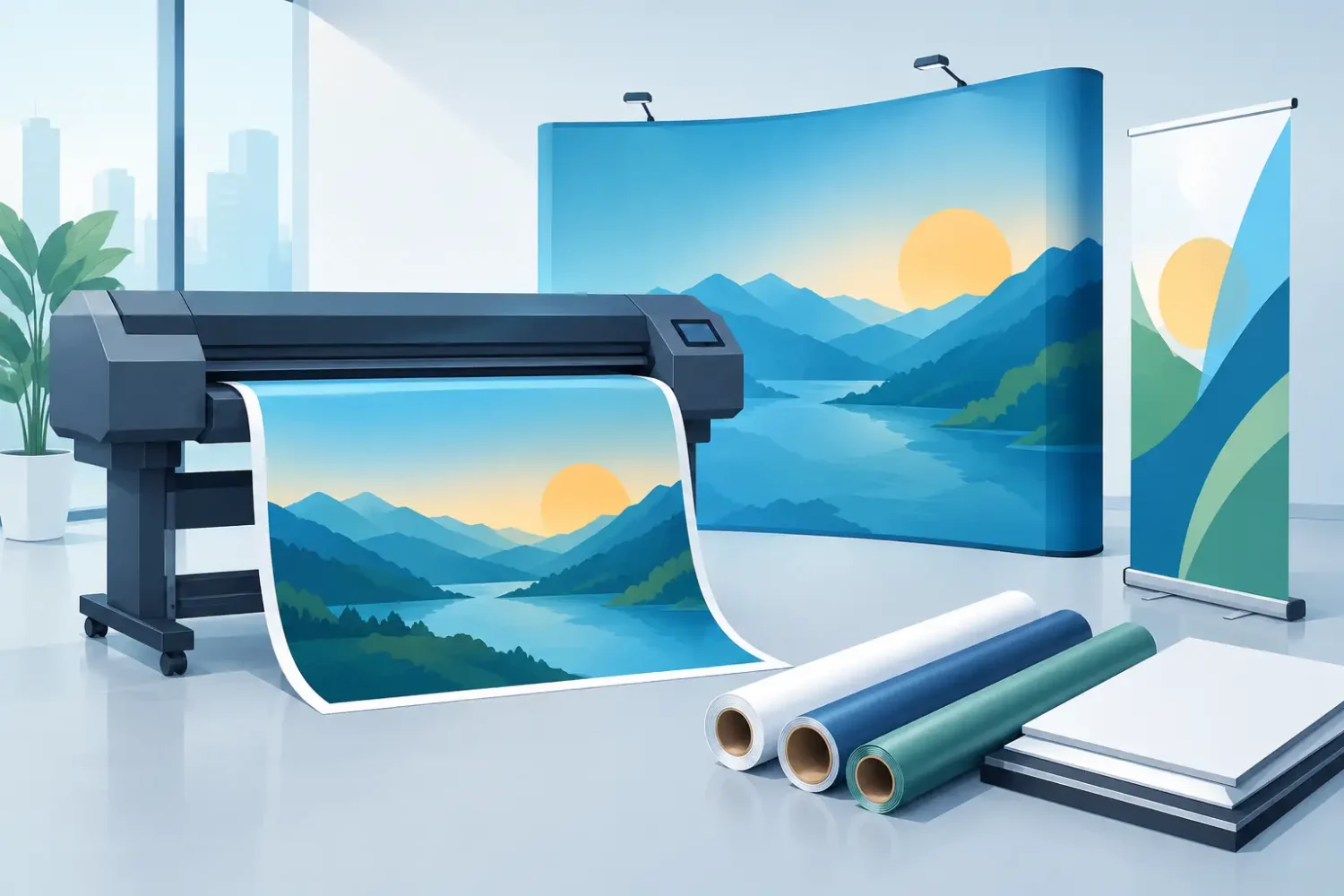
A roll-up stand can look sharp in a meeting room and fail quickly at an outdoor roadshow. A window graphic may need to let light through, while a promotional counter needs a rigid face that stays flat through repeated setup. Large format materials are not interchangeable. The right choice depends on where the graphic will be used, how it will be viewed, which display hardware it fits, and how long it needs to perform.
For marketing teams, retail operators, and event buyers, material selection affects more than appearance. It changes print quality, installation time, transport requirements, durability, and replacement cost. Selecting the substrate after the artwork is approved often creates avoidable compromises. Start with the job environment and the display format, then match the print material and production method to that requirement.
What Large Format Materials Need to Do
Large-format printing covers a broad set of applications: roll-up banners, popup backdrops, beach flags, wall graphics, lightbox visuals, point-of-sale boards, storefront stickers, barricade covers, and exhibition counters. Each application places different demands on the printed material.
Indoor graphics generally prioritize image quality, flatness, finish, and close-range readability. A retail promotion mounted on a wall or counter is often read from a few feet away, so sharp text, clean color, and a suitable surface finish matter. Outdoor graphics need greater resistance to moisture, sunlight, wind, and handling. For a long event period, a material that looks good on day one but curls, tears, or fades early is not a cost-saving choice.
Viewing distance matters as well. A large exhibition backdrop is commonly viewed from several yards away, where bold imagery and high-contrast messaging work well. A product label, menu panel, or shelf display is viewed much closer and needs finer text reproduction. The material cannot fix a poor artwork file, but it can support the intended level of detail when paired with the right print process.
Selecting Large Format Materials by Application
The most practical way to choose is to begin with the finished display rather than the substrate name. Determine whether the item is temporary or long-term, indoors or outdoors, fixed or portable, illuminated or non-illuminated.
Roll-Up Stands, Popups, and Portable Displays
Portable systems need graphics that roll, retract, pack, and travel without excessive edge wear or surface damage. PVC banner media remains a common option for roll-up stands because it is durable, opaque, and suitable for high-impact promotional graphics. The important detail is compatibility with the stand mechanism. A banner with the wrong thickness, weight, or finish may not retract cleanly or may show curl after repeated use.
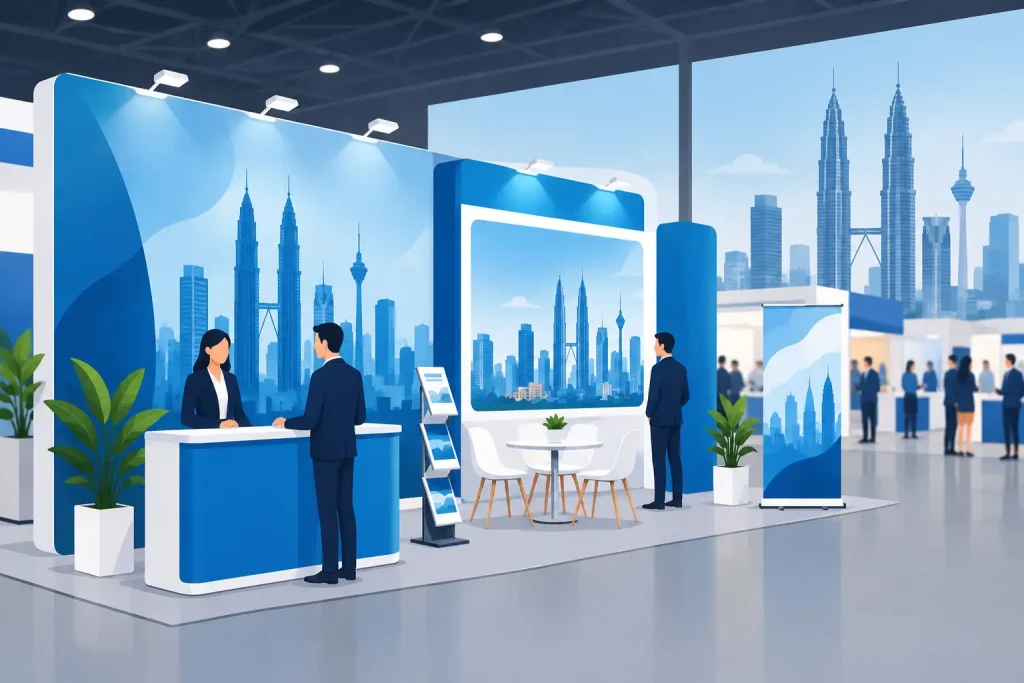
Popup displays require panels that remain flat and align correctly across the frame. The graphic should be selected together with the specific popup system, including its attachment method and panel dimensions. Buyers should also consider whether the display will be updated often. Replaceable graphic panels can be more economical than ordering a new complete system for every campaign.
For roadshows and short-term promotions, portability often matters more than maximum outdoor life. A lighter material can reduce handling effort and freight costs, but it may be less suitable for a long-term exterior installation. This is a standard trade-off, not a defect.
Outdoor Banners, Beach Flags, and Barricades
Outdoor displays face changing conditions. Wind places stress on flag fabric, pole pockets, grommets, hems, and banner edges. Rain can affect mounting points even when the printed material itself is water-resistant. Direct sun can reduce color intensity over time, especially on graphics with strong reds, blues, and dark photographic areas.
Beach flags typically use fabric printed by dye sublimation. This process is well suited to fabric applications because the color becomes part of the textile rather than sitting as a surface layer. It supports movement, foldability, and visibility from both sides when the material and print construction are specified for that purpose.
PVC banner material is widely used for outdoor promotion, temporary fencing, and barricade graphics. Finishing is as important as the print. Reinforced hems, grommets, pole pockets, or tensioning details should be chosen according to the installation method. A large banner secured only at a few points can fail in wind regardless of print quality.
Retail Boards, Counters, and Rigid Signage
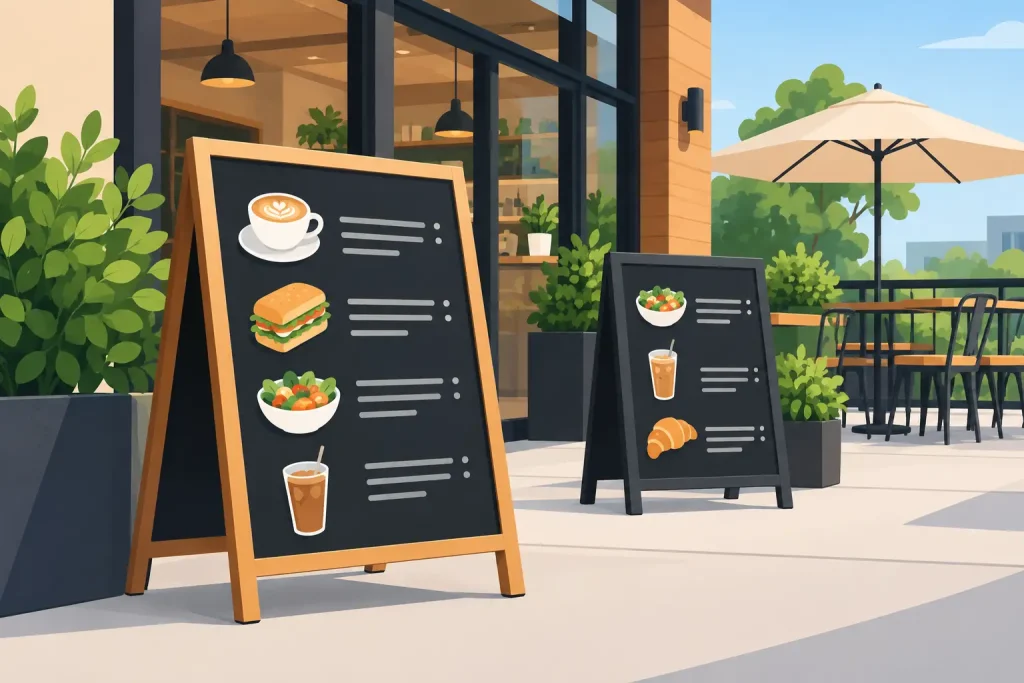
Rigid substrates are useful when a display needs structure. Foam board, KT board, and similar mounted panels are common for price promotions, counter signage, directional displays, and temporary retail graphics. They are easy to position and can provide a clean presentation indoors, but they are not intended for harsh or wet environments unless a suitable protective treatment and mounting solution are used.
For counters and point-of-sale units, consider the expected contact level. A graphic face in a busy store may be touched, cleaned, and bumped throughout the day. A laminated or protected surface can be worthwhile where abrasion and fingerprints are expected. Matte finishes reduce glare under retail lighting, while gloss can make colors appear more vivid. Neither is automatically better. The decision depends on lighting, brand style, and reading distance.
Stickers, Window Graphics, and Specialty Promotions
Sticker materials allow brands to use glass, packaging, product surfaces, and fixtures as advertising space. PP white sticker media is a practical choice for many promotional labels and short-term graphic applications. Transparent stickers are useful when the background surface should remain visible, while hologram and matte silver options create a more distinctive product or campaign finish.
The substrate should support the desired effect rather than compete with it. Transparent material works best when artwork uses strong contrast and purposeful white ink where needed. Metallic and holographic surfaces can make simple logos or short promotional messages stand out, but detailed images and small text may become harder to read if the reflective finish overwhelms the design.
Window graphics require another decision: whether the customer must see through the glass, whether light should enter, and whether the graphic is viewed mainly from inside or outside. Installation conditions matter too. Glass must be properly cleaned, and the artwork should account for door frames, handles, seams, and sight lines.
Match the Material to the Print Method
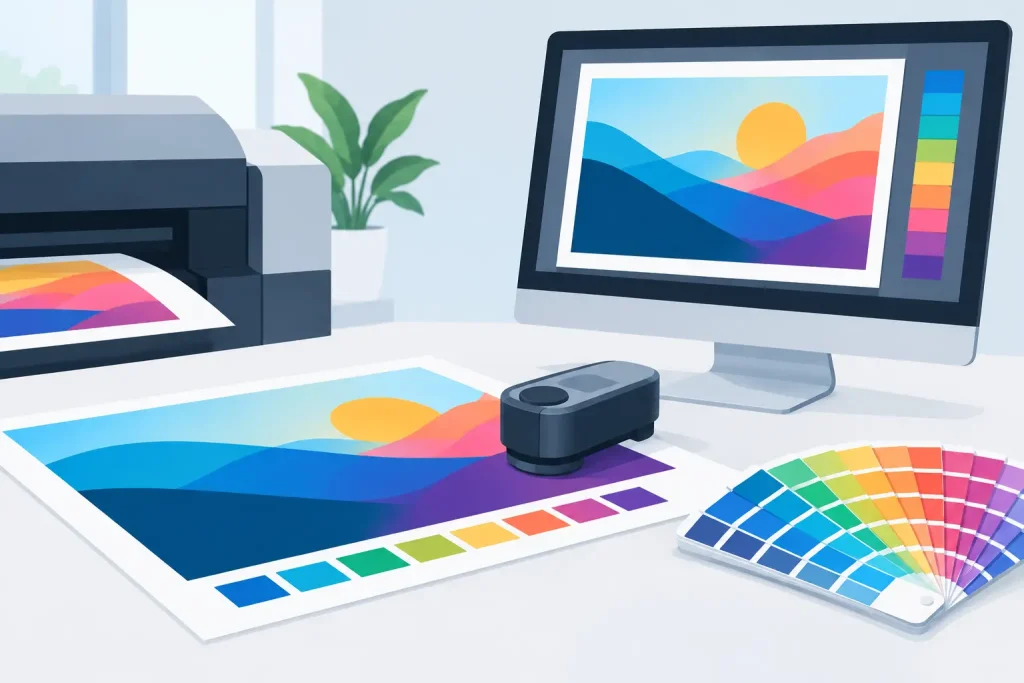
Print technology affects color, finish, durability, and material compatibility. A supplier should recommend the print method based on the application instead of treating every file as the same production job.
Solvent and eco-solvent printing are commonly used for vinyl, banners, and other flexible graphics. They are practical choices for many indoor and outdoor promotional formats. Eco-solvent output is often selected where lower odor and indoor production considerations are relevant, though job requirements and curing time should still be reviewed.
UV printing cures ink directly on the printed surface. It is useful for rigid boards and specialty materials, where direct printing can reduce the need for separate mounting. UV output can deliver strong color and crisp graphics, but the surface characteristics of the board or media should be checked before production.
Latex printing is suitable for a wide range of display graphics and can provide good color performance for indoor applications, retail visuals, and selected outdoor uses. Dye sublimation is the standard choice for fabric-based formats such as textile backdrops and flags. Its advantage is flexibility and a softer fabric finish, which is difficult to achieve with conventional vinyl graphics.
A print method should be selected with the finish and installation in mind. For example, a backlit LED light frame needs media designed to distribute light evenly. Standard banner material may create hotspots or dull areas once illuminated. Similarly, an outdoor banner needs ink performance and finishing that match its expected exposure period.
File Preparation and Finishing Affect the Result
Material selection starts before printing, but production details decide whether the final display looks professional. Supply artwork at the required scale and resolution. Large displays do not always need extremely high-resolution files, since they are often viewed from farther away, but low-quality source images will still show pixelation when enlarged.
Include bleed where trimming is required, and keep critical text away from edges, hems, grommets, and frame channels. For popup panels, roll-up stands, and fabric systems, the visible area may differ from the full print size. A logo placed too close to the bottom can disappear into a stand cassette. A price message placed over a seam can become difficult to read.
Finishing should be specified as part of the order: cutting, contour cutting, lamination, mounting, eyelets, hemming, welding, pole pockets, or frame fitting. These are operational details, but they determine whether the printed item is ready to install when it arrives.
Plan for Reuse, Storage, and Replacement
A display bought for one event may be used again for future campaigns, but only if the material and hardware are suited to reuse. Roll-up graphics should be stored in their cases. Fabric displays should be folded cleanly and kept dry. Rigid boards need protection from bent corners and pressure marks. Adhesive graphics may not be reusable after removal, so they should be treated as campaign-specific items.
For repeat programs across stores, exhibitions, or regional launches, standardizing formats can reduce ordering errors. Using the same counter size, roll-up stand model, or light frame specification makes it easier to update graphics without replacing hardware. My Inkjet can support this approach by combining display hardware, print production, and finishing under one order process.
The best material is the one that performs in the real installation, not simply the one with the lowest unit price. Confirm the display format, environment, print method, finishing, and expected lifespan before artwork goes to production. That check takes a few minutes and can prevent a campaign from arriving with graphics that are technically printed but not ready to work.
Related Posts