A backdrop that looks good on a screen can fail on the event floor for simple reasons: glare from venue lights, visible folds, an oversized shipping carton, or a graphic that does not suit its display frame. In the fabric backdrop vs vinyl backdrop decision, the right material depends less on which one is generally better and more on where it will be used, how often it will travel, and the finish your campaign requires.
For exhibition booths, retail launches, media walls, roadshows, and point-of-sale displays, fabric and vinyl serve different practical purposes. Both can produce strong branded graphics. The difference is in handling, surface appearance, installation, and expected working life.
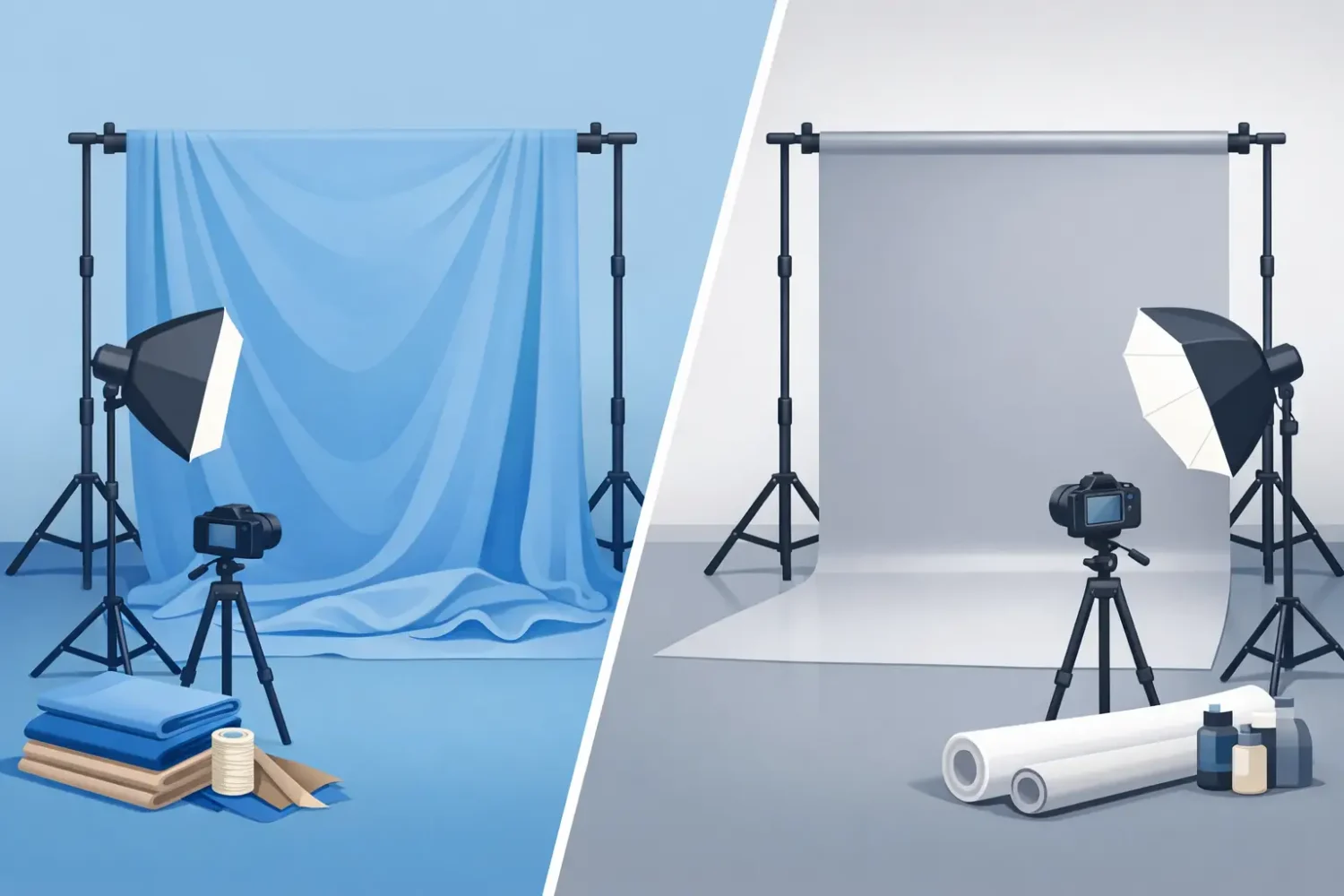
Fabric Backdrop vs Vinyl Backdrop: Main Differences
Fabric backdrops are usually printed polyester textiles, commonly through dye sublimation for full-color graphics with a soft, non-reflective finish. They are often fitted to tension frames, pillowcase-style exhibition frames, popup systems, or hanging structures. The material is lightweight, folds for packing, and gives a more finished appearance than a standard banner substrate.
Vinyl backdrops use PVC-based banner material or similar printable films. They are commonly printed using solvent, eco-solvent, UV, or latex printing, depending on the required finish, ink system, and production setup. Vinyl can be supplied as a flat banner, mounted graphic, roll-up stand print, popup panel, outdoor banner, or temporary wall display.
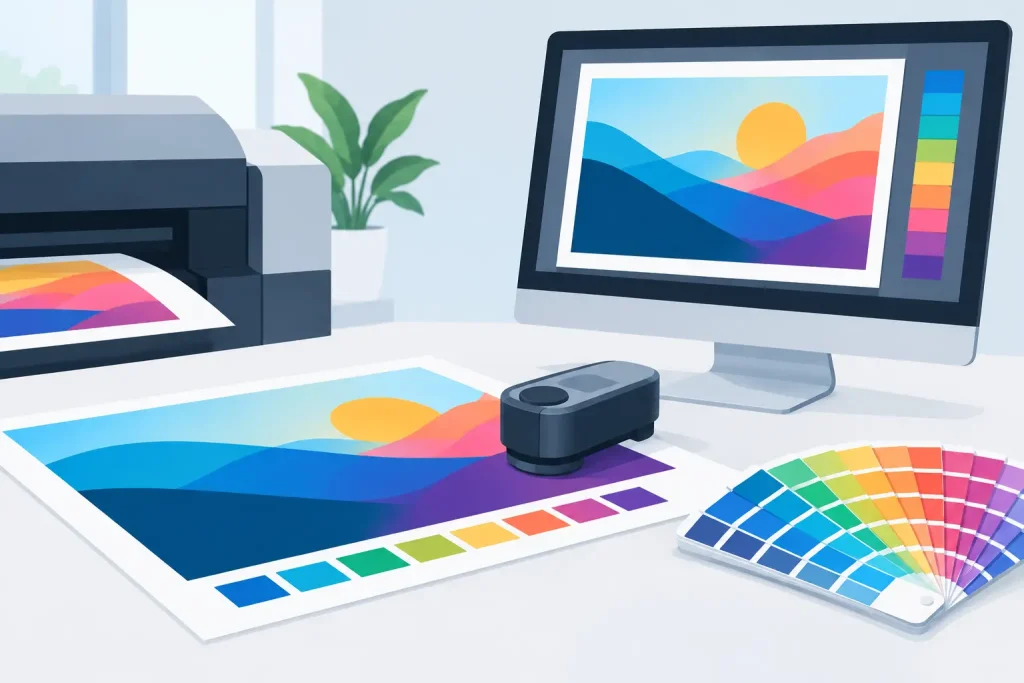
The first decision point is the visual effect. Fabric has a matte textile surface that handles direct lighting well. Vinyl has a smoother, denser surface and can deliver sharp graphic detail and strong color, but gloss or semi-gloss materials may reflect spotlights and camera flashes. A matte vinyl reduces this issue, although it will still not have the same textile appearance as fabric.
Choose Fabric for Premium Indoor Displays
Fabric is usually the stronger option when the backdrop will be viewed at close range in an indoor environment. It works especially well for exhibition booths, corporate events, press walls, stage backgrounds, photo areas, and retail feature displays where the material itself is part of the presentation.
A dye-sublimated fabric graphic has color embedded into the textile rather than sitting as a surface layer. This produces a clean finish without the heavy plastic feel associated with some banner materials. It is useful for large visuals with gradients, photography, skin tones, or broad solid-color areas that need to look refined under exhibition lighting.
Another practical advantage is transport. Fabric can be folded into a carry bag, which is easier for teams moving between venues or shipping event materials with a frame. For repeat-use displays, this can reduce storage space compared with keeping large vinyl sheets rolled around cores.
Fabric also performs well when a graphic needs to wrap around a frame. Tension fabric systems pull the material tight across the structure, helping the backdrop stay smooth without visible panel joins or curled edges. For a branded wall behind a reception counter or a trade show booth, this creates a more integrated display than attaching a banner to a temporary surface.
There are limits. Fabric can absorb dirt and moisture more readily than vinyl, particularly at busy public events. It may need careful cleaning, and heavy stains can be difficult to remove without affecting the print. It is also not the first choice for exposed outdoor use, construction areas, food-service zones, or situations where the graphic may be handled roughly throughout the day.
When wrinkle resistance matters
Fabric is described as wrinkle-resistant, not wrinkle-proof. A folded fabric backdrop can show creases if it has been compressed for a long period or packed incorrectly. Tension frames remove many minor creases during installation, but a loose fabric banner or hanging drape may require steaming before use.
If the event crew needs a graphic that comes out of a tube, hangs quickly, and remains flat with minimal preparation, vinyl may be easier. If the backdrop is part of a fitted tension frame, fabric remains a highly practical choice because the frame does most of the smoothing work.
Choose Vinyl for Durable, Flexible Banner Work
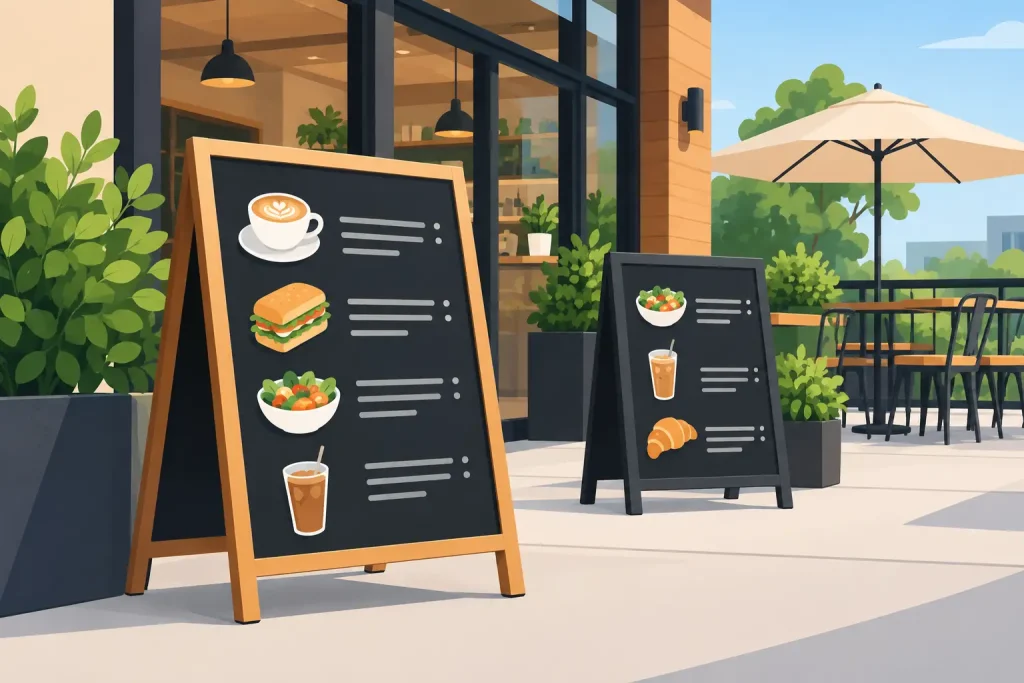
Vinyl is a workhorse material for commercial signage. It is suitable for temporary promotions, outdoor banners, storefront graphics, barricade displays, roll-up stands, campaign signage, and large flat-format prints where durability and easy wipe-down maintenance matter.
Because vinyl is available in different weights, finishes, and constructions, it can be matched closely to the display application. A smooth PVC banner may suit a promotional wall. A blockout material can prevent show-through when light is behind the graphic. A heavier outdoor banner can handle grommets, ropes, and more demanding installation conditions.
For retail operators and event teams, vinyl is often the more economical option for short-to-medium-term campaigns. It is straightforward to produce in standard sizes, easy to mount, and compatible with many display hardware formats. A vinyl graphic can also be rolled and stored in a protective tube, ready for the next activation.
Vinyl is generally easier to clean than fabric. Dust, fingerprints, and light surface marks can often be wiped away with an appropriate soft cloth. That makes it useful for mall promotions, sampling booths, outdoor events, and high-contact environments where the backdrop may be touched, moved, or exposed to spills.
The trade-off is appearance. Vinyl can look highly professional, especially with a matte finish and proper mounting, but it does not create the same soft, premium visual effect as a fabric wall. Creases from folding can also be permanent or difficult to remove. Vinyl should normally be rolled, not folded, during transport and storage.
Outdoor and high-use conditions
For outdoor use, vinyl is normally the more reliable starting point. It resists moisture better, handles grommets and tensioning well, and is available in materials designed for wind, light exposure, and regular handling. The full specification still matters. A thin indoor vinyl print is not automatically suitable for an outdoor fence or roadside promotion.
Fabric can be used outside in selected display systems, but it requires more planning. Wind, rain, dirt, and repeated packing can shorten its usable life. For a campaign that moves between indoor and outdoor locations, a vinyl banner or a purpose-built outdoor display graphic is usually the lower-risk choice.
Print Quality, Color, and Lighting
Both materials can carry strong branding, but their print behavior differs. Fabric printed through dye sublimation produces a matte finish with softer color absorption and no harsh glare. It is a good match for illuminated exhibition halls, photo backdrops, and displays where visitors will stand close to the graphic.
Vinyl supports several print production methods, including eco-solvent, solvent, UV, and latex. This gives buyers more flexibility when choosing between indoor graphics, durable banners, mounted prints, and specialty display requirements. UV printing can provide crisp detail and strong surface color, while latex and eco-solvent options are often specified for particular indoor and signage applications.
Do not select only by resolution. A high-resolution file printed on the wrong material can still look unsuitable. A dark photographic backdrop on glossy vinyl may show unwanted reflections. A simple logo wall with large type may not need the refined surface of fabric if it is only being used for a one-day outdoor activation.
Request the material based on viewing distance as well. Close-view retail graphics benefit from clean detail and a controlled finish. Large stage backdrops are usually viewed from farther away, where scale, color contrast, and proper tension matter more than tiny image detail.
Hardware Changes the Material Decision
The backdrop hardware should be chosen with the graphic, not afterward. Fabric is commonly paired with aluminum tension frames, popup fabric systems, and lightweight event structures. Vinyl works across roll-up stands, PVC popup panels, banner frames, barricade systems, and hanging banners.
For example, a portable 10-foot media wall is often more efficient as a fabric tension display because the frame and graphic pack together cleanly. A retractable roll-up stand requires a banner-grade graphic designed for the roller mechanism, where vinyl or a suitable PP-based display film is generally more appropriate.
Check the finishing requirements before production. Vinyl may need hems, grommets, pole pockets, reinforced edges, or mounting tape. Fabric may need silicone edge beading for light frames, sewn pockets for poles, or a fitted perimeter for a tension frame. These details determine whether the graphic installs correctly and stays presentable through the campaign.
Cost, Reuse, and Ordering Priorities
Vinyl is often more cost-effective for straightforward banners and temporary promotional work. Fabric may carry a higher initial cost when paired with a tension frame system, but it can offer better presentation value for repeat exhibitions, client-facing events, and branded environments.
Reuse should be evaluated realistically. A vinyl banner reused carefully indoors may remain serviceable for multiple campaigns. A fabric display can also be reused many times, particularly when packed dry and handled properly. Neither material will last indefinitely if it is folded carelessly, stored in heat, or installed with unsuitable hardware.
When placing an order, provide the finished display size, intended hardware, installation location, event duration, and whether the graphic will be reused. These points allow the print material, finishing, and production method to be specified for the actual job rather than selected by appearance alone.
For a polished indoor brand wall, choose fabric when the budget and frame system support it. For durable banners, flexible sizing, outdoor work, and standard display hardware, vinyl remains the practical choice. Start with the installation conditions, then select the material that will still look right after transport, setup, and a full day of use.
Related Posts