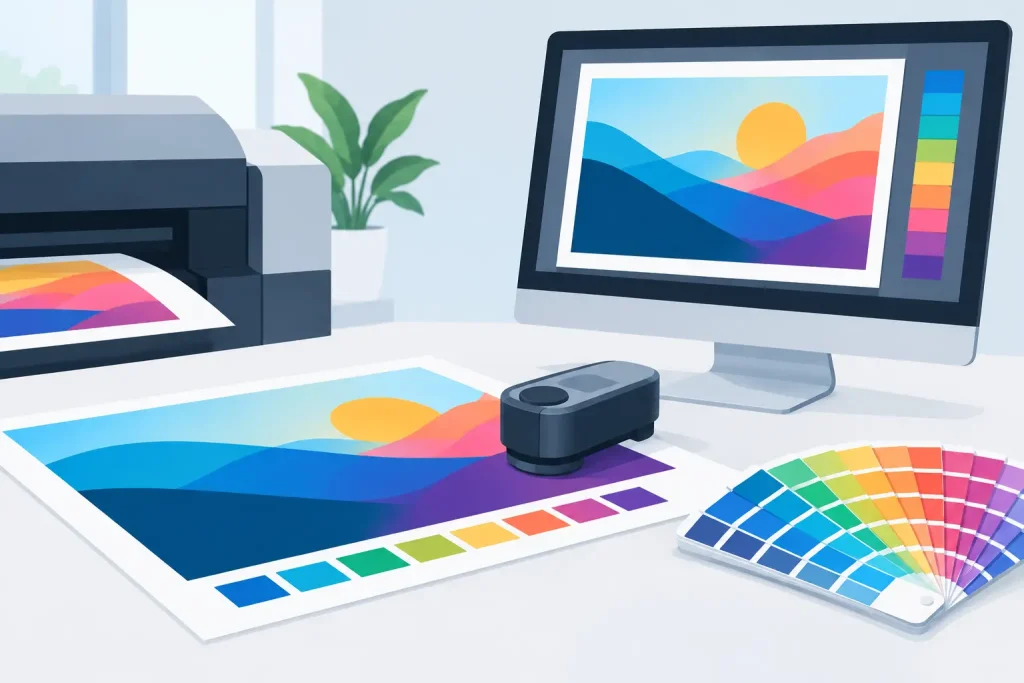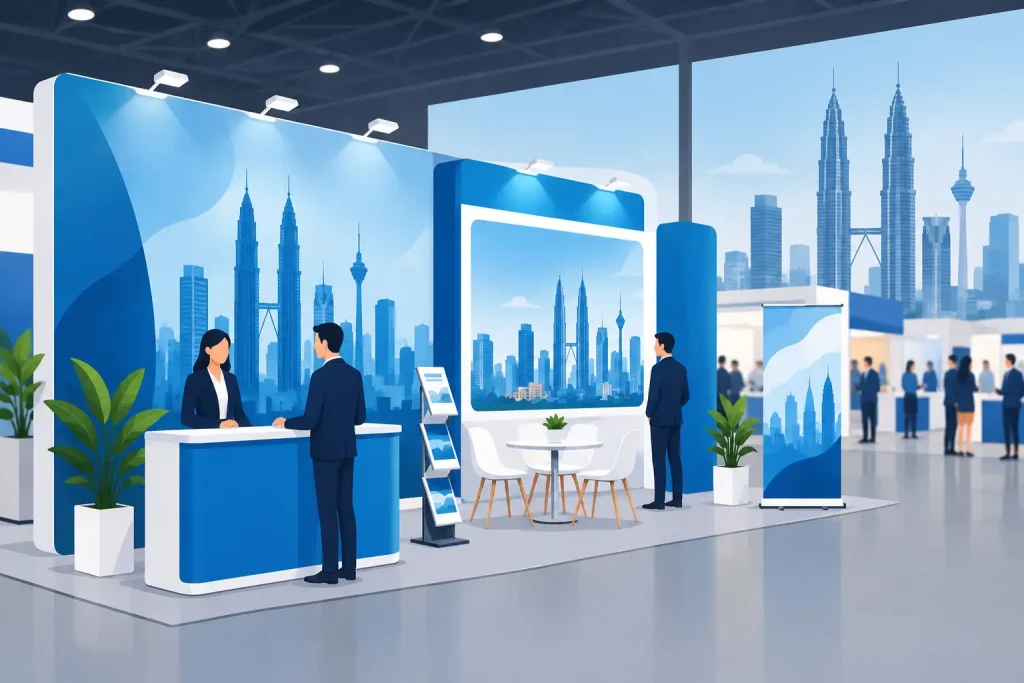
A display that looks sharp under exhibition hall lighting can fail quickly at a storefront, roadshow, or outdoor event. Indoor outdoor display material selection starts with the real operating conditions: how long the display will stay up, what it will face, how often it will move, and whether the graphic needs to be replaced. The right choice is not simply the heaviest material or the lowest print price. It is the combination of substrate, print method, finishing, and hardware that delivers a usable result for the campaign.
Start With the Display Environment
Indoor displays usually work in controlled spaces such as retail stores, malls, offices, exhibitions, and product launches. Their main requirements are clean print detail, color consistency, a professional surface finish, and easy installation. They may be viewed at close range, so scratches, curling edges, uneven mounting, and low-resolution artwork are easy to spot.
Outdoor displays face a different set of demands. Sun exposure, rain, wind, dirt, heat, moisture, and repeated handling all affect material performance. A short weekend activation may not require the same construction as a six-month storefront campaign, but it still needs materials that will remain readable and stable for the full event period.
Before selecting a product, define four practical points:
- The display location and expected weather exposure
- The campaign duration, from one day to several months
- The viewing distance and required image detail
- Whether the display will be fixed, moved, folded, rolled, or reused
These answers narrow the options quickly. For example, a close-viewed promotional counter graphic needs a clean, scuff-resistant finish, while a roadside banner needs tear resistance, secure hemming, and suitable mounting points.
Indoor Outdoor Display Material Selection by Format
The format often determines the material more than the artwork does. A large wall graphic, roll-up stand, light frame, flag, and rigid board all handle tension, light, and movement differently.
Roll-up stands and portable displays
Roll-up stands are commonly used for exhibitions, receptions, sales presentations, and temporary retail promotions. The graphic must roll in and out without excessive edge curl or surface cracking. PVC banner media is a standard choice because it has body, opacity, and good print coverage. For a more premium appearance, PP film may be suitable where the display will be used indoors and handled carefully.
The hardware matters as much as the print. A basic roll-up stand suits short campaigns and occasional use. For frequent travel or repeated setup, select stronger aluminum hardware and a graphic material that stays flat after multiple retractions. Saving on the stand can be a false economy if the mechanism damages the graphic after several events.
Popup displays and fabric backdrops
Popup displays need graphics that align correctly across panels or stretch evenly across a frame. Fabric is often a strong option for reusable backdrops because it is lighter to transport, reduces glare, and can be folded for storage. Dye sublimation printing is especially useful for polyester fabric because the ink becomes part of the material rather than sitting as a surface layer.
PVC or film-based popup graphics can produce strong color and crisp detail, but they require more careful packing and are more likely to show scratches or creases. Fabric is usually the better choice for a large branded background that will travel between events. Film panels may be preferable when the artwork includes fine product images, small text, or a high-gloss retail look.
Outdoor banners, barricades, and building-facing graphics
Outdoor banners require a material that can withstand tension and weather while remaining legible from a distance. PVC banner media is widely used for this purpose because it is durable, printable, and compatible with hems, eyelets, and reinforced edges. Mesh banner is a better option where wind passes through the display, such as fencing, scaffolding, and exposed barricades. Its perforated construction reduces wind load, although the image will not appear as solid at close range.
Do not choose a solid banner solely because the artwork looks richer on screen. On an exposed site, wind pressure can tear eyelets, pull hems apart, or damage the supporting frame. The hardware, spacing of fixing points, and banner tension should be specified together.
Beach flags and moving outdoor signage
Beach flags are designed to attract attention through movement. Polyester fabric is the standard choice because it is lightweight and works well with dye sublimation printing. The print can be visible on both sides, depending on the fabric construction and print configuration, while the material flexes with the pole and wind.
A rigid film or PVC graphic is not suitable for this format. It does not move correctly, adds unnecessary weight, and may fail under repeated flexing. For beach flags, base selection is also material selection in practice. Ground spikes, cross bases, water bases, and plate bases should match the surface and wind conditions.
Rigid boards, counters, and point-of-sale displays
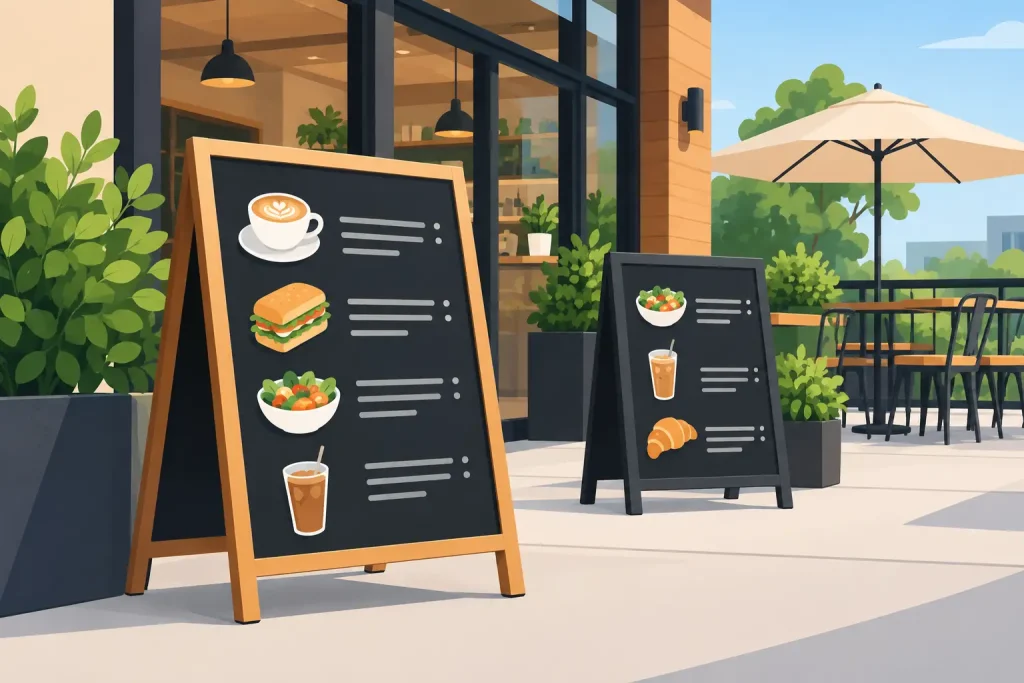
KT board, foam board, PVC board, and similar rigid materials suit indoor directional signs, price boards, product promotions, photo displays, and short-term point-of-sale use. They offer a flat print surface and fast installation. KT board is lightweight and economical, but it is not intended for wet areas, long-term outdoor exposure, or heavy handling.
PVC board provides more durability and moisture resistance than foam-based board, making it useful for semi-permanent retail signage, menu boards, and displays that need a stronger substrate. For counters and freestanding structures, the printed skin and the supporting hardware should be selected as a set. A well-printed panel still looks poor if the counter edges lift or the frame is unstable.
Match the Print Method to the Material
Material choice and print technology should not be treated as separate purchasing decisions. Different print methods suit different surfaces, production schedules, and display conditions.
Eco-solvent and solvent printing are common for PVC banners, self-adhesive vinyl, and outdoor graphics. They offer practical durability for signage and promotional work. UV printing is useful for rigid boards and specialty substrates because it cures quickly and can produce strong detail on flat materials. Latex printing is suitable for many indoor and outdoor applications where low odor and fast turnaround are useful. Dye sublimation is the natural fit for polyester fabric displays, flags, and textile backdrops.
Print resolution should match viewing distance. A counter card or close-viewed sticker benefits from fine detail. A large building banner does not need tiny text or product copy that cannot be read from the street. Simplifying the design can reduce production risk and improve the final display more effectively than specifying a higher-resolution file alone.
Choose Surface Finish for Use, Not Just Appearance
Gloss, matte, and specialty finishes change both the look and the service life of a display. Gloss can make colors appear more vivid, but reflections may reduce readability under spotlights, shop windows, or direct sunlight. Matte finishes reduce glare and are often better for presentation boards, indoor posters, and text-heavy displays.
Lamination can add scratch resistance, moisture protection, and a more finished feel to printed film. It is particularly useful for frequently handled graphics, such as counters, menu panels, stickers, and retail signage. However, lamination adds cost and may not be necessary for a single-use indoor board or a short event banner.
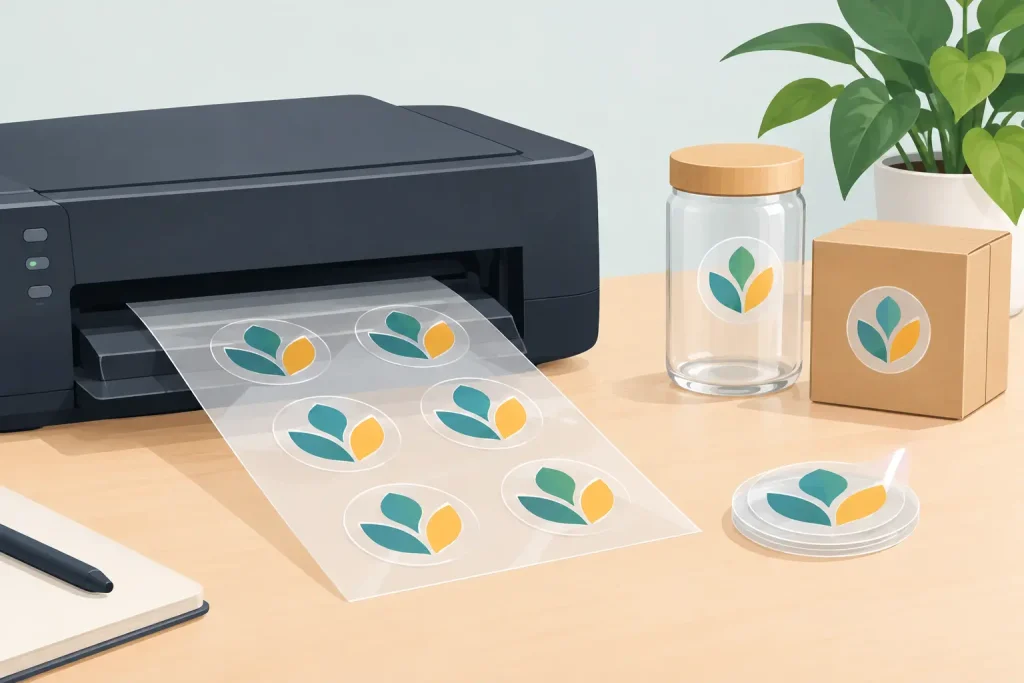
For stickers and labels, select the face material based on the surface and application. PP white, transparent, hologram, matt silver, synthetic, and Mirrorkote stocks each create different results. Transparent sticker material works best when the applied surface is clean and the design accounts for what will show through. Matt silver and hologram materials are more suitable for promotional labels or packaging applications where the substrate itself is part of the visual effect.
Plan for Installation, Replacement, and Storage
The most suitable material can still underperform if installation is overlooked. Adhesive graphics need a compatible surface that is clean, dry, and properly prepared. Banner graphics need the correct eyelets, hems, pockets, or tensioning method. Light frame graphics need material with appropriate light diffusion so that bright spots and shadows do not appear across the image.
Replacement requirements also affect the decision. If a retail campaign changes every month, use a system with replaceable graphic inserts rather than rebuilding the entire display. LED light frames, snap frames, fabric systems, and certain popup structures can reduce replacement time and keep the hardware in service across multiple campaigns.
Storage is a cost factor, not an afterthought. Fabric backdrops fold compactly, while rigid boards need protected flat storage. Roll-up graphics stay protected inside their hardware but should be transported in a suitable carry case. Outdoor banner material can be reused if it is cleaned, dried, and rolled rather than folded along hard creases.
Specify the Full Display System
A material specification should cover more than the printed face. Confirm the display size, final trim, print method, surface finish, mounting method, hardware type, and intended usage period before production begins. This avoids common problems such as a banner arriving without suitable fixing points, a board being too thin for its stand, or a light frame graphic showing unwanted glare.
My Inkjet can supply display hardware alongside printed graphics, which makes it easier to match roll-up stands, popup displays, beach flags, counters, LED light frames, frames, and boards to the correct print production method. For procurement teams, that reduces handoffs between hardware and print suppliers.
The practical choice is the material that remains presentable for the campaign, fits the hardware correctly, and does not add cost for performance the display will never need. Specify the environment first, then build the print and finishing decision around it.
Related Posts