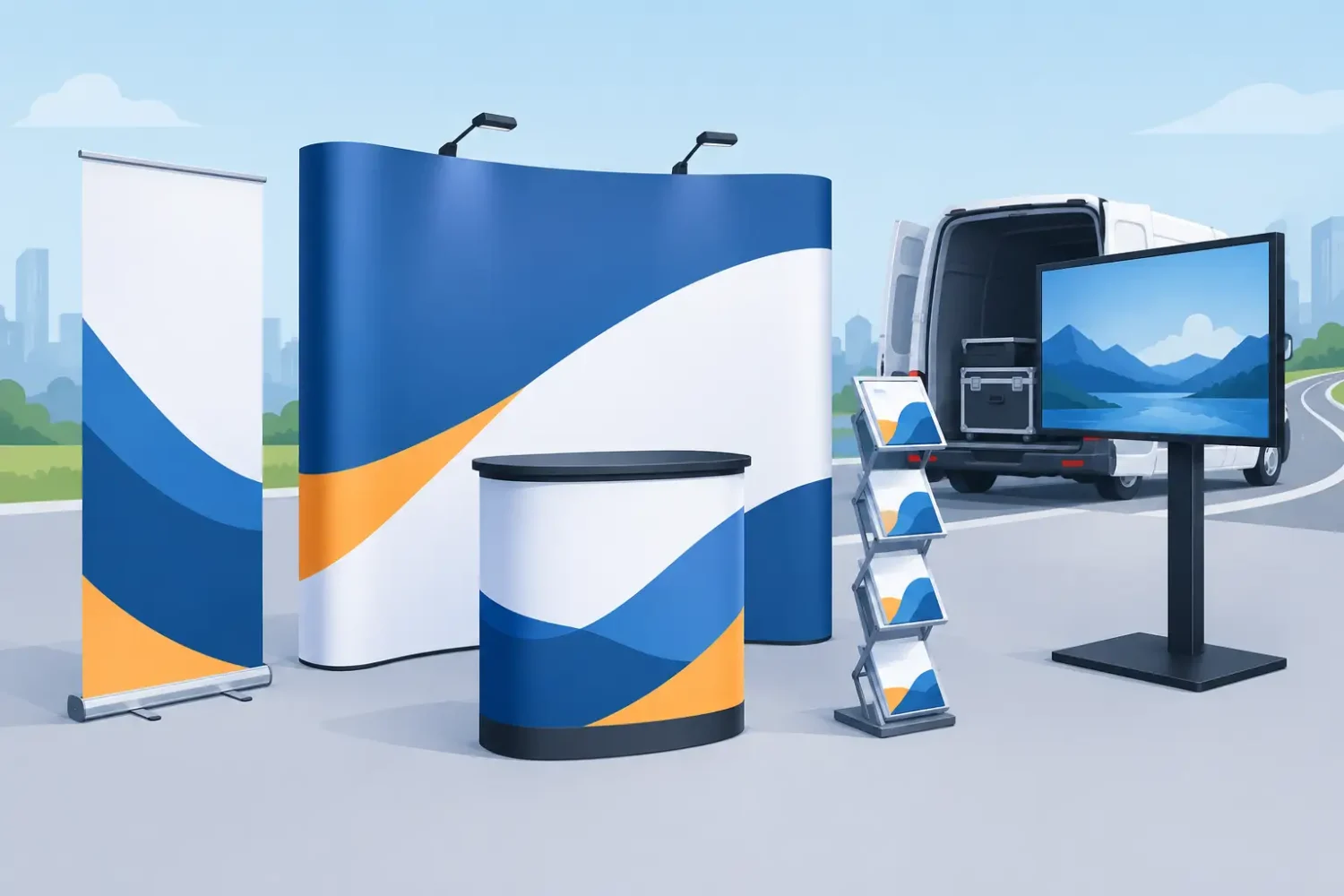
A roadshow display has to do more than look good in a product photo. It must fit the vehicle, move through loading areas, set up without specialist labor, and still present a clean brand image under venue lighting. The top portable displays for roadshows are the formats that balance transport size, setup time, graphic area, and repeat-use durability.
For marketing teams running multiple stops, the best choice is rarely one display type. A practical roadshow kit usually combines a high-visibility backdrop, a few directional or promotional graphics, and a counter or product presentation point. The right mix depends on whether the event is in a mall, office lobby, outdoor activation, showroom, campus, or exhibition hall.
Top Portable Displays for Roadshows by Use
Roll-up banner stands for fast, repeatable setup
Roll-up stands remain one of the most useful roadshow items because they pack into a narrow carry bag and deploy in seconds. The printed graphic stays attached to the base, which reduces loose parts and keeps setup consistent from one location to the next. They work well for campaign messages, product benefits, pricing, event schedules, QR codes, and directional signage.
For frequent use, choose a stable base and a banner material with good opacity. A thin material can show shadows when placed in front of windows or strong lights. PVC roll-up graphics are a common option for indoor use, while a more premium banner film may be worth the cost when the display will be handled repeatedly by field staff.
The trade-off is visual scale. One roll-up stand is useful, but it does not create a full branded environment. Use pairs at an entrance, beside a demo area, or as supporting displays around a larger backdrop.
Popup displays for a clear brand backdrop
A popup display is the practical answer when a roadshow needs a large, central visual without building a custom booth. The folding frame creates a wide graphic wall that can carry a hero image, product range, or campaign theme. It gives photographers, sales staff, and visitors a defined branded area.
Popup displays are especially effective for mall activations, media backdrops, product sampling areas, and exhibition-style roadshows. They are more substantial than roll-up banners, so they take longer to unpack and require more vehicle space. However, the added graphic area often makes them a better value than bringing several small stands to fill an empty space.
Check the frame type, graphic attachment method, and carry case before ordering. Magnetic panel systems are familiar and functional, while fabric-based systems can reduce panel alignment work. If the campaign moves every week, the replacement graphic process matters as much as the first setup.
Fabric tension backdrops for lighter transport
Fabric tension displays offer a cleaner, more contemporary backdrop option. The printed fabric fits over an aluminum frame or stretches across a portable structure, producing a softer finish than segmented rigid panels. They are well suited to brand launches, corporate presentations, and photo areas where close-up appearance matters.
Dye sublimation printing is commonly used for fabric graphics because the color becomes part of the material rather than sitting on the surface. This helps reduce glare and provides a more refined finish under event lighting. Fabric can also be folded for transport, although staff should pack it cleanly to avoid unnecessary creasing or stains.
This format is not always the best fit for a team that needs the fastest possible setup. A roll-up stand still wins on speed. But when the roadshow requires a polished main wall without the bulk of traditional panel systems, fabric tension displays are a strong option.
Portable counters for conversations and product demos
A portable counter turns a display area into a working sales point. It provides a place for brochures, samples, tablets, registration forms, and payment equipment. More importantly, it gives event staff a defined place to stand and speak with visitors rather than trying to manage a conversation in open foot traffic.
Counters are useful at nearly every indoor roadshow, but specifications matter. Consider the top surface size, internal storage, load capacity, and whether the front graphic can be changed for future campaigns. A lightweight counter is easier to move, while a heavier unit may feel more stable in a busy public venue.
For product demonstrations, pair the counter with a roll-up stand or small backdrop. The counter carries the operational items; the vertical display carries the message. Trying to put every detail onto the counter graphic usually makes it harder to read from a distance.
LED light frames for high-impact indoor campaigns
LED light frames make sense where the campaign visual needs to compete with bright retail environments, exhibition halls, or airport-style corridors. The backlit graphic gives images and color blocks more presence than a standard printed panel. It is a useful format for beauty, technology, automotive, property, and premium retail campaigns where visual finish directly affects perceived product value.
The practical consideration is power. Confirm outlet access, cable routing rules, and operating hours with the venue before selecting illuminated hardware. LED frames also require more careful packing than basic banner stands. For a one-day activation in a simple lobby, they may be more display than necessary. For a multi-city launch inside major shopping centers, their visibility can justify the added handling.
Beach flags for outdoor stops and wayfinding
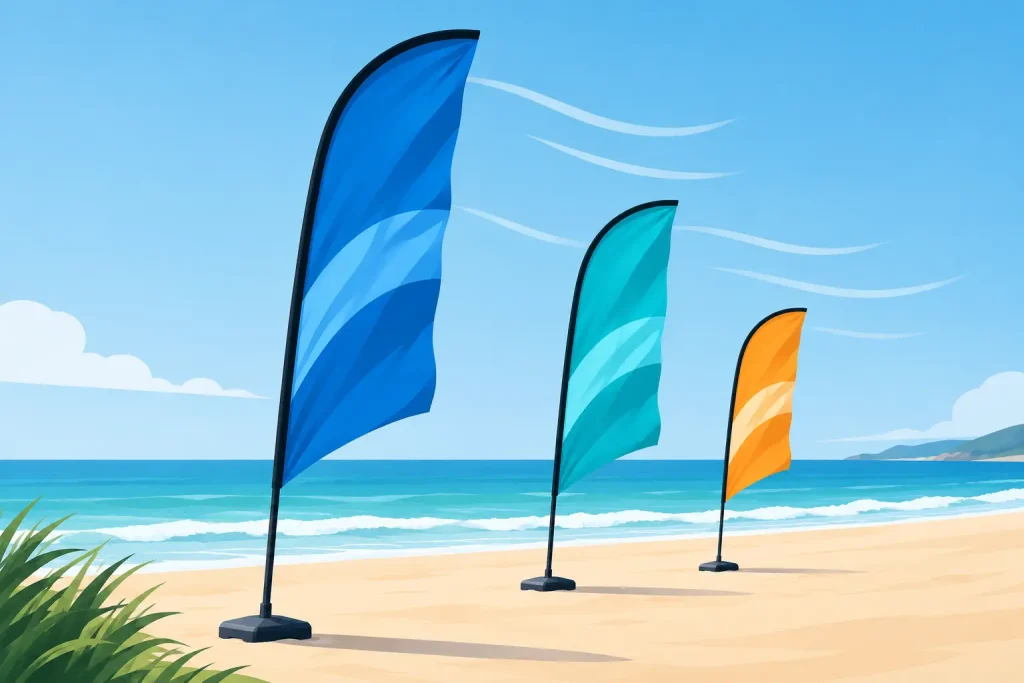
Beach flags are made for movement and visibility. Their tall shape can be seen above crowds, cars, or temporary booths, making them useful outside event entrances, along walkways, at test-drive locations, and around promotional tents. They can carry a logo, directional arrow, short offer, or category message.
Outdoor use requires the correct base. A cross base may be suitable for a flat indoor floor, but outdoor roadshows often need a water base, ground spike, or weighted solution matched to the surface and wind conditions. A flag that looks fine in calm weather can become a safety issue when conditions change.
Keep the message simple. Flags are read while people are moving, so a large logo and a few words work better than detailed product copy.
Build the Display Kit Around the Venue
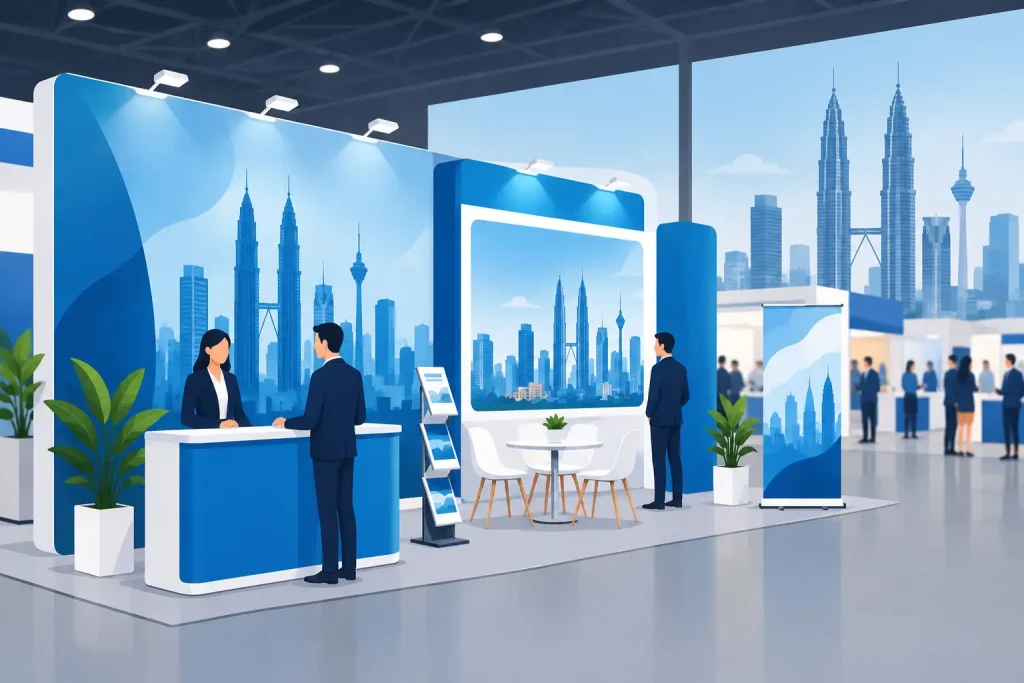
The best portable display kit changes with the event environment. For a compact indoor roadshow, a popup or fabric backdrop, one portable counter, and two roll-up stands can create a complete branded station. This setup gives staff a main visual, a work surface, and supporting messages without overwhelming a small footprint.
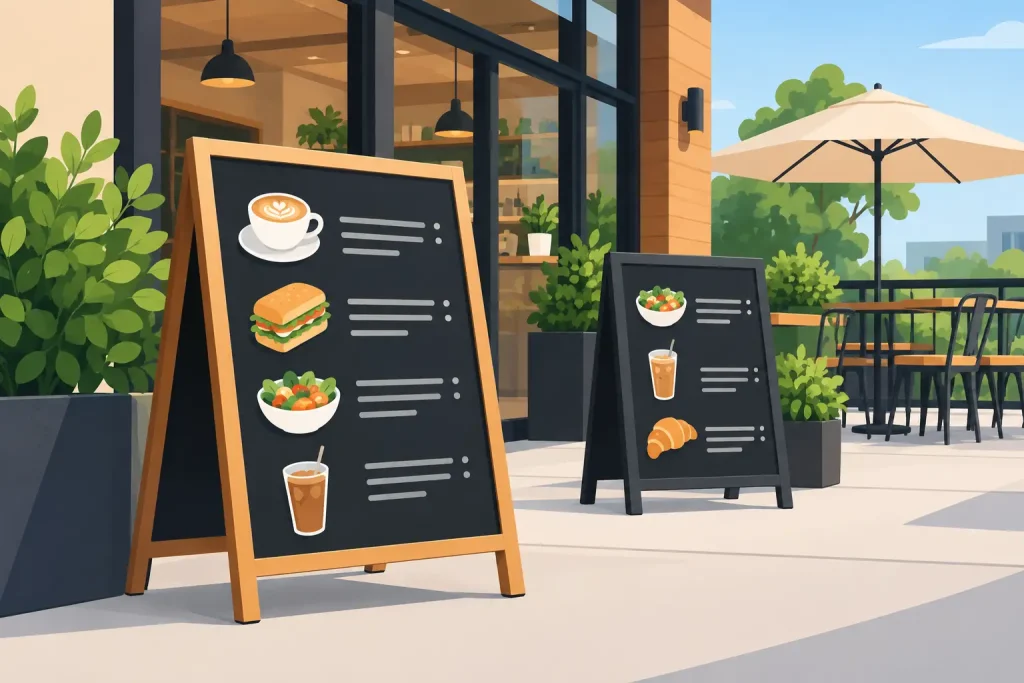
For retail corridors and mall spaces, add LED light frames or backlit visuals when permitted, particularly if neighboring stores use bright fixtures. For outdoor activations, prioritize beach flags, weather-aware bases, and display materials that can tolerate handling and short exposure to the elements. Printed boards and lightweight frames can be useful for menus, schedules, or product information, but they should be secured properly.
Large event spaces may need a combination of a central backdrop and separate displays for registration, product education, and wayfinding. Do not rely on one large wall to do every job. Visitors need to understand where to go before they can engage with the campaign message.
Print and Hardware Choices That Affect Results
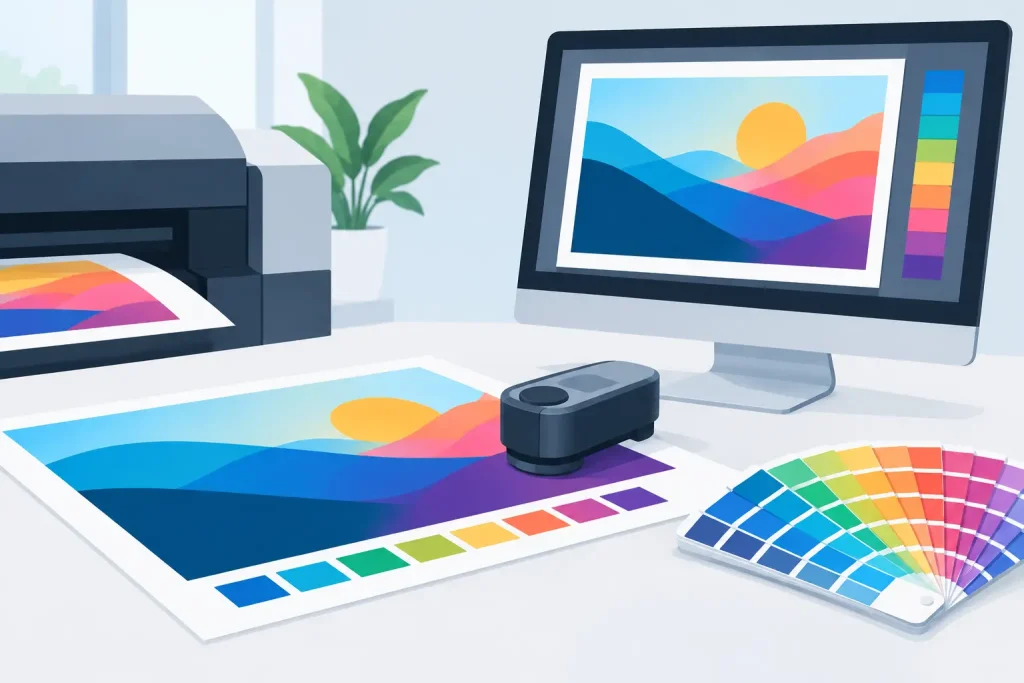
Portable hardware is only half of the order. The print method and finishing determine how the display looks after transport, repeated assembly, and exposure to event lighting. Eco-solvent and latex printing are common choices for banner graphics, while UV printing can suit rigid materials and specialized applications. Dye sublimation is a natural fit for many fabric displays.
Color consistency matters when a roadshow uses several formats. A red logo that shifts noticeably between a roll-up banner, fabric wall, counter, and sticker graphics makes the setup look pieced together. Provide approved artwork, color references where available, and final-size files built for the correct viewing distance.
Also plan for replacements. Roadshow hardware is handled by different people, moved through vehicles, and set up on tight schedules. Ordering replaceable graphics for the main formats can extend the life of frames and stands while allowing the campaign to change without buying new hardware each time.
What to Confirm Before Ordering
Before committing to a display format, confirm the packed size, hardware weight, setup steps, graphic dimensions, base requirements, and replacement print availability. Ask where the kit will be stored between stops and who will set it up. A display that is technically portable may still be impractical if it needs two people, a large vehicle, or 30 minutes of assembly at every venue.
My Inkjet can supply the hardware and printed output as one order, which helps keep display sizes, materials, and graphics aligned across a campaign. That is useful when the roadshow needs standard roll-up stands, popup displays, flags, counters, rigid boards, and specialty print pieces produced to the same brand direction.
Start with the event footprint and the transport plan, then select the largest display that the team can realistically move and install at every stop. A well-used roll-up, counter, and backdrop will outperform an elaborate system that stays in its case because setup is too difficult.
Related Posts