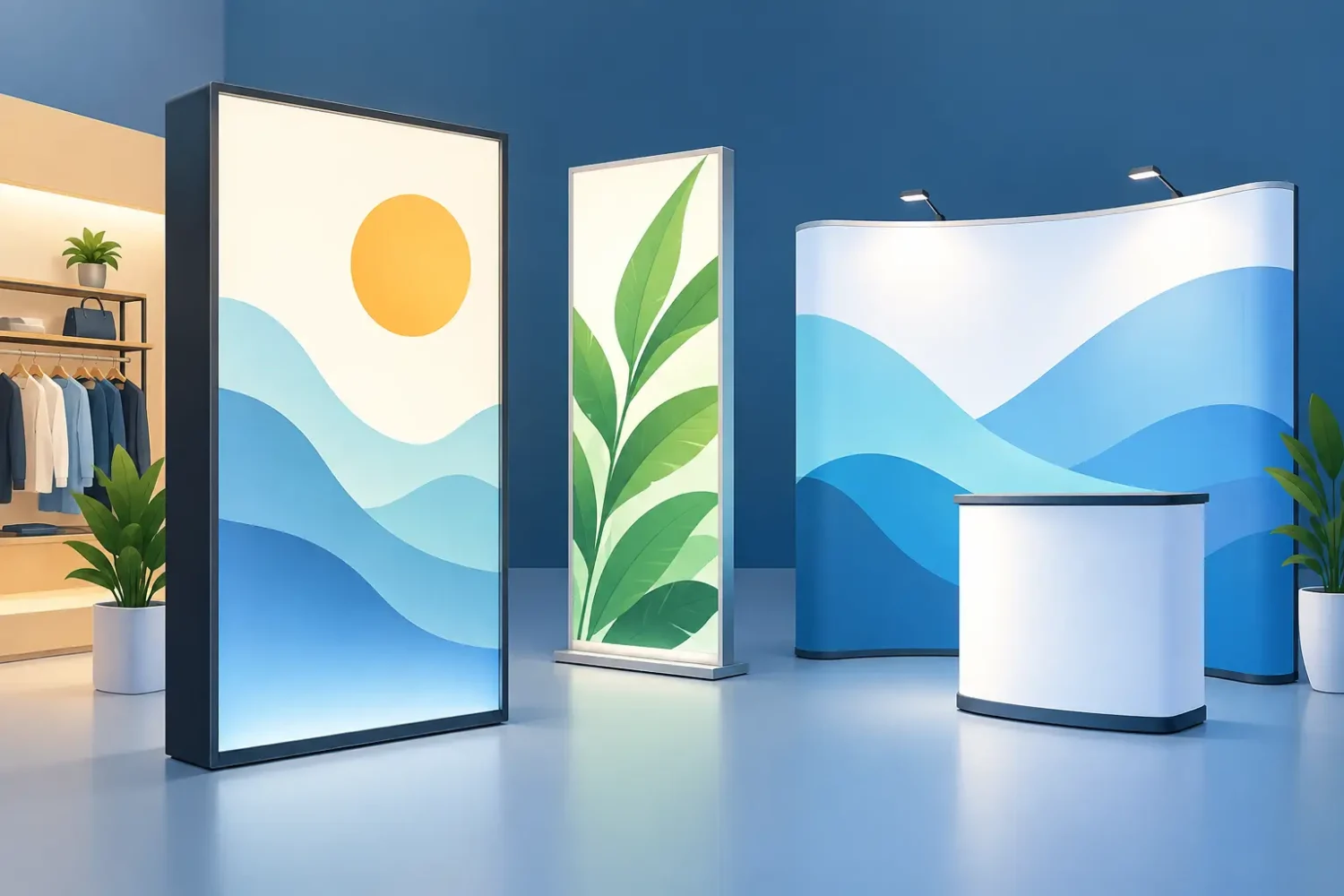
A printed wall graphic can disappear under uneven ceiling lights, while a backlit graphic remains visible from across a sales floor or exhibition aisle. The best lightboxes use consistent LED illumination, the right frame depth, and properly produced graphics to make branded messages readable at a glance. For retail promotions, trade shows, reception areas, and point-of-sale campaigns, the right choice depends less on finding one universal product and more on matching the lightbox format to the installation, viewing distance, and graphic change schedule.
Which Best Lightboxes Fit Your Campaign?
A lightbox is a display frame with internal LED lighting that shines through a printed graphic. Most commercial systems use fabric graphics with silicone edge gasket, commonly called SEG fabric, or backlit film and acrylic panels depending on the frame design. The lighting creates a brighter, more even presentation than a standard poster frame, especially in shopping malls, airports, showrooms, and indoor event venues.
The practical question is whether the display needs to be fixed, freestanding, portable, single-sided, or visible from both directions. A wall-mounted LED light frame suits permanent branding and recurring promotions. A freestanding lightbox works where there is no usable wall surface, such as an exhibition booth, open retail floor, or building lobby. Double-sided models are more effective in walkways because the message can be seen by traffic approaching from either side.
There is no single best option for every job. A slim frame may look clean in a cosmetics store or office reception, but a deeper frame can provide greater rigidity for a large freestanding display. A portable unit may be the better purchase for a roadshow, even if a custom-built wall frame offers a more integrated finish.
Start With the Installation Type
The installation method determines the lightbox category before print specifications are considered. Buyers should first identify where the unit will stand, how long it will remain in place, and whether staff need to move it between campaigns.
Wall-mounted LED light frames
Wall-mounted lightboxes are the standard choice for retail walls, menu boards, brand feature walls, and indoor advertising locations. They keep the floor clear and create a finished appearance without the visual weight of a traditional illuminated sign box. Slim aluminum frames are commonly specified where the graphic is changed seasonally or when the display needs to sit close to the wall.
Check the wall construction before ordering. A large illuminated frame needs secure fixing points and access to a suitable power source. For long installations or a series of connected frames, cable routing and power placement should be planned before the graphics are printed. A bright frame is less useful if exposed wiring compromises the final presentation.
Freestanding lightboxes
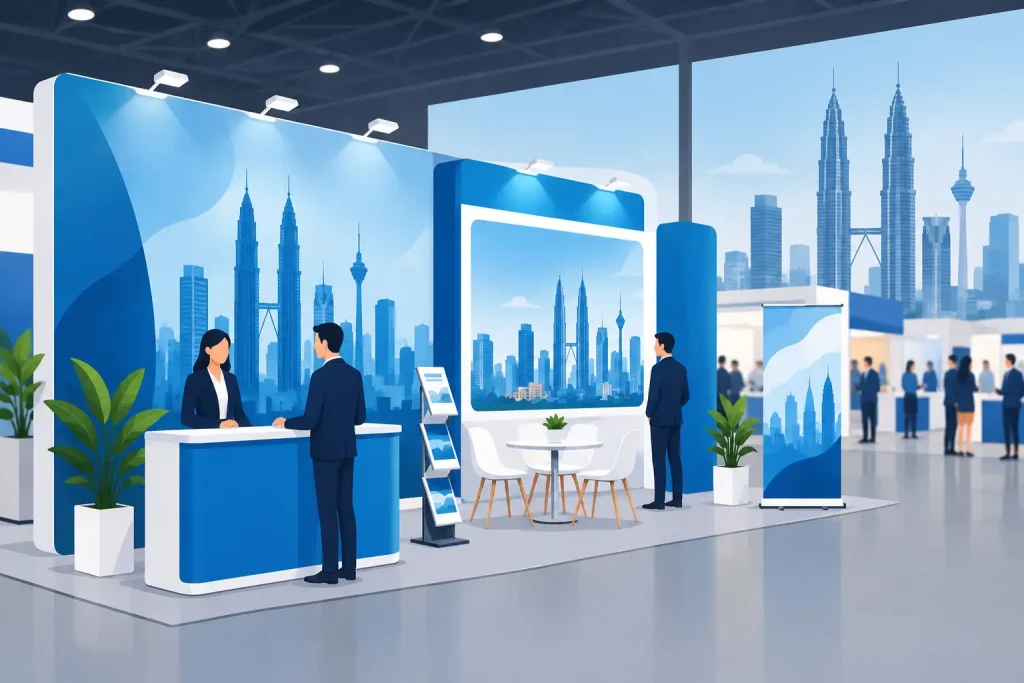
Freestanding LED lightboxes are suited to exhibition booths, product launches, pop-up stores, atriums, and promotional zones. They can define a booth boundary, provide a branded backdrop, or create a focal point beside a product display. Units with stable base feet are practical for indoor public areas, while modular frames are useful when a larger display must be transported in sections.
For events, consider assembly time as carefully as size. Tool-free frame systems and fabric graphics that push into a perimeter channel reduce setup work. However, the quickest system is not always the strongest choice. For repeated use at busy shows, a more substantial frame and protected transport case can reduce replacement costs over time.
Double-sided and hanging formats
A double-sided lightbox is appropriate when customers move around the display rather than toward it from one direction. Retail aisles, exhibition corridors, and large reception spaces are typical applications. The two graphics can carry the same campaign or different messages, such as a product image on one side and a promotion or call to action on the other.
Hanging lightboxes offer high visibility where floor space is limited. They are generally specified for indoor commercial sites with approved suspension points. Because installation requirements can be more complex, frame weight, electrical access, ceiling height, and venue rules should be confirmed early.
Frame Size, Depth, and Viewing Distance
A lightbox should be sized for the distance from which the audience will first see it. Small counter displays can use concise pricing, product names, or logos. Large wall frames and exhibition backdrops need graphics that work from several yards away. If the message relies on fine print, no amount of LED brightness will solve the readability problem.
Frame depth affects appearance and stability. Slim frames are efficient for wall displays and close-viewing applications. Deeper aluminum frames are often used for freestanding structures because they allow for stronger internal support and a more substantial base connection. Larger frames may also use cross braces to keep the fabric face flat and the illumination even.
Do not select the largest size simply because the space allows it. A poorly proportioned frame can overwhelm a compact store or make a booth feel crowded. Leave enough clear space around the display for the illuminated graphic to register as a distinct visual element.
Choose Graphics Made for Backlighting
A standard frontlit banner or poster material is not a substitute for a proper backlit graphic. Lightbox media must diffuse the internal LEDs while retaining color density and image detail. The goal is an evenly lit face without visible bright spots, dark bands, or washed-out colors.
For fabric lightboxes, tension fabric with a silicone edge gasket gives a clean, frameless face. The graphic is fitted into the frame channel around all edges, which creates an even surface when the artwork and finishing are correctly produced. This format is practical for campaigns that require regular graphic replacement because the fabric can be removed, folded, stored, and refitted.
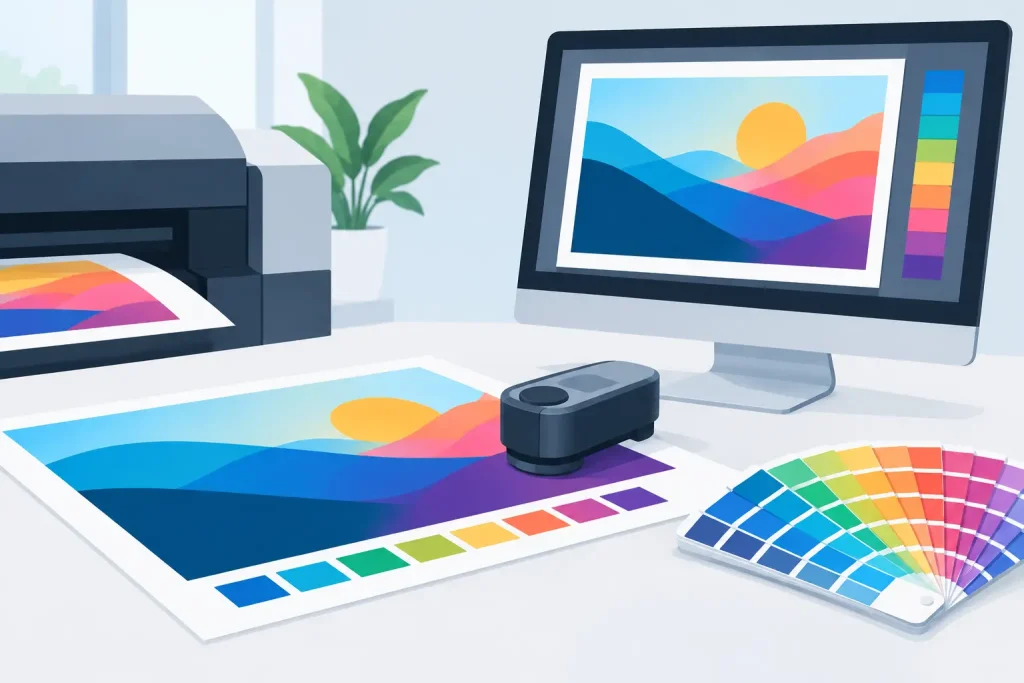
Color preparation matters more for backlit work than for an ordinary wall poster. Areas intended to appear black may need adjusted ink coverage to prevent them from looking gray when illuminated. Very pale colors can also shift under LED light. Supply high-resolution artwork, use readable contrast, and request output intended specifically for backlit display use.
Keep artwork simple at distance
A strong lightbox graphic normally has one immediate message, a clear product image or visual, and sufficient contrast. Retail price messaging can be more detailed when shoppers stand close to the frame. Exhibition graphics should prioritize brand name, product category, and a message that can be understood while a visitor is walking past.
Avoid placing critical text too close to the silicone edge or frame perimeter. A safe margin gives the production team room to finish and install the graphic without affecting important information.
LED Quality and Power Requirements
The quality of illumination is central to lightbox performance. Look for even light distribution across the full graphic, particularly on wide or tall frames. Uneven lighting is most visible on plain backgrounds, pale colors, and large blocks of white.
LED systems are generally preferred because they run cooler and use less power than older illumination methods. For commercial buyers, service access is also relevant. If a frame is installed as a permanent retail feature, ask how LED components can be accessed or replaced if needed. A low-cost frame that cannot be serviced easily may not be the economical option over several years.
Power location should be part of the site plan. Wall frames may conceal cables more easily than freestanding units, but both require a safe and practical electrical connection. For temporary events, confirm the venue’s available outlets and any restrictions on cable covers or extension runs.
Compare Lightboxes by Operating Cost, Not Only Purchase Price
The initial price includes only part of the decision. A lightbox used once for a short campaign has different requirements from one used weekly across multiple store locations. Consider the cost of replacement graphics, installation labor, transport, storage, and the likelihood of frame damage between events.
When comparing commercial lightboxes, assess these four points:
- Frame construction and base stability for the intended location.
- Graphic replacement method and availability of backlit print media.
- LED brightness and evenness across the full display area.
- Packing, transport, and assembly requirements for mobile use.
A modular LED light frame can be a sensible long-term platform when campaigns change frequently. The hardware remains in place while new fabric graphics are produced for each promotion. Conversely, a fixed-size wall frame may be more economical for a permanent logo or brand image that will remain unchanged for an extended period.
Specify the Complete Lightbox Package
Ordering the frame and the printed graphic from one production source reduces the risk of mismatched dimensions, unsuitable media, or incorrect edge finishing. The frame profile, graphic size, silicone edge treatment, print method, and installation orientation should be confirmed together. This is especially useful for large-format projects where a small measurement error becomes obvious once the display is illuminated.
For a campaign requiring multiple formats, keep visual consistency across the lightbox, roll-up stand, popup display, counter graphic, and other event materials. The lighting may make the main graphic more prominent, but it should still use the same logo treatment, product colors, and campaign message as the surrounding display system.
Choose the lightbox that fits the site, the graphic cycle, and the way customers move through the space. A correctly specified LED frame does more than brighten a print – it gives the message a defined place to work.
Related Posts