A lightbox can make a retail message visible from across a sales floor, but the wrong unit can create avoidable problems: uneven lighting, a difficult graphic change, poor wall fit, or a frame that does not suit the campaign location. These lightbox reviews focus on the points business buyers need to assess before ordering – display format, illumination, graphic material, installation, and long-term operating use.
For a storefront, exhibition booth, mall activation, or point-of-sale program, the best lightbox is rarely just the brightest one. It is the unit that fits the available space, supports the intended graphic change schedule, and produces a clean branded result under the lighting conditions already present on site.
Lightbox Reviews: What Buyers Should Compare
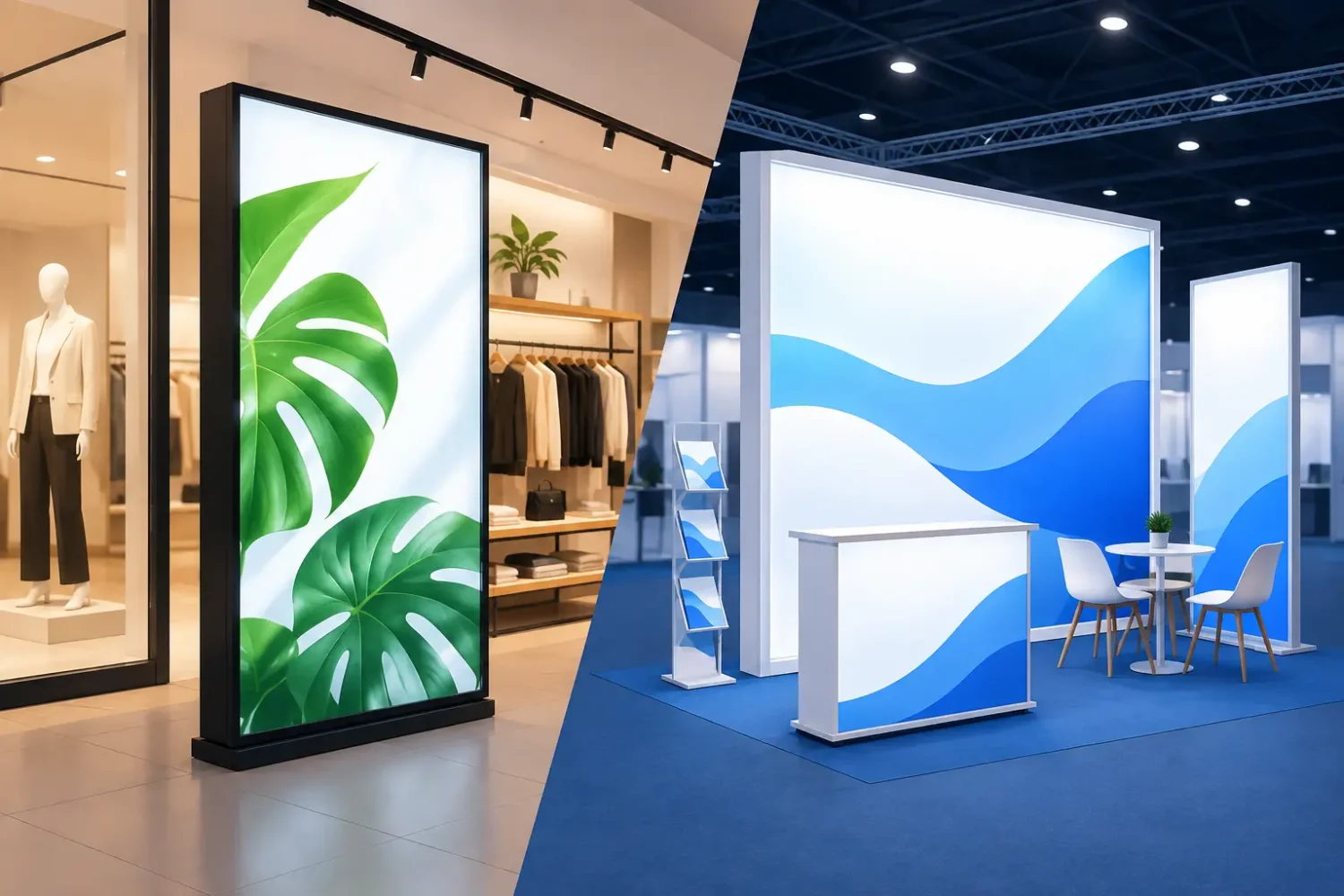
Commercial lightboxes usually fall into two main groups: slim LED light frames with rigid or flexible printed graphics, and fabric lightboxes using tension fabric graphics. Both provide internally illuminated branding, but they perform differently in practical use.
LED light frames are commonly selected for retail walls, menu panels, promotional posters, and permanent or semi-permanent interior signage. Their aluminum profiles provide a neat, structured edge and suit graphics that need a polished framed appearance. Depending on the model, the graphic may be a backlit film, acrylic panel, or another compatible translucent print material.
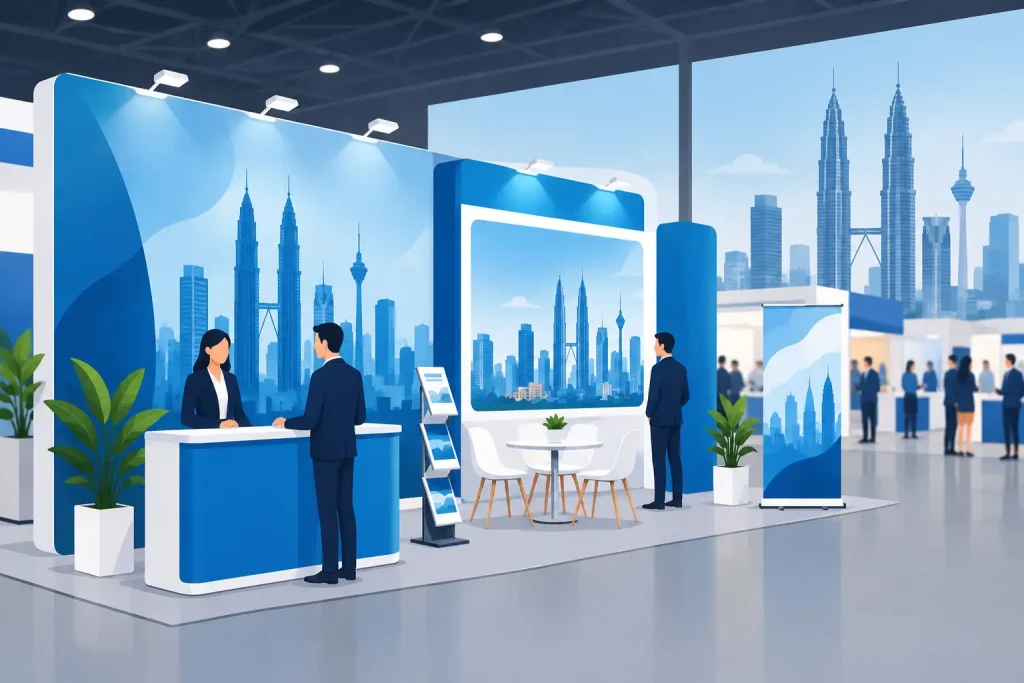
Fabric lightboxes use printed backlit fabric with silicone edging. The edge is pressed into the frame channel to create an even, stretched graphic surface. This format is widely used for exhibition backdrops, larger retail visuals, reception areas, and campaign displays that require frequent graphic replacement. Fabric is lighter to transport and store than rigid panels, which matters for event teams and agencies managing multiple locations.
The first decision is therefore not whether a lightbox looks premium. Most well-produced illuminated displays do. The real decision is whether the frame and graphic system match how the display will be installed, moved, and updated.
Slim LED Frames
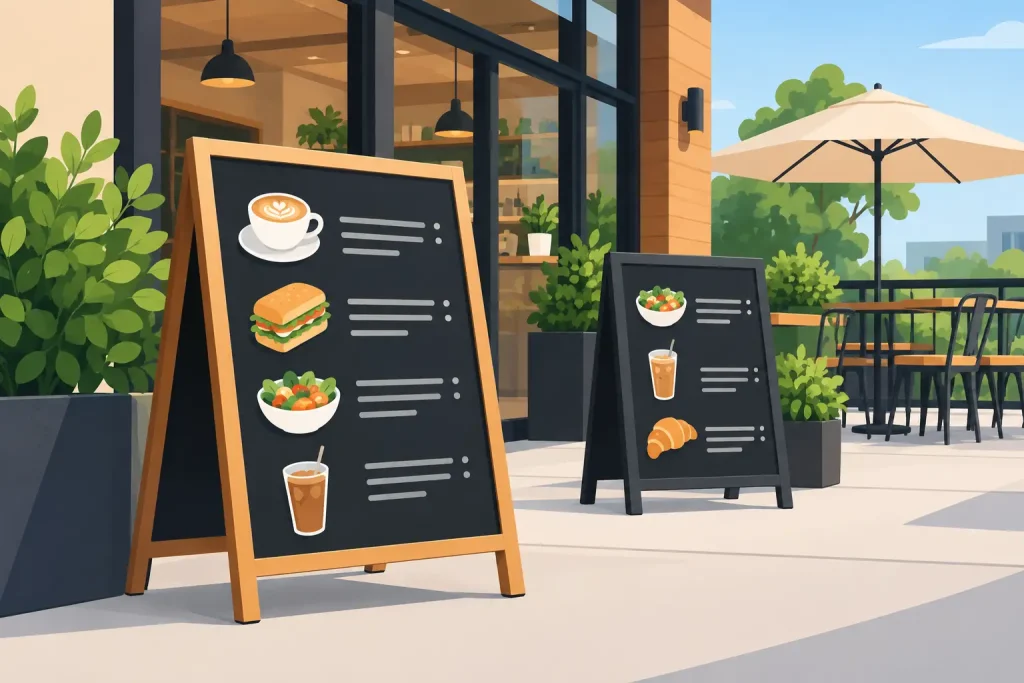
Slim LED frames are a practical choice where wall space is limited and the display needs a clean profile. They work well for product promotions, food and beverage menus, salon service boards, showroom messaging, and branded feature walls. A narrow aluminum frame keeps the focus on the visual rather than the hardware.
Their main advantage is presentation. A properly produced backlit graphic can display strong color, deep image detail, and high contrast. Internal LED lighting removes the dependence on surrounding spotlights, so the message remains visible in dim retail areas or evening operating hours.
The trade-off is graphic handling. Some slim frames require a specific backlit print format and careful insertion. If a campaign changes every few weeks, confirm how the panel is loaded and whether staff on site can replace it without damaging the print or frame. A frame that looks simple in a product image may still require access from a side, front, or rear panel.
Fabric Lightboxes
Fabric lightboxes are usually the better option for larger visuals and repeat campaigns. The graphic folds down for storage, ships efficiently, and can be changed without replacing the display structure. For retailers running seasonal promotions or event organizers using different sponsor graphics, this reduces the need to purchase new hardware for every activation.
The quality point to check is tension. A correctly sized silicone-edge fabric graphic should sit flat, with no visible ripples, loose corners, or sagging at the center. The print must also be produced for backlighting. A standard front-lit fabric can appear washed out once LEDs illuminate it from behind.
Freestanding fabric lightboxes are useful for exhibition entrances, promotional zones, photo backdrops, and temporary retail campaigns. Double-sided versions help where customers approach from more than one direction, such as open mall spaces, trade show aisles, and airport-style concourses. Wall-mounted units are more suitable when floor space is limited and the message needs to remain in one fixed position.
Brightness Is Only One Part of Lightbox Quality
Many product comparisons focus immediately on LED brightness. Brightness matters, especially in brightly lit stores or locations with daylight exposure, but it is not the only performance factor. Uniformity is equally important. A bright lightbox with visible hotspots, shadows, or dark edges will make even a good print look poor.
For large-format graphics, assess how the LEDs are positioned and how the internal diffusion layer manages the light. Quality illumination should appear consistent across solid colors, pale backgrounds, and large areas of white. Uneven lighting is often most noticeable on simple graphics, not on busy photographs.
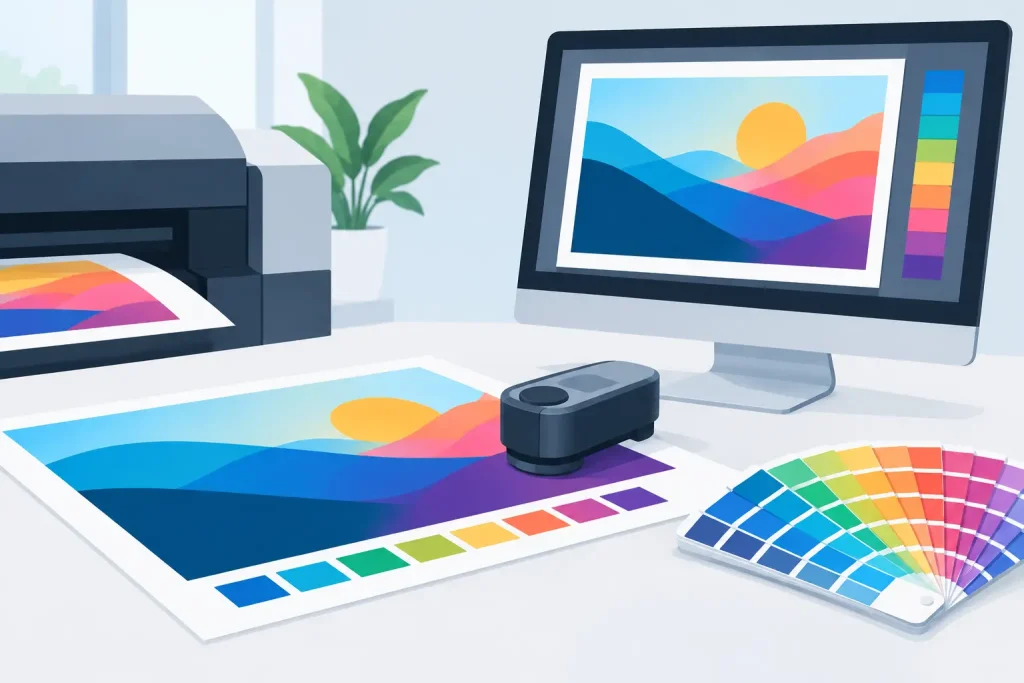
Color output also depends on the printed graphic. The frame provides light, while the substrate controls how that light is filtered and displayed. A good production process uses a suitable backlit media, appropriate ink density, and a print profile designed for illumination. Images that look correct under normal office lighting can shift once installed in a lightbox, particularly in dark tones and skin colors.
This is where print capability matters. UV, latex, eco-solvent, and dye sublimation methods each suit different substrates and applications. A supplier should match the production method to the selected graphic material rather than treating every lightbox face as the same job.
Installation Review: Wall, Ceiling, or Freestanding
Before selecting a size, inspect the installation location. A large illuminated frame may look effective in a concept layout but be unsuitable if the wall cannot carry the load, there is no nearby power point, or the electrical cable cannot be concealed. Measurements should include not only the visible graphic area, but also frame depth, power access, opening clearance, and service access for graphic replacement.
Wall-mounted lightboxes are the most space-efficient choice for stores, offices, showrooms, and permanent display areas. They give a built-in appearance when the frame profile, cable routing, and mounting points are planned properly. In a customer-facing area, a visible extension cable can undermine the finish of an otherwise high-quality display.
Freestanding lightboxes are more flexible, but they require a stable base and safe placement. For exhibitions and roadshows, consider traffic flow, queue areas, emergency access, and whether the unit will be seen from one side or both. A single-sided unit placed in the middle of an open booth wastes a potential viewing surface. A double-sided unit in a narrow aisle may add cost without producing additional value.
Ceiling-hung formats can be effective for directional messaging and high-visibility branding, although installation requirements are more demanding. They are usually best handled as part of a full event or retail fit-out plan rather than as a last-minute display addition.
Graphic Replacement and Operating Cost
The hardware price is only part of the purchase decision. A lightbox used for one long-term brand visual has different needs from a display supporting monthly offers, product launches, or rotating tenant campaigns.
For frequent changes, fabric systems are often more economical over time because replacement graphics are compact and simple to store. Keep each graphic labeled by size, orientation, and location. This prevents installation errors when the same campaign includes several frames with similar dimensions.
For a more permanent application, a slim LED frame with a backlit film graphic may provide the sharper, more formal finish required for retail merchandising or corporate interiors. The replacement process may be less convenient, but that may not matter if visuals are updated only once or twice a year.
LED energy use is generally lower than older fluorescent lighting systems, but buyers should still consider operating hours. A display running through long retail hours should use reliable components and be installed so that maintenance can be performed without dismantling surrounding fixtures. Ask how the unit is powered, whether the driver is accessible, and what parts can be replaced if service is needed.
Choosing the Right Lightbox for the Job
Use a slim LED frame when the priority is a neat, permanent wall presentation with strong graphic detail. Choose a fabric lightbox when the display is large, portable, double-sided, or likely to receive new campaign graphics regularly. Select a freestanding unit for open event spaces and promotional zones, while wall-mounted frames make better use of tight retail and office interiors.
Size should follow viewing distance. A small counter-area lightbox does not need the same image scale or type size as a large showroom wall. Conversely, a large format frame with text designed for close reading will fail when customers view it from across an aisle. Build the artwork around the actual viewing position, not only the print dimensions.
For buyers sourcing display hardware and printed graphics together, confirm the complete specification before production: frame type, finished size, single- or double-sided configuration, graphic substrate, print method, mounting approach, and power requirements. My Inkjet can support this type of coordinated order, helping reduce the mismatch that occurs when frames and graphics are procured separately.
A lightbox should make campaign visuals easier to notice and easier to maintain. Select the format based on the working environment, then specify the print and installation details with the same care as the artwork. That is what turns illuminated signage from a decorative feature into a dependable commercial display.
Related Posts