A storefront banner can look perfect when it leaves production and fail after its first afternoon shower because the wrong media, edge finish, or mounting method was selected. Can latex prints withstand rain? In many outdoor applications, yes. But a latex print is not automatically waterproof simply because latex ink was used. The printed material, finishing specification, graphic design, and installation conditions determine whether the display remains presentable after repeated wet weather.
Can Latex Prints Withstand Rain?
Latex printing is suitable for many rain-exposed signs, banners, window graphics, and promotional displays. Properly cured latex ink adheres well to compatible outdoor media and will not normally run or dissolve when rain hits the printed face. This makes it a practical production method for short-term and medium-term outdoor branding.
The key distinction is between a rain-resistant print and a complete outdoor display system. The ink may hold its color while the media curls, adhesive fails, water enters an unfinished edge, or wind damages the hardware. A rain-exposed print needs to be specified as a system, not ordered as ink on a generic sheet.
For temporary campaign graphics, latex printing on PVC banner, suitable polypropylene, polyester fabric, or approved self-adhesive vinyl can perform well outdoors. For a long-term installation, the required media grade, laminate, ink coverage, and mounting detail should be reviewed before production.
What Determines Wet-Weather Performance?
The print media matters more than the ink alone
A suitable outdoor substrate does most of the physical work. PVC banner materials are common for outdoor promotions because they handle moisture well and can be finished with hems, eyelets, or pole pockets. Mesh banner is useful where wind passes through the graphic, such as fence wraps and open-site installations.
Polyester fabrics can also work for selected flag and display applications, particularly when the material and finishing are specified for exterior use. However, fabric absorbs and retains water differently from PVC. It may become heavier in heavy rain, and its tension can change as it dries.
Paper-based posters, untreated board, and indoor display films are not substitutes for outdoor media. A latex-printed graphic on an unsuitable material can still wrinkle, swell, delaminate, or lose structural integrity after rain.
Water usually enters at the edges and mounting points
The printed face is only one exposure point. Rainwater can sit inside hems, collect around eyelets, travel behind window film, or reach the cut edge of a mounted board. If the display is installed against a wall, trapped moisture behind the graphic can create as many problems as direct rainfall.
For banners, reinforced hems and correctly spaced eyelets reduce stress around fixing points. For rigid signs, sealed edges and outdoor-rated mounting methods help prevent water from reaching the core. For stickers and graphics, edge lift is more likely when the surface was poorly cleaned, the substrate is textured, or water is consistently driven behind the film by wind.
Ink cure and print handling affect durability
Latex prints must be properly cured before finishing, packing, and installation. Rushing the process can increase the risk of scuffing, surface marking, or reduced adhesion on some materials. This is particularly relevant for dark, high-ink-coverage graphics, where drying and handling conditions need more attention.
Once correctly produced on compatible media, latex prints are generally well suited to wet conditions. However, rain resistance does not eliminate abrasion. A graphic that rubs against a frame, wall, rope, or metal barricade can wear more quickly than one exposed to rain alone.
Specify Media and Finishing for the Job
A practical outdoor specification begins with the display format. A roadside banner, a retail window promotion, a beach flag, and a roll-up stand do not face the same conditions.
PVC banner is a direct option for rain-exposed promotions, temporary site messaging, event backdrops, and barricade displays. Standard banner works where wind exposure is controlled. Mesh banner is the better choice for exposed fencing or large-format graphics where wind load is a concern. Using a solid banner in a high-wind location can create strain at the eyelets and fixings, even when the print itself is unaffected by rain.
For self-adhesive graphics, choose a film intended for exterior use and match it to the installation surface. Smooth painted panels, glass, aluminum composite, and clean flat plastic give better results than porous walls, rough concrete, or poorly maintained painted surfaces. If the campaign requires frequent cleaning, vehicle use, heavy handling, or an extended outdoor period, a compatible laminate adds protection against scratches, dirt, and UV exposure.
Lamination is not mandatory for every latex print. A short-duration PVC banner often does not need it. A retail decal that will be wiped daily, a high-contact counter graphic, or a long-running exterior sign may benefit from it. The trade-off is added cost and production time, so it should be selected for actual exposure rather than applied by default.
Installation Can Decide Whether the Print Survives
A quality print can still fail through poor installation. Tension a banner evenly, leave enough clearance for drainage, and avoid mounting it where water will pool behind the graphic. Do not pull eyelets so tightly that the banner cannot move slightly under wind load. Excessive tension concentrates stress and can tear the material around the fixing point.
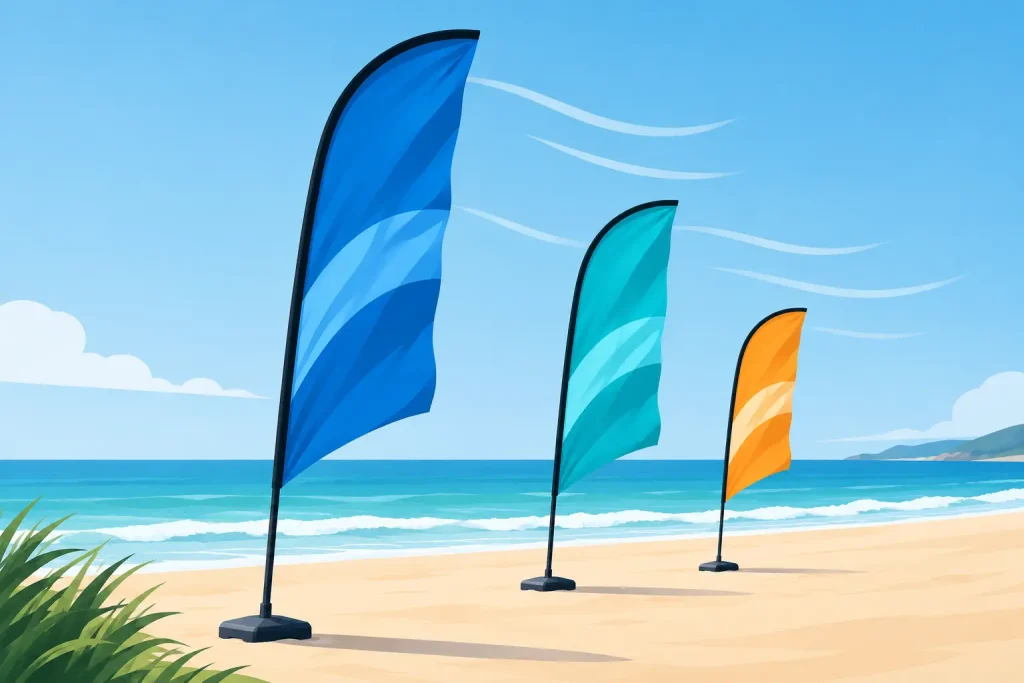
For beach flags and other fabric display systems, follow the hardware limits for wind and weather. These products are designed for visibility and portability, not permanent storm exposure. Bring them in during strong winds or severe weather rather than relying on the printed fabric alone.
Roll-up stands, popup displays, LED light frames, and many indoor promotional systems should not be treated as outdoor rain products. Even if a latex-printed graphic can tolerate moisture, the aluminum base, electrical components, graphic tension system, or board inserts may not. Use dedicated outdoor hardware when the display will be unattended outdoors.
Mounted boards need special care. Foam board, KT board, and similar indoor presentation materials are efficient for short-term indoor promotions but are not appropriate for rain. For exterior signage, select an outdoor-rated rigid substrate and use mounting hardware that allows for drainage and thermal movement.
A Quick Procurement Check Before Ordering
Before approving an outdoor latex print, confirm these five points with the production team:
- The media is rated for the expected outdoor duration and exposure.
- The graphic will be finished with suitable hems, eyelets, edge treatment, or laminate where needed.
- The installation surface and fixing method will not trap water behind the print.
- The display hardware is rated for outdoor use, not only the printed graphic.
- The campaign team has a plan to remove portable displays during high wind or severe weather.
These checks are particularly useful for event organizers running roadshows, retail operators changing storefront graphics, and marketing teams ordering several formats at once. A matching set of banners, flags, stickers, and counters may require different materials even when all artwork uses the same campaign design.
When Another Print Method May Be Better
Latex is a strong option when low-odor production, indoor and outdoor versatility, and compatible media choices are priorities. It is not automatically the best method for every exterior job. UV printing may be preferred for direct-to-board work or specialty rigid materials. Solvent or eco-solvent production can also be suitable for selected vinyl and banner applications, depending on the required finish, durability target, and available media.
The right question is not only whether latex ink can handle rain. Ask how long the graphic will stay up, what material it will be printed on, how it will be fixed, and what type of weather it will actually face. A clear production brief prevents the common mistake of buying an outdoor-looking display that is only suitable for a covered area.
For rain-exposed graphics, specify the display format first, then match the latex print media and finishing to the installation. That approach keeps the order practical, the output professional, and the campaign visible after the weather changes.
Related Posts