A retail promotion can have strong artwork, clear pricing, and a useful offer, then still underperform because the display is placed on the wrong hardware. A poster taped to a wall is easy to miss. A banner that curls, leans, or blocks the aisle makes the store look unfinished. The right top retail display hardware options give printed graphics a defined place, keep messaging visible, and make campaign changeovers easier for staff.
For retail operators, marketing teams, and procurement buyers, the practical question is not which display looks best in isolation. It is which format suits the location, viewing distance, campaign duration, and graphic replacement cycle. A seasonal promotion at an entrance needs different hardware from a price message beside a shelf or a product launch in a mall atrium.
Top Retail Display Hardware Options by Placement
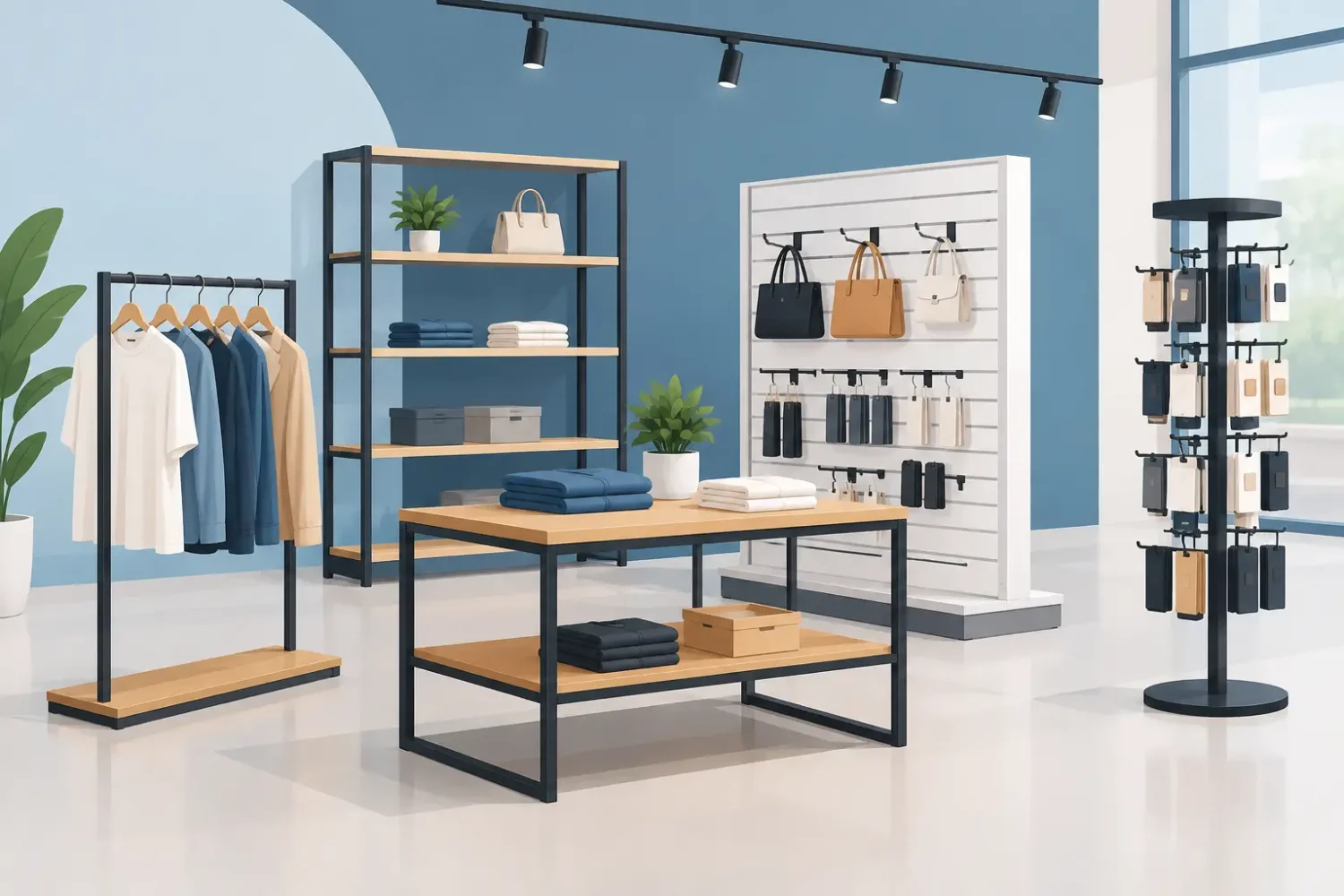
Start with where the display will be used. Entrance zones need height and immediate visibility. Aisles and shelf areas need compact formats that do not interfere with customer movement. Checkout counters need messaging at close range. Open concourses, roadshows, and outdoor approaches need hardware that remains stable and readable from a distance.
The main display categories below cover most store promotions, pop-up activations, and short-term retail campaigns.
Roll-up stands for fast campaign changes
Roll-up stands are a standard choice for store entrances, reception areas, promotions near escalators, and temporary campaign zones. The printed graphic retracts into the base, making the unit compact for storage and transport. Staff can set one up quickly without tools, which is useful when campaigns rotate frequently.
PVC roll-up stands are suitable for short to medium promotional runs where value and speed matter. More premium roll-up systems can be considered for repeated use, especially when the hardware will move between branches, events, and retail locations. The trade-off is simple: entry-level units control cost, while stronger bases and better pole systems generally handle repeated deployment more reliably.
Use roll-up stands when the message is vertical and direct: a new product range, limited-time sale, membership offer, menu feature, or event announcement. Keep the most important text and price point in the upper half of the graphic. The lower section is more likely to be blocked by shopping bags, fixtures, or people standing nearby.
LED light frames for high-visibility graphics
LED light frames are effective where ambient lighting is high or where the campaign needs a cleaner, more premium presentation. Backlit graphics help product photography, color blocks, and simple promotional messages hold attention in shopping centers, retail windows, beauty counters, and branded feature walls.
This format is best treated as a semi-permanent display solution rather than a disposable campaign item. The frame can remain installed while the printed backlit graphic is replaced for new launches or seasonal messaging. That reduces the need to purchase new hardware each time, although correct graphic sizing and material selection are essential.
LED frames work particularly well for cosmetics, fashion, food visuals, property promotions, and lifestyle campaigns where image quality carries the message. They are less suitable for a promotion that changes every few days unless the team has a clear process for replacing graphics. Confirm power access, frame depth, mounting requirements, and the intended viewing distance before ordering.
Popup displays for launch areas and retail events
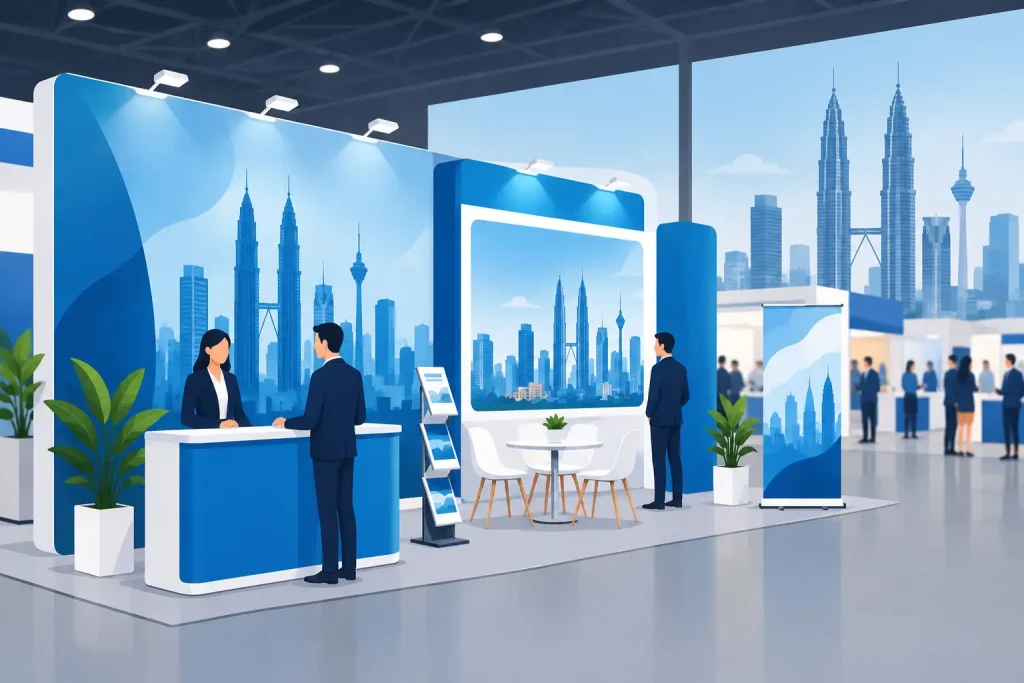
Popup displays provide a larger branded backdrop than a roll-up stand. They are useful for product demonstrations, sampling stations, mall activations, seasonal photo areas, press moments, and retail roadshows. A popup structure supports a broad printed graphic, creating a defined campaign area that can be recognized from across an open floor.
The main benefit is visual scale. A popup display can turn a simple table or promoter station into a branded activation point. It also creates a better background for staff photos, customer content, and product demonstrations than separate small signs.
However, popup systems require more floor space and more attention during setup. They are not the right choice for a narrow aisle or a crowded checkout zone. Buyers should check the full assembled width, height, carry case, and graphic attachment method. If the display will be used often, specify replacement graphics at the start so future campaigns can use the same hardware.
Counters and KT board stands for close-range messages
Promotional counters combine a usable surface with visible branding. They suit sampling, registration, gift redemption, product demonstrations, and small event booths inside retail spaces. The branded front panel keeps the campaign visible while staff have a practical place for brochures, samples, devices, or sign-up forms.
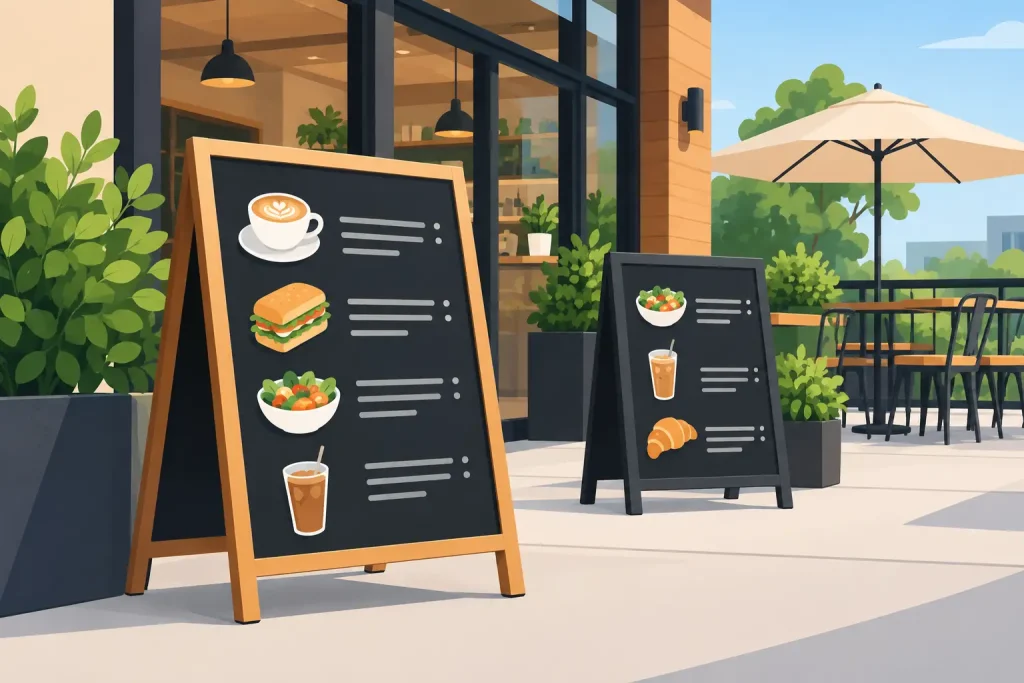
For tighter spaces, KT board stands are a straightforward way to present promotional boards, directional information, price lists, or product features. They are best for short viewing distances and indoor use. A lightweight board display is economical and easy to replace, but it should not be treated like heavy-duty permanent signage.
These two formats work well together at a launch counter: use a branded counter as the activity point and a KT board stand for product details, terms, directions, or QR-based instructions. Keep copy brief. Customers standing at a counter will read more than passersby, but they still need to understand the offer in seconds.
Beach flags and barricade displays for traffic flow
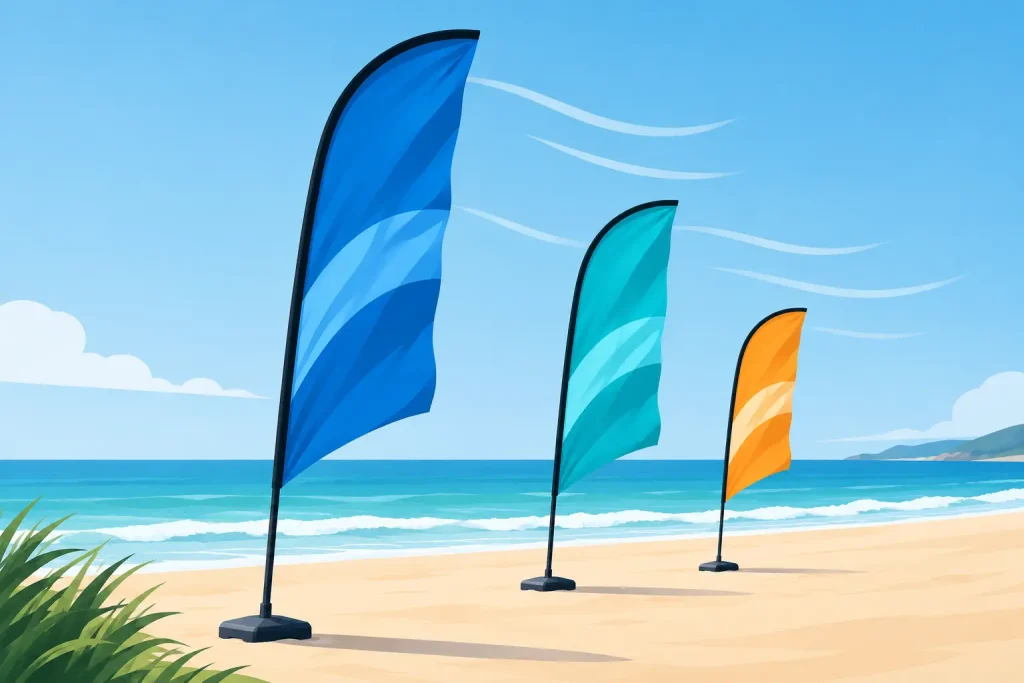
Beach flags are designed for movement and distance. Their vertical shape makes them useful at storefront approaches, outdoor promotions, parking areas, event entrances, and open atrium spaces. They can carry simple brand marks, directional messages, launch announcements, or category identifiers.
Because flags move and are viewed from multiple angles, the artwork should use large type, strong contrast, and limited information. A beach flag is not a brochure. It should tell people where to look, where to go, or what is happening.
Barricade displays serve a different function. They turn required crowd-control barriers into branded media space. Use them around queues, temporary event areas, launches, construction-adjacent retail zones, and public activations. They are especially practical when the barrier is already needed for operations. The graphic does not take up extra floor space because it uses an existing boundary.
For outdoor or high-traffic settings, base selection and installation matter as much as the printed graphic. Wind exposure, surface type, security restrictions, and cleaning access should be checked before choosing flags or barricade hardware.
Match the Hardware to the Print Method and Material
Hardware and print production should be specified together. A display system may require flexible banner media, rigid board output, fabric graphics, backlit film, or mounted panels. The wrong material can affect fit, flatness, color appearance, and durability.
Solvent and eco-solvent printing are commonly selected for many banner and promotional graphics where practical durability is required. UV printing is suitable for sharp output on selected rigid materials and specialty applications. Latex printing can be useful when odor considerations and fast finishing are priorities. Dye sublimation is a strong option for fabric-based displays where a softer finish and foldable graphic are required.
For a retail buyer, the decision should begin with the application rather than the machine name. Ask whether the graphic is indoor or outdoor, flat or curved, front-lit or backlit, temporary or reusable, and likely to be handled frequently. Those answers narrow down the suitable material and production method quickly.
Plan for Reuse Before the First Order
Reusable hardware can lower future campaign costs, but only when dimensions are standardized. If each branch orders a different roll-up width or counter model, replacement graphics become harder to manage. Standardize a small group of approved formats for entrances, counters, event areas, and shelf-side messaging.
Before confirming an order, check these operational points:
- Final display size and available floor or wall space
- Viewing distance and whether customers will be walking or standing
- Indoor, outdoor, or mall management requirements
- Graphic replacement process and storage conditions
- Base weight, transport needs, and expected reuse frequency
- Print material, finishing, mounting, and installation requirements
My Inkjet can support this type of specification process by supplying display hardware alongside printed graphics, including large-format and specialty print options. Ordering both from one production source helps reduce sizing errors between the structure and the finished artwork.
A good retail display does not need to be complicated. Select hardware that fits the placement, print graphics for the actual viewing conditions, and choose reusable systems where campaign volume justifies them. That gives every promotion a clearer presence on the sales floor without creating unnecessary setup work for the store team.
Related Posts