A roll-up banner that looks sharp on the product page can still fail at an event if the material curls at the edges, shows glare under spotlights, or does not suit the stand. Print substrates determine far more than the appearance of a graphic. They affect color output, ink adhesion, rigidity, weight, transport, installation, and how long the finished display remains presentable. For business buyers ordering signage, retail graphics, stickers, or exhibition materials, selecting the substrate is part of the production specification, not an afterthought.
What Print Substrates Control
A print substrate is the base material that receives the printed image. It may be a flexible roll material, a rigid board, a self-adhesive film, a fabric, or a specialty media with a metallic, clear, or holographic finish. The same artwork can look noticeably different when printed on PVC banner, fabric, PP paper, or a metallic sticker.
The correct choice starts with the job, not the artwork. A temporary roadshow backdrop needs a different material from a long-term storefront sticker. A hanging fabric display has different requirements from a mounted point-of-sale board. The questions that matter are practical: Where will it be used? How will it be installed? How close will people stand to it? Will it be moved repeatedly? Is it exposed to rain, heat, or direct lighting?
Budget also matters, but the lowest material cost is not always the lowest campaign cost. Reprinting a warped board or replacing an unsuitable banner during an event costs more than specifying the correct material at the start.
Common Print Substrates by Application
Flexible materials for banners and display systems
PVC banner remains a standard choice for outdoor banners, promotional backdrops, and large graphics where durability and cost control are priorities. It works well for solvent, eco-solvent, UV, and latex printing, depending on the media specification. PVC is practical for short- to medium-term outdoor use, but it is heavier than fabric and can reflect light under strong indoor illumination.
For roll-up stands, popup systems, and portable displays, the material needs to work with the hardware. A roll-up graphic must stay flat, retract cleanly, and resist edge curl after repeated use. Material thickness, backing, and lay-flat behavior are as relevant as printed resolution. Do not choose a banner material based on surface appearance alone if it will be loaded into a cassette stand.
Fabric is often selected for exhibition walls, tension displays, and premium indoor backdrops. Dye sublimation printing on polyester fabric produces a soft, low-glare finish that photographs well and is easier to transport than many rigid alternatives. Fabric can be folded for shipping, although creasing and the display system’s tension requirements should be checked before ordering.
Rigid boards for retail and point-of-sale graphics
KT board, commonly used for mounting presentation graphics, temporary signs, and indoor promotional boards, is light and economical. It suits short-term retail campaigns, directional signage, and event-use graphics where easy handling is needed. Its limitation is durability. Foam-based board can dent, crush at the corners, and perform poorly in wet or high-humidity locations.
For a more durable rigid result, buyers may consider materials such as PVC board, acrylic, composite panel, or other engineered boards based on the installation. These options offer greater stiffness and cleaner long-term presentation, but add weight and may require different cutting, drilling, or mounting methods. A wall-mounted menu board and a freestanding event sign should not automatically use the same board.
Self-adhesive films and specialty stickers
Stickers are specified by both face material and adhesive. PP white stickers provide a clean printed surface for product labels, retail promotions, and indoor applications. Synthetic sticker materials offer improved water resistance and tear resistance where paper labels would be unsuitable. Transparent stickers are useful when the background surface should remain visible, while matt silver and hologram finishes create a distinct decorative or security-oriented effect.
Clear and metallic media require artwork planning. White ink may be needed to keep colors visible on transparent, silver, or holographic substrates. Without a white base layer, the material beneath can change the final color, and pale artwork may lose contrast. This can be a useful visual effect, but it should be intentional rather than discovered after installation.
Match the Substrate to the Print Method
The print method and substrate must work together. A material may physically accept ink but still produce poor scratch resistance, uneven color, or limited outdoor life if the process is not suitable.
Solvent and eco-solvent printing are widely used for banners, vinyl, adhesive films, and outdoor signage. They are practical options for graphics that need weather resistance and durable adhesion. Eco-solvent is commonly used for high-quality signage and display work with lower odor than traditional solvent systems, though drying and finishing requirements still depend on the media.
UV printing cures ink directly on the surface using ultraviolet light. It is useful for rigid boards, specialty materials, and applications that require fast handling after print. UV ink can produce strong color and sharp detail, but the final look depends on the surface. On some materials, the ink sits on top rather than absorbing into the substrate, which can affect flexibility when a graphic is folded or bent.
Latex printing is suited to many indoor and outdoor display materials, including certain banner, vinyl, and fabric media. It is often selected for odor-sensitive environments such as retail interiors, offices, and event spaces. Dye sublimation is the preferred process for polyester fabric displays because the dye bonds into the material rather than forming a surface layer. This supports rich color and a soft textile finish.
Do not specify a print method only by resolution. A 1440 DPI print setting can deliver fine image detail, but material texture, finish, viewing distance, and lighting all influence what the audience sees.
Consider Light, Distance, and Installation Conditions
A glossy substrate can make colors appear deeper, but it can also create glare under retail spotlights, exhibition hall lighting, or direct sunlight. Matte finishes reduce reflection and are often easier to read at close range. For menu boards, product information panels, and graphics viewed under overhead lighting, matte may be the safer option.
Viewing distance should guide material and resolution choices. A large barricade display or building-facing banner is generally viewed from several yards away, so bold imagery and strong contrast matter more than small text. A counter display, sticker, or shelf-level point-of-sale graphic is viewed close up and needs cleaner fine detail, readable type, and a surface that does not distract from the message.
Installation conditions are equally important. Outdoor graphics need consideration for rain, wind, temperature changes, and UV exposure. Indoor graphics may face air-conditioning, frequent handling, cleaning, or repeated assembly. For beach flags, banners, and freestanding displays, the hardware and base selection are part of the material decision. A high-quality print cannot compensate for a display system that is unsuitable for the venue.
Specify the Full Production Requirement
A useful print order gives production teams more than a file size. It identifies the display format, finished dimensions, substrate, print side, print method if required, finishing, and installation purpose. Finishing can include lamination, cutting, hemming, eyelets, pole pockets, mounting, contour cutting, or white ink for clear and metallic materials.
If the graphic will be mounted into a roll-up stand, framed, applied to glass, wrapped around a counter, or attached to a barricade, state that use clearly. It helps prevent a common procurement mistake: ordering the right image in the wrong material format.
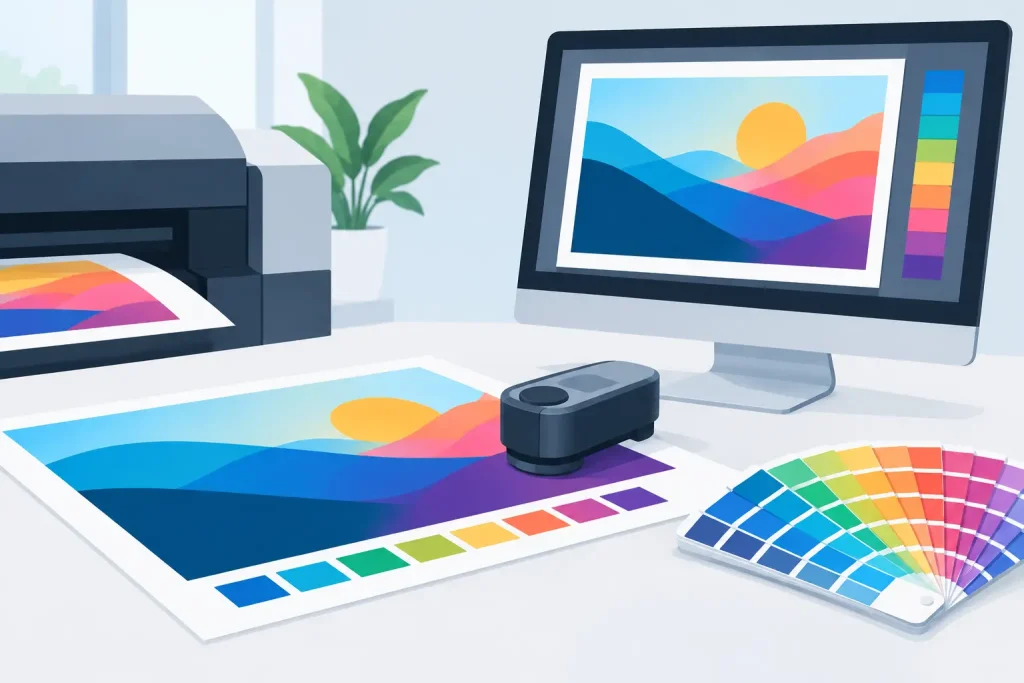
Color expectations should also be managed before production. Screen colors are not a final print reference, particularly on transparent, metallic, holographic, and textured media. For brand-critical work, provide approved color references and request a proof or sample where timing allows.
The best substrate is the one that fits the display hardware, print process, campaign duration, and viewing environment at the same time. Start with where the graphic will live and how it will be handled. That approach produces displays that are easier to install, more reliable during use, and worth showing after the event doors open.
Related Posts