A hanging sign has one job before a customer reaches the shelf, booth, or counter: make the location easy to find. The best Kuala Lumpur hanging signs are not simply the largest panels available. They are selected around ceiling height, viewing distance, lighting, installation limits, campaign duration, and the type of message being displayed.
For retail operators, event organizers, and marketing teams, overhead signage is useful because it works above crowded floor-level displays. It can identify departments, guide traffic, mark a promotion zone, or make an exhibition stand visible from across an aisle. The right format depends on where it will hang and what people need to understand in a few seconds.
Best Kuala Lumpur Hanging Signs by Application
There is no single best hanging sign for every commercial space. A lightweight fabric banner may suit a high-ceiling exhibition hall, while a rigid printed panel may be better for a short retail campaign where clean edges and simple directional text matter most.
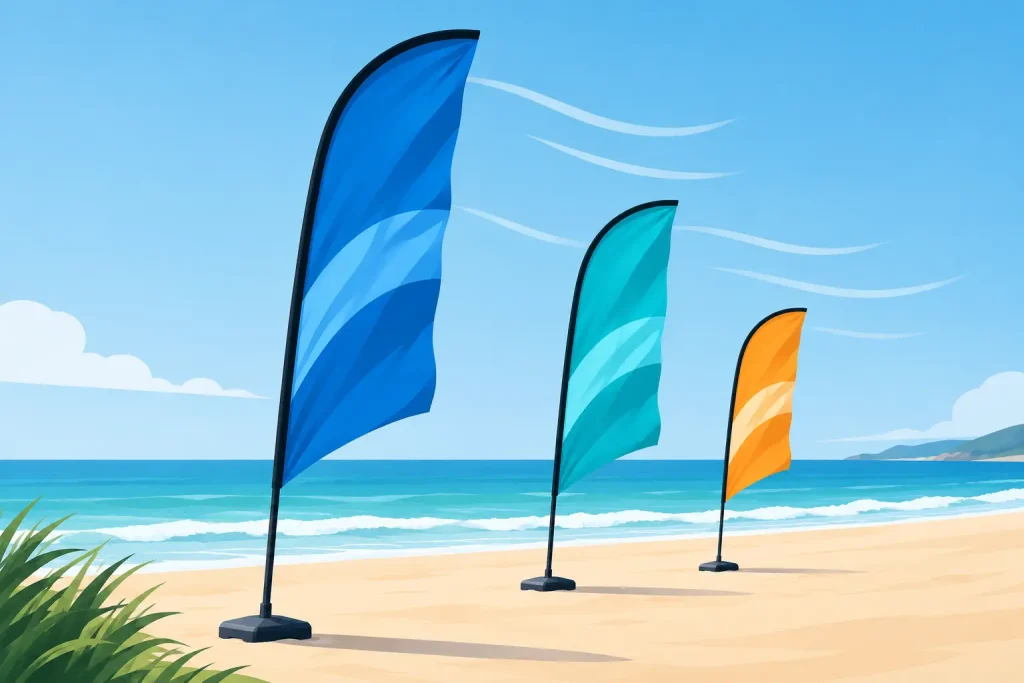
Fabric hanging banners for exhibitions and open spaces
Fabric banners are a practical choice for trade shows, roadshows, atriums, and large event venues. They are light, easy to transport, and suitable for graphics that need to be seen from several directions. Dye sublimation printing is commonly used for fabric because it produces saturated color and a finished surface that does not add much weight.
For a hanging banner above a booth, use a short brand name, large logo, or clear category message. Fine product details, long taglines, and dense contact information are usually wasted at height. A fabric sign can be visually strong, but it still needs a proper hanging frame, pole pocket, tension system, or approved suspension method to keep its shape.
Rigid board signs for retail navigation
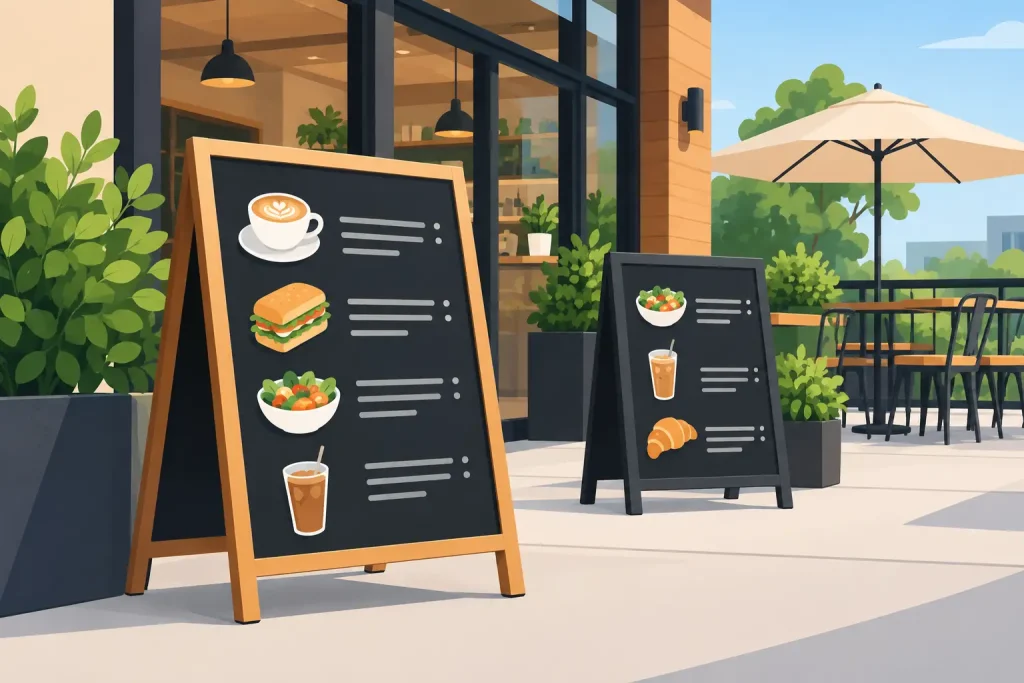
Printed rigid boards work well for department markers, price zones, category signs, and temporary promotional areas. Materials such as PVC or KT board can provide a flat print surface with crisp text and solid blocks of color. They are often appropriate for indoor installations where a sign is fixed to a ceiling grid, suspended from a controlled point, or placed inside a defined display structure.
The trade-off is weight and edge exposure. Larger rigid panels need suitable mounting points and should not be specified without checking the ceiling condition and venue rules. They are generally better for straightforward indoor use than for locations with strong airflow, frequent handling, or complicated rigging requirements.
Double-sided hanging signs for aisle visibility
If customers approach from two directions, a double-sided sign is usually a better use of the overhead position than a single-face panel. Retail aisles, mall corridors, exhibition lanes, and registration areas are common examples. The sign should carry the same primary message on both sides, rather than treating each face as separate advertising space.
Use one main visual hierarchy: logo or category name first, offer or directional cue second, and only essential supporting information below. Consistent artwork on both faces reduces confusion and makes the display easier to recognize at a distance.
LED light frames for controlled indoor impact
An LED light frame is appropriate when the sign must remain bright in a premium retail setting, an indoor promotional zone, or a venue with uneven ambient lighting. Backlit graphics can make product imagery and high-contrast campaign visuals more noticeable than a standard printed board.
This option requires more planning than a simple suspended banner. Power access, frame weight, cable routing, access for graphic changes, and maintenance all need to be considered. For a long-term branded installation, that extra setup can be justified. For a two-day event or a short sales push, a lightweight printed solution may be more efficient.
How to Choose a Hanging Sign That Can Be Read
Most hanging-sign problems begin with artwork, not printing. A graphic designed for a flyer or a social post often contains too much information for overhead viewing. The sign may look complete on screen but become unreadable once installed six to ten feet above the customer.
Start with viewing distance. A sign intended to be read from across a retail floor needs larger lettering than a sign above a cashier line. As a working rule, the farther the viewer, the fewer words the panel should carry. Make the main message dominant and avoid thin fonts, low-contrast colors, or photographs behind critical text.
Ceiling height also changes the required format. In a lower-ceiling shop, a compact rectangular sign may be enough. In a convention hall, the sign may need greater scale, a suspended shape visible from multiple directions, or a bright color block that separates it from neighboring booths. Measure the available drop height as well as the panel width. A sign that hangs too high can disappear; one that hangs too low can obstruct sightlines or breach venue clearance requirements.
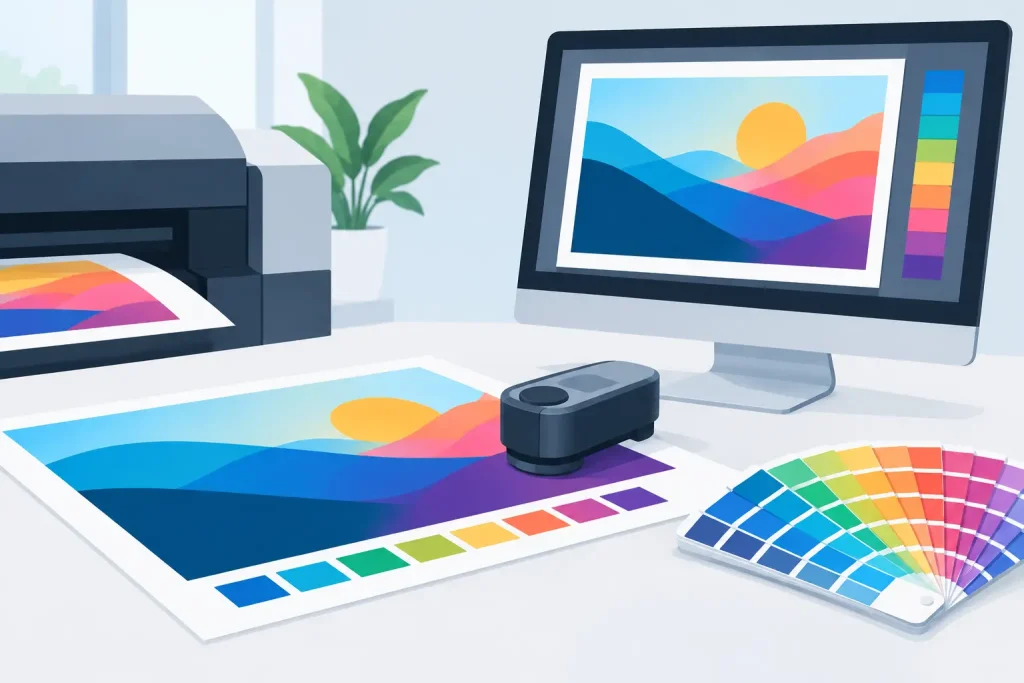
Location lighting matters. Matte materials reduce glare under direct spotlights, while glossy surfaces can make certain colors appear deeper but may reflect overhead fixtures. Backlit systems require graphics prepared for illumination, not standard front-lit artwork. The intended print method and material should be decided before final artwork approval, particularly when brand color consistency is a requirement.
Print Method and Material Selection
The best material is the one that matches the installation period and environment. For indoor campaigns, PVC, PP white, fabric, and mounted board products each serve different practical needs. For a temporary promotion, prioritize quick setup and manageable weight. For a longer retail installation, prioritize a stable substrate, dependable finishing, and a graphic surface that remains presentable under indoor lighting.
Eco-solvent and solvent printing are commonly suited to a range of display graphics and adhesive applications. UV printing is useful where direct printing onto selected rigid materials or a sharp, durable finish is required. Latex printing can be a practical option for certain indoor graphics where fast handling and broad material compatibility are priorities. Dye sublimation is a natural fit for polyester fabric banners and exhibition-style textile displays.
Do not choose a print process based on a specification label alone. The finish, substrate, expected lifespan, and installation method should drive the decision. A lightweight fabric graphic and a rigid UV-printed panel may both be called hanging signs, but they behave differently in transport, installation, and daily use.
Mounting Is Part of the Sign Specification
A printed panel is not a finished hanging-sign solution until the suspension details are clear. Confirm who is supplying the hanging hardware, whether the venue permits ceiling suspension, and what load restrictions apply. Exhibition halls, malls, office lobbies, and retail centers often have their own approval process and installation rules.
Specify the finished size, number of faces, material thickness or fabric type, finishing method, and required hardware before production starts. If the sign needs eyelets, pole pockets, reinforced corners, aluminum framing, hanging wire, or a particular clearance height, those details affect the final result. They should not be left to the installation crew to solve on site.
For campaigns across Kuala Lumpur, it is also sensible to check site access and installation timing early. A sign may be simple to print but difficult to bring into a mall after operating hours or difficult to install when ceiling access equipment is restricted. Production and installation should be planned as one job.
Artwork Checks Before Production
Before approving a hanging sign, check the final file at its intended scale. Confirm that logos are high resolution, black text is rich enough to read clearly, and colors have sufficient contrast against the background. Keep critical text away from eyelets, edges, folds, frames, and pole pockets.
For double-sided signs, review both faces side by side. For fabric, account for seams and finishing allowances. For rigid panels, check whether the substrate edge will remain visible and whether the sign needs printing on one or both sides. A small proofing review can prevent a costly reprint when the finished piece is already at ceiling level.
My Inkjet can support a hanging-sign requirement with large-format graphic production, fabric and rigid display options, mounting and finishing considerations, and related retail or event display hardware. The practical starting point is simple: define the venue, the viewing distance, the campaign period, and the installation method before selecting the print format.
A hanging sign earns its space when a visitor can spot it, understand it, and move in the right direction without stopping to decipher the message. Specify for that moment of recognition, not for the close-up artwork review.
Related Posts