A label can look correct at approval and fail after a week on a chilled bottle, a delivery box, or a retail shelf. The practical decision in PP white versus Mirrorkote is not simply synthetic versus paper. It is a choice between durability, finish, application environment, expected handling, and unit cost.
For business labels, promotional stickers, packaging seals, and point-of-sale materials, both stocks have a place. PP white is generally selected when water resistance and flexibility matter. Mirrorkote is often selected when a bright, glossy paper finish and economical high-volume production are the priority. The right option depends on where the printed piece will go after it leaves the printer.
PP White Versus Mirrorkote: The Core Difference
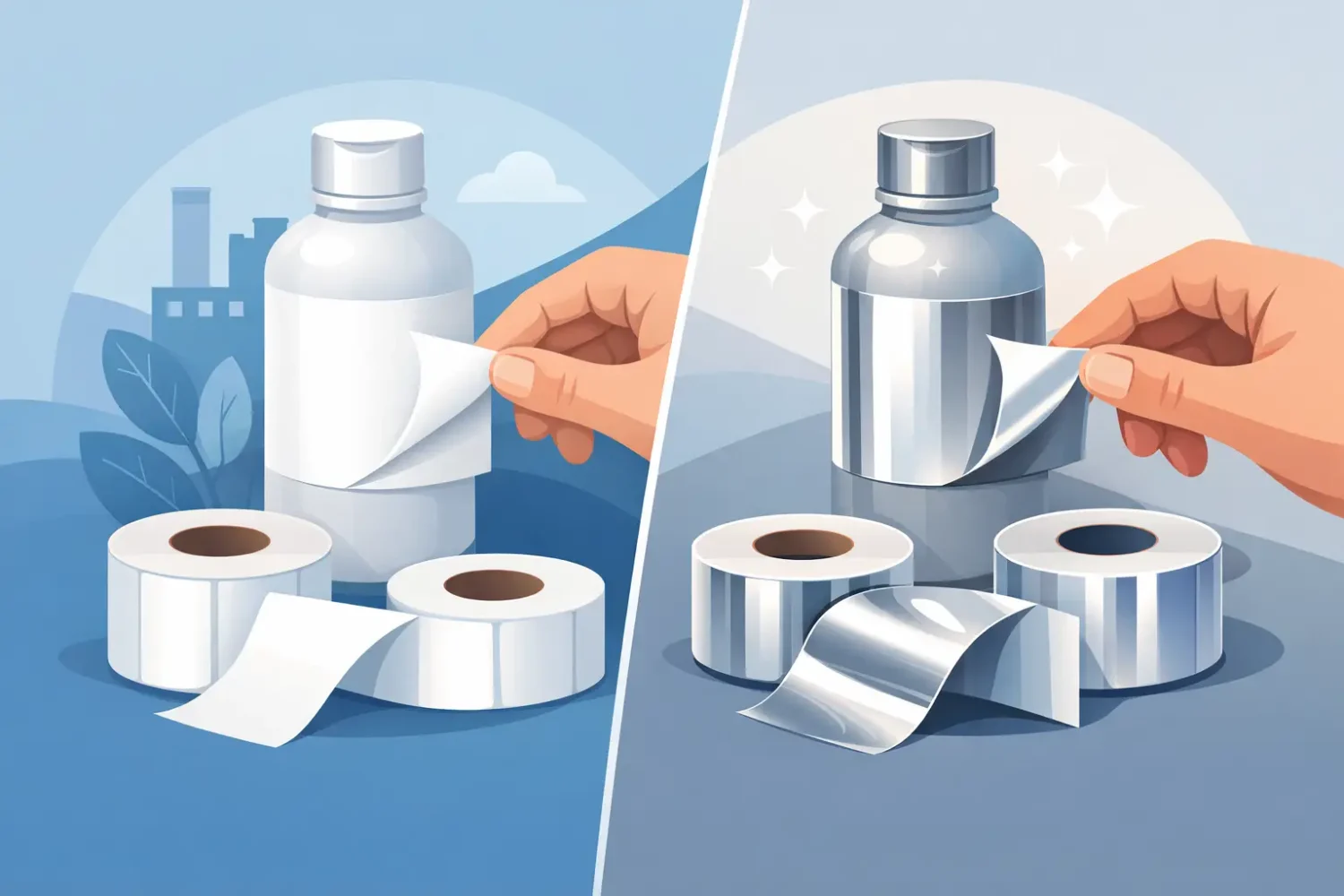
PP white is a white polypropylene synthetic material. It does not absorb moisture like paper, which makes it suitable for labels and stickers exposed to condensation, splashes, humidity, or frequent handling. It is also flexible, allowing it to conform better to curved packaging such as bottles, jars, containers, and cosmetic tubes.
Mirrorkote is a coated paper stock recognized for its smooth, glossy surface. It produces clean color, sharp small text, and a polished retail appearance. For indoor labels, product information stickers, carton seals, price labels, and promotional stickers that stay dry, it remains a practical and cost-conscious choice.
The most useful distinction is straightforward: PP white is built for tougher use conditions, while Mirrorkote is built for attractive paper-based print at an efficient cost. Neither is automatically better. A premium-looking label on the wrong substrate can become a customer complaint if the surface wrinkles, absorbs moisture, or lifts too early.
When PP White Is the Better Material
Choose PP white when the label must remain readable and presentable in wet or demanding environments. This includes beverage bottles, chilled food containers, bathroom products, cleaning products, personal care items, outdoor equipment labels, and shipping-related stickers that may encounter rain or moisture.
Because polypropylene is synthetic, PP white does not soften or break down in the same way as paper when exposed to water. This is useful for cold-chain products, refrigerated displays, or products used around sinks, kitchens, and bathrooms. A label for bottled sauce, hand wash, or a takeaway container may need this extra resistance even when it is not intended for outdoor use.
PP white also works well where flexibility is required. A paper label can crease or show stress when wrapped tightly around a small-radius bottle. PP white generally follows the container more smoothly, especially when the correct adhesive and application method are used. For cylindrical packaging, test samples on the actual container before committing to a full run.
Its benefits come with trade-offs. PP white normally costs more than a paper stock, and it may require more careful adhesive selection for certain surfaces. Low-energy plastics, textured containers, oily surfaces, and cold applications can all affect adhesion. Material choice alone does not guarantee that a sticker will stay in place.
Print and finishing considerations for PP white
PP white can deliver strong, opaque color and a clean commercial finish. The final appearance depends on the print method, white material grade, ink system, and whether a gloss or matte laminate is added. A laminate can improve scratch resistance and protect print from repeated wiping, but it adds cost and can change the perceived finish.
For labels that will be handled regularly, rubbed against other products, or exposed to light moisture, it is worth specifying the real use case at the quotation stage. A basic PP white sticker for indoor packaging is different from a durable product label for refrigerated retail or outdoor use.
When Mirrorkote Is the Better Material
Mirrorkote is often the sensible option for dry, indoor applications that need a smooth glossy surface and good visual impact. It is commonly suitable for retail product labels, bakery packaging, box seals, event stickers, promotional giveaways, short-term campaign labels, and printed inserts.
The coating provides a bright print surface that supports crisp graphics, solid color areas, and fine typography. Brands that need a familiar glossy sticker look without moving to a synthetic material often choose Mirrorkote for this reason. It is particularly effective when the label is applied to cartons, paper bags, rigid boxes, or packaging that will remain in a controlled retail setting.
Budget is another reason to use Mirrorkote. For large quantities of standard labels that do not need water resistance, it can provide an efficient balance of appearance and cost. There is little value in specifying PP white for a dry carton seal used once in an air-conditioned store, unless the label also needs unusual tear resistance or surface flexibility.
Mirrorkote has clear limits. It is paper-based, so prolonged exposure to water, condensation, oil, or high humidity can affect its appearance and strength. Edges may absorb moisture, and repeated abrasion can dull or damage the printed surface. It is not the first choice for chilled bottles, shower products, freezer packaging, or items likely to be washed.
Print and finishing considerations for Mirrorkote
Mirrorkote can be finished in ways that improve presentation, including lamination or selected protective coatings where available. However, finishing does not convert a paper stock into a fully synthetic waterproof label. A laminated Mirrorkote sticker may tolerate light splashes better than an unlaminated version, but the paper edge and adhesive system still need consideration.
For campaigns with a premium visual requirement but limited exposure to moisture, Mirrorkote can produce the result without paying for material performance that the application does not need. This makes it a practical stock for marketing teams managing high-volume retail rollouts and temporary promotions.
Match the Stock to the Application, Not the Artwork
Artwork is usually the same whether the job prints on PP white or Mirrorkote. The application changes the decision. Before ordering, identify the product surface, storage temperature, likely exposure to water, expected life span, and how often the label will be touched.
A few common examples show the difference. A glossy sticker for a dry gift box, bakery box, or event pack can often use Mirrorkote. A label on a shampoo bottle, chilled drink, cleaning spray, or reusable food container is more suited to PP white. A short-term indoor promotion can use either material, with budget and finish deciding the outcome. A label on a curved container should generally favor PP white because its flexibility reduces the risk of visible creasing.
Surface type matters as much as the stock. Smooth glass, coated cartons, metal tins, HDPE containers, and textured plastic surfaces do not behave the same way. Adhesive performance can vary with heat, cold, dust, oil, and packaging texture. For critical products, request a sample or test a small quantity under real conditions before placing a larger production order.
Color, Finish, and Brand Presentation
Both materials can support professional commercial graphics, but they communicate a different physical quality. PP white often feels more durable and modern, particularly with a matte finish or protective laminate. Mirrorkote gives the familiar shine associated with traditional product stickers and printed retail packaging.
For color-critical work, supply print-ready artwork with the correct color settings and adequate image resolution. Large solid areas, small reverse text, metallic effects, and very light colors should be checked on a proof where possible. The substrate, ink, finishing, and viewing light can all affect the final result.
Do not assume gloss always looks more premium. A matte PP white label can be more appropriate for skincare, specialty food, technical products, and minimalist branding. A glossy Mirrorkote label may be the better fit for value retail products, festive packaging, or colorful promotional items. The finish should support the product position and usage conditions at the same time.
Order Specifications That Prevent Rework
When requesting labels or stickers, provide the finished size, shape, quantity, application surface, and intended environment. State whether the item will be refrigerated, exposed to water, placed outdoors, wrapped around a curve, or handled frequently. Also confirm whether you need individual cut stickers, sheets, rolls, kiss-cut labels, or die-cut shapes.
If the label needs durability beyond basic moisture resistance, specify that early. Requirements such as UV exposure, chemical contact, freezer use, scratch resistance, or strong permanent adhesion can change the recommended material, adhesive, print method, and finishing process. A lower initial material cost can become expensive if labels must be replaced after delivery.
For standard commercial print orders, My Inkjet can help match sticker material and production options to the intended display or packaging use. The useful starting point is not the artwork file. It is a clear description of where the finished label will be used.
Choose Mirrorkote when the job needs a sharp, glossy paper label in a dry environment. Choose PP white when moisture, flexibility, and longer-term wear are part of the job. The better label is the one that still looks right after the product has been stored, handled, transported, and seen by the customer.
Related Posts