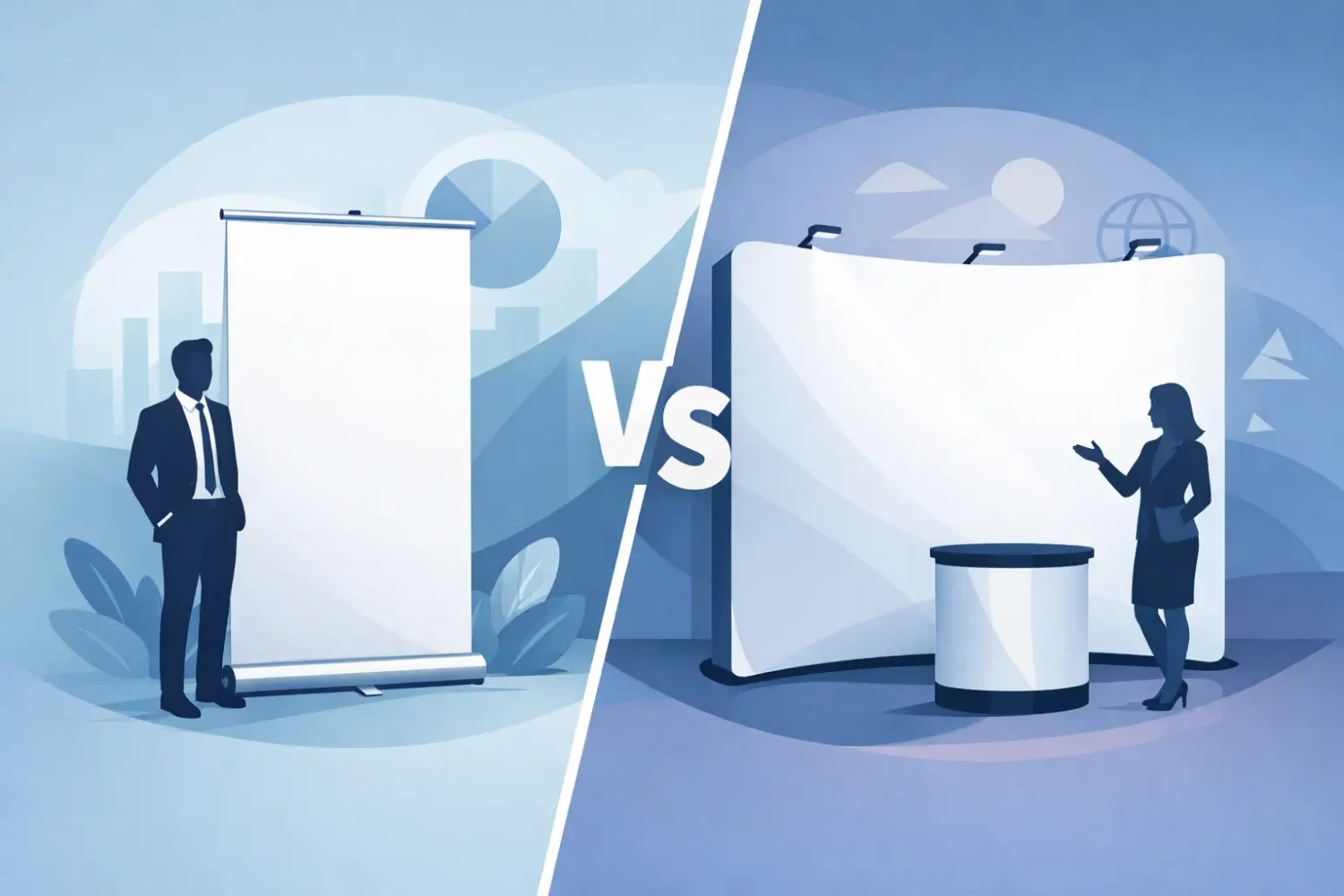
A 10-foot exhibition space can look either temporary or fully built out depending on the display system behind the graphic. When comparing roll up versus tension fabric, the print design is only one part of the decision. Setup time, repeat use, storage, viewing distance, lighting, and the available footprint all affect which format works best.
Roll-up banners are compact, fast, and familiar. Tension fabric displays create a larger, more finished visual surface and are better suited to branded environments where the display itself needs presence. Neither is automatically the better choice. The right format depends on how and where the graphic will be used.
Roll Up Versus Tension Fabric at a Glance
A roll-up display, also called a retractable banner stand, stores the printed graphic inside an aluminum base. The user pulls the banner upward and secures it to a support pole. It is a practical choice for single-message promotions, directional signage, product launches, reception areas, and small event spaces.
A tension fabric display uses a printed fabric graphic stretched over a lightweight frame. The fabric is typically finished with sewn edges or silicone beading, depending on the frame type. Once fitted, the material stays smooth and creates a broad, continuous graphic area. These displays are common at trade show booths, retail activations, media backdrops, and corporate events.
The main difference is scale and presentation. A roll-up banner is a portable sign. A tension fabric system is closer to a branded wall or structure.
When a Roll-Up Stand Makes More Sense
Roll-up stands are built for speed. A staff member can carry a stand in its bag, set it up in a minute or two, and pack it down just as quickly. That matters for roadshows, sales calls, mall promotions, training sessions, and events where a team has limited access time.
They also work well when the campaign needs several separate messages. A retailer may use one banner for a promotion, another for membership registration, and a third for payment information. Several roll-up units can be placed at entrances, beside counters, or along a queue without requiring a large open wall.
For buyers managing a limited display budget, roll-up systems offer a lower entry cost than large fabric frames. They are especially useful for short-term promotions or campaigns where the message will be replaced frequently. If the hardware is reusable and the stand supports graphic replacement, new prints can be ordered without replacing every component.
The trade-off is visual impact. A standard roll-up is narrow, usually designed for one person to view from a short distance. Its base is visible, and the support pole sits behind the print. This is not a problem for practical signage, but it does not provide the same booth-level finish as a full tension fabric backdrop.
Best uses for roll-up banners
Roll-up stands are a strong fit for conference registration areas, showroom promotions, retail point-of-sale messaging, pop-up counters, meeting rooms, and directional communication. They are also useful as supporting graphics around a larger booth rather than as the main visual feature.
Select the width based on the available floor space. A wider roll-up can carry a stronger message, but a narrow stand is easier to place in corridors, beside doors, and between fixtures. Keep the layout simple: one main headline, a clear image or product visual, and contact or action details that can be read quickly.
Where Tension Fabric Displays Perform Better
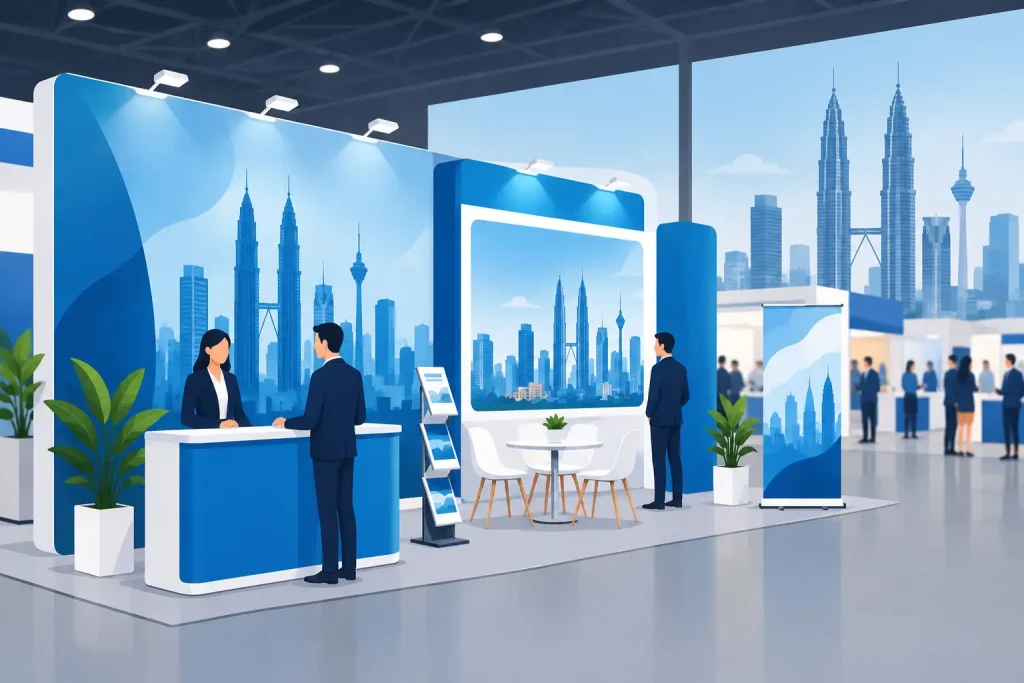
Tension fabric is the better option when the display needs to define a space. A straight or curved fabric wall can create a clean backdrop for a product demonstration, presentation stage, photo area, or trade show booth. Because the graphic covers the frame edge to edge, it gives the campaign a more deliberate and premium appearance.
Fabric displays also allow larger artwork without breaking the visual into multiple narrow panels. This is useful for wide brand imagery, large product photography, timelines, or graphics that need to be seen across an exhibition aisle. A 10-foot fabric wall can do the work of several individual banners while presenting one uninterrupted message.
Another advantage is finish. Properly tensioned fabric has a soft, matte appearance that photographs well and reduces glare under event lighting. For businesses planning media photos, social content, speaker sessions, or customer photo opportunities, this can be a practical benefit rather than a cosmetic extra.
The trade-off is that tension fabric systems need more assembly than a retractable stand. The frame must be connected, and the fabric must be fitted correctly. Most systems remain straightforward for event staff, but setup should be tested before the event day, especially for larger walls or shaped frames.
Best uses for tension fabric
Use tension fabric for exhibition back walls, branded photo backdrops, corporate launches, product demonstrations, retail campaign zones, and long-running promotional installations. It is also a suitable choice when the display must match other structured elements such as counters, LED light frames, or popup displays.
For a major booth, consider the viewing angle. A straight wall is efficient for narrow booths and formal backdrops. A curved wall can create more depth and soften the edges of an open stand. If the display will be viewed from both sides, a double-sided frame and graphic configuration may be needed.
Transport, Storage, and Repeat Use
A roll-up stand is generally easier to transport. The graphic retracts into its base, protecting the print during movement and storage. The complete unit usually fits in one carry bag, making it suitable for sales teams and event staff who travel with several marketing items.
Tension fabric breaks down into a frame, fabric graphic, and carry case. It is still portable, but the case is larger and the components need to be checked after each event. The fabric should be folded cleanly and kept dry. The frame should be inspected for bent connectors or missing parts before the next setup.
For repeat use, both systems can offer good value when handled properly. Roll-up mechanisms need care because the internal spring and graphic edge can be damaged by forcing the banner down. Fabric graphics need proper packing to prevent creases, stains, and snagged stitching. If a display will be used every week by different teams, choose hardware that is simple enough to set up consistently and provide basic handling instructions with it.
Print Material and Graphic Quality
The display format should guide the print specification. Roll-up banners typically use materials selected for flatness, opacity, and stable retraction. PVC banner material is commonly used because it holds shape and presents strong color for indoor promotional graphics.
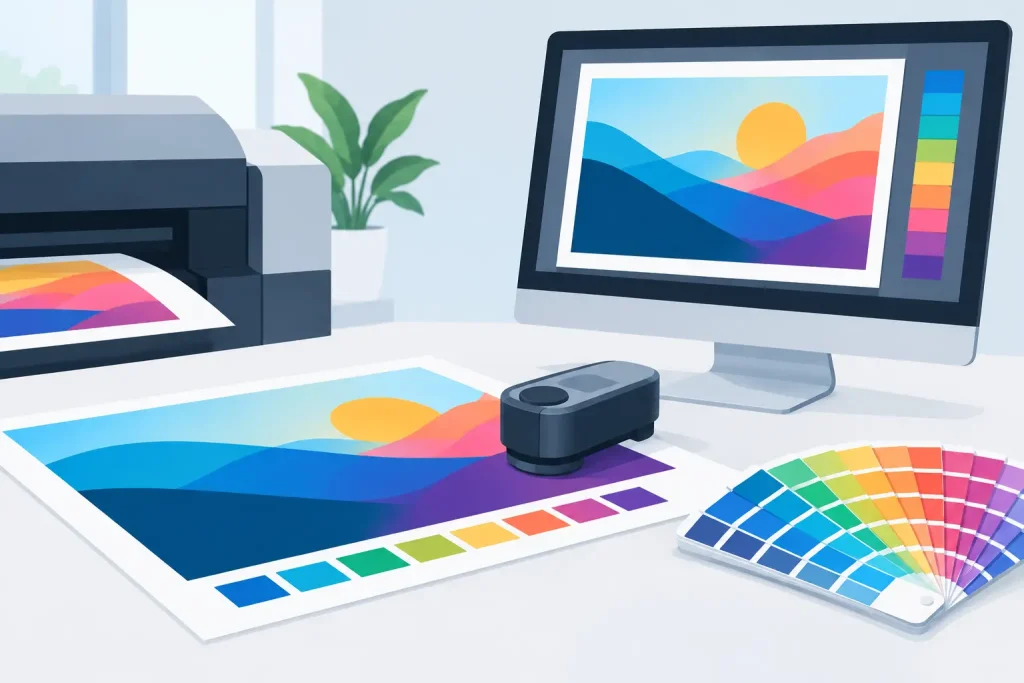
Tension fabric requires a stretch-compatible textile that can be pulled smoothly across the frame without distorting the artwork. Dye sublimation printing is often used for fabric displays because the ink becomes part of the material, producing a soft finish and consistent color coverage. For both formats, use high-resolution images and allow for the final viewing distance. A close-up retail sign needs finer detail than a backdrop viewed from 15 feet away.
Artwork setup is also different. Roll-up designs need safe areas at the bottom because part of the print sits inside the base. Tension fabric artwork needs correct bleed and panel measurements so the edges, seams, and frame fit do not cut into logos or key copy. Supplying the final hardware size before design approval prevents costly revisions.
Budget the Full Display, Not Only the Print
The lowest initial price is not always the lowest campaign cost. A roll-up stand may be the efficient choice for a one-day promotion or a campaign requiring multiple locations. A tension fabric wall may cost more upfront, but it can replace several smaller signs and give a booth a stronger central feature.
Factor in hardware reuse, graphic replacement, packing requirements, installation labor, and storage. A procurement team ordering for several branches may benefit from standard roll-up sizes that are easy to distribute. A marketing team planning an annual exhibition calendar may get more value from reusable fabric frames with replacement graphics for each campaign.
My Inkjet can supply display hardware and printed graphics as one order, which helps when the print material, finishing, and frame dimensions need to match from the start.
Choose by Campaign Requirement
Choose a roll-up stand when portability, fast setup, individual messaging, and controlled cost are the priority. Choose tension fabric when the goal is a larger branded surface, a cleaner event presentation, or a booth feature that customers will notice from across the room.
For many events, the most effective answer is not one or the other. Use a tension fabric wall as the main branded backdrop, then place roll-up banners at entry points, counters, and product zones where specific information is needed. Start with the customer journey through the space, then assign each format a job it can perform well.
Related Posts