A roll-up stand can look sharp on installation day and worn by day three if the graphic surface is not specified for its environment. This large format lamination guide covers the practical decisions behind film selection, finish, adhesive, and production sequence for commercial display graphics.
Lamination is a clear protective film applied over a printed surface. It adds resistance to scratches, moisture, fingerprints, UV exposure, and cleaning, while also changing the final appearance of the graphic. The correct specification depends on where the display will be used, how long it will remain installed, the print method, and the material being laminated.
When Large Format Lamination Is Needed
Lamination is usually a sensible choice for graphics that will be handled, cleaned, moved, or exposed to outdoor conditions. Retail wall graphics, window stickers, point-of-sale panels, barricade displays, directional signs, and exhibition graphics often benefit from it. It is particularly useful for high-contact surfaces such as counters, menu boards, product displays, and removable promotional decals.
It is not required for every print job. A short-term indoor poster behind a frame may not need a laminate layer. Fabric produced by dye sublimation generally does not need film lamination because the dye is transferred into the textile rather than sitting on the surface. Adding film to a flexible fabric can reduce foldability and create an unsuitable finish.
The trade-off is straightforward: lamination improves protection but adds material cost, production time, and sometimes glare. For temporary indoor campaigns, the extra layer may not provide enough practical value. For graphics that need to stay clean and presentable through repeated use, it often pays for itself.
Large Format Lamination Guide: Start With the Application
Before selecting a laminate, define the display format and service conditions. A graphic for a roll-up stand has different requirements from a vehicle decal, a window sticker, or a rigid board mounted in a retail store.
Ask four questions before production: Will the graphic be used indoors or outdoors? How long must it last? Will people touch, clean, fold, or transport it? Is the base print a smooth self-adhesive vinyl, paper, synthetic sheet, banner, or rigid panel?
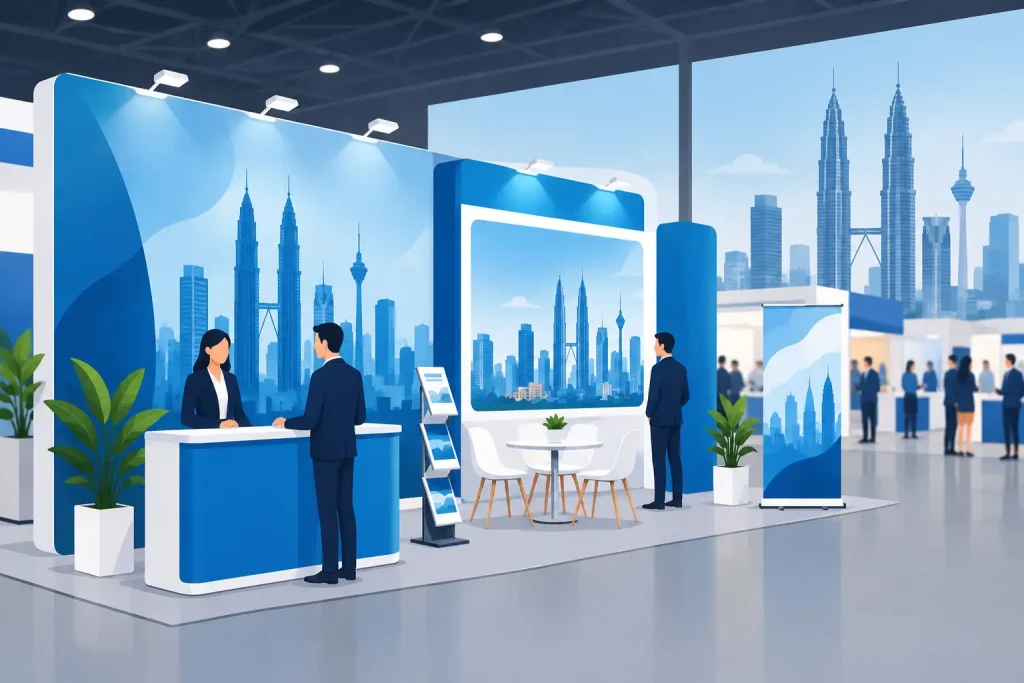
An indoor event backdrop may only need a matte laminate for reduced light reflection and easier photography. A storefront promotion that receives direct sun, rain, and daily cleaning needs a more durable film and adhesive system. A floor graphic requires a certified anti-slip laminate rather than a standard gloss or matte film.
Match Film Durability to Campaign Life
Laminating films are commonly grouped by how they are manufactured and how well they conform and resist shrinkage over time.
Monomeric laminate is a cost-effective option for flat, short-term indoor graphics. It is suitable for promotional boards, temporary retail signage, standard posters, and flat window applications where long outdoor life is not required. It should generally be paired with a compatible monomeric print vinyl. Using a lower-grade laminate over a longer-life vinyl can cause uneven aging, edge lift, or shrinkage.
Polymeric laminate provides better stability and is appropriate for medium-term applications. It is commonly used for retail decals, outdoor signs, display panels, and graphics that need more dependable performance across changing temperatures. This is often the practical middle ground for commercial branding programs.
Cast laminate is designed for demanding long-term work and curved surfaces. It is the standard choice for vehicle wraps, contoured surfaces, and premium outdoor applications where flexibility and color stability matter. It costs more, but it follows curves better and is less likely to shrink or pull away from recessed areas.
Do not select a film based on thickness alone. A thicker film may offer more physical protection, but conformability, adhesive quality, and compatibility with the print media still determine whether the finished graphic performs correctly.
Choose the Finish for Viewing Conditions
Gloss laminate increases color saturation and gives printed graphics a polished, high-impact look. It works well for product promotions, retail decals, and images where color depth is the main priority. The downside is reflection. Under spotlights, LED light frames, or direct sunlight, gloss can produce glare that makes copy harder to read from certain angles.
Matte laminate reduces reflection and hides minor handling marks better than gloss. It is a practical option for exhibition panels, menu graphics, presentation boards, indoor signage, and displays photographed under strong event lighting. Matte surfaces can slightly soften the visual punch of dark colors and high-contrast images, so test samples are useful for brand-critical work.
Luster or satin laminate sits between gloss and matte. It offers reduced glare with more color depth than a full matte finish. For many retail and corporate graphics, it is the most balanced choice.
Specialty films should be specified only when the application requires them. Anti-slip films are for floor graphics. Dry-erase laminates suit reusable planning boards or sales displays. Textured films can reduce glare or create a premium surface, but may affect fine detail and small text.
Check Print Method and Drying Time
A laminate should be applied only after the print is ready. This is especially relevant with solvent and eco-solvent printing, where residual solvent needs time to outgas before lamination. If film is applied too early, trapped solvent can lead to bubbles, silvering, adhesive failure, or visible distortion later.
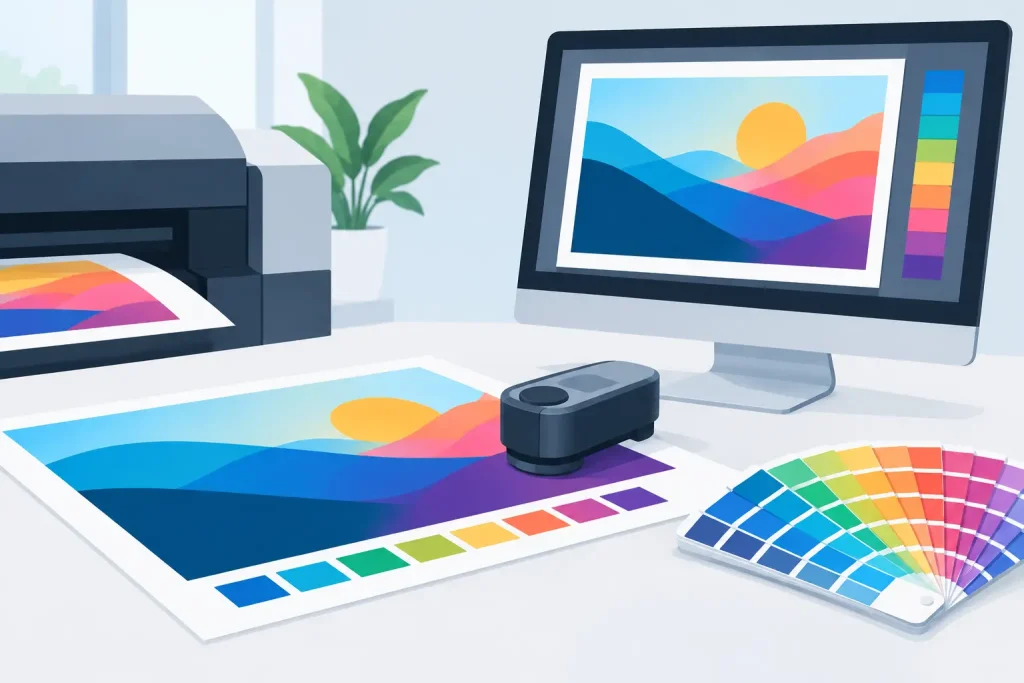
Actual drying time depends on ink load, media, temperature, humidity, and printer settings. Heavy-ink images require more time than simple text graphics. A production team should follow the ink and media supplier guidance, then verify the result with a small test before processing a full campaign.
Latex prints can often move to finishing more quickly, but the print still needs to cool and stabilize. UV prints cure immediately under UV light, yet adhesion testing remains necessary because some UV ink surfaces can be difficult for certain laminates to bond to. For dye sublimation fabric, focus on fabric weight, stretch, and finishing method rather than applying a laminate.
The laminate, printed vinyl, and ink system should be treated as one specification. Mixing materials from unrelated systems can work, but it creates more risk than using a tested combination.
Apply Lamination in the Right Production Order
For roll media, the standard sequence is print, allow adequate drying or curing, laminate, trim, and then finish or install. Keeping the web straight and tension even is essential. Too much tension can stretch the print or laminate, while too little can cause wrinkles and tunneling.
For rigid display work, the best sequence depends on the substrate and equipment. Many graphics are laminated before mounting to KT board, PVC board, acrylic, aluminum composite panel, or other rigid surfaces. This protects the image before it reaches the mounting stage. However, oversized boards or delicate materials may require a different workflow to avoid pressure marks, edge damage, or trapped dust.
Temperature also matters. Cold lamination adhesive performs poorly in unsuitable conditions. A very cold print room, damp media, or dusty finishing bench can create defects that appear only after delivery. Clean rollers, clean work surfaces, and properly stored media are basic production controls, not optional extras.
Common Lamination Problems and What They Mean
Silvering appears as a cloudy or speckled area under the laminate. It can result from insufficient adhesive wet-out, textured print surfaces, low application temperature, or incompatible materials. Mild silvering may reduce as adhesive settles, but it should not be accepted on premium close-view graphics without testing.
Bubbles and tunnels usually point to uneven pressure, incorrect tension, dust contamination, or premature lamination. Small bubbles may sometimes be released during finishing, but large areas should be remade rather than patched for customer-facing displays.
Edge lift and shrinkage often occur when film durability does not match the base media, when graphics are exposed to heat and moisture, or when installation edges were not prepared correctly. This is why outdoor decals and vehicle graphics need a higher-grade matched film system.
Curling is common when the laminate and print media have different tension or dimensional behavior. It can make a graphic difficult to load into a roll-up stand, apply to a panel, or keep flat in a frame. For display hardware, test the finished graphic in the actual stand or frame before releasing the job.
Information to Provide When Ordering
A clear production brief avoids incorrect material selection. For commercial orders, provide the display format, finished size, quantity, print method if specified, indoor or outdoor location, expected campaign duration, required finish, and whether the graphic will be mounted or supplied as a roll.
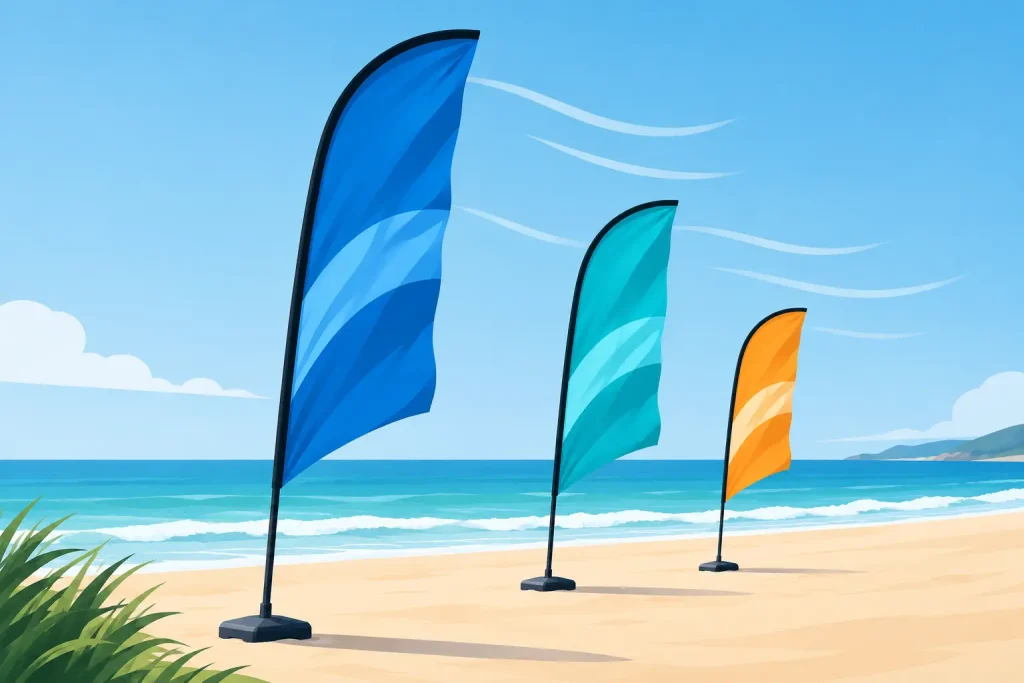
Also identify any special conditions: direct sun, frequent cleaning, high customer contact, curved installation surfaces, floor use, backlit use, or repeated transport between events. A roll-up stand graphic, popup display panel, beach flag, LED light frame, or self-adhesive window graphic may all use large-format printing, but they should not automatically receive the same laminate specification.
For buyers managing multiple display formats, source the hardware, print, mounting, and finishing as one coordinated job whenever possible. My Inkjet can match printed graphics to common promotional display systems and finishing requirements, reducing the risk of a stand, panel, or frame receiving a graphic with the wrong weight, finish, or fit.
The best laminate is not always the most expensive one. It is the film that matches the graphic’s surface, viewing environment, campaign life, and handling requirements. Specify those conditions early, approve a sample when color or finish is critical, and the finished display will stay presentable for the work it is expected to do.
Related Posts