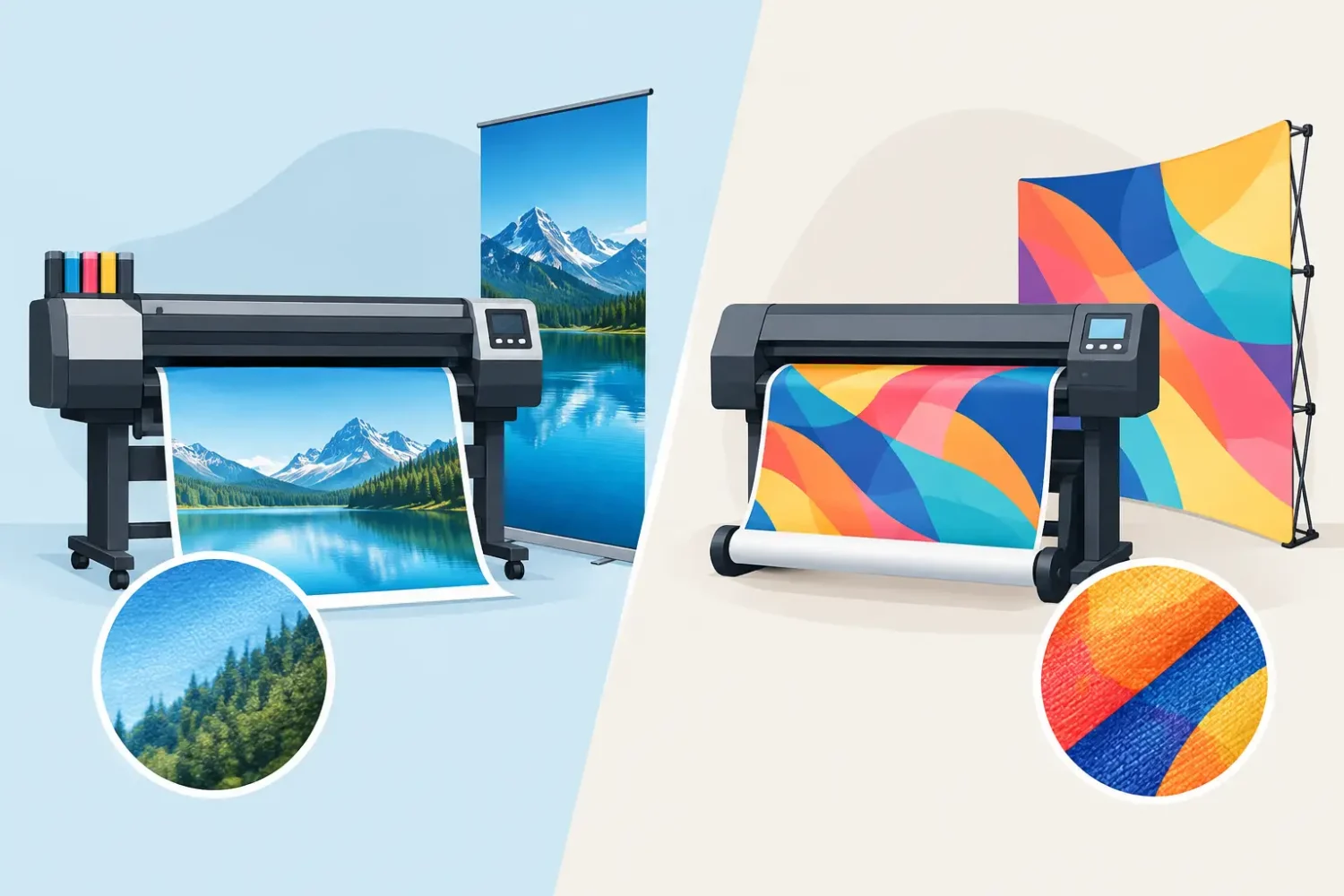
A fabric backdrop that looks rich under exhibition lighting and a roll-up banner that stays flat through repeated use may both be called large-format prints, but they should not automatically be produced the same way. Latex versus sublimation printing is a material and application decision first. The right choice affects color appearance, surface feel, durability, finishing, installation, and the display hardware you can use.
For business buyers ordering event graphics, retail signage, wall visuals, flags, or point-of-sale displays, the question is not which process is universally better. It is which process fits the substrate, viewing environment, and expected service life of the job.
Latex Versus Sublimation Printing: The Practical Difference
Latex printing applies water-based latex inks to the surface of a compatible media. Heat cures the ink, creating a durable printed layer on materials such as PVC banner, self-adhesive vinyl, paper, film, canvas, and selected coated textiles. It is commonly specified for roll-up banner graphics, window graphics, posters, stickers, mounted boards, retail panels, and outdoor promotional signage.
Dye sublimation printing works differently. A special dye is printed onto transfer paper, then heat and pressure convert the dye into gas and bond it into polyester fabric or polyester-coated material. In direct-to-fabric production, the ink may be printed directly onto the textile before heat fixation. Rather than sitting on the surface, the color becomes part of the polyester fibers or coating.
That difference explains most of the visual and practical trade-offs. Latex is highly flexible across signage media. Sublimation is purpose-built for polyester-based fabric graphics and products where a soft, non-reflective textile finish matters.
Choose by Material Before Image Type
The fastest way to narrow the choice is to start with the display material. If the job requires PVC, vinyl, sticker stock, paper, PP film, synthetic media, or a rigid board-mounted graphic, latex is normally the relevant option. Sublimation cannot replace latex on those materials because the dye needs polyester content or a polyester coating to bond correctly.
If the finished product is a polyester tension fabric backdrop, fabric popup skin, textile lightbox graphic, exhibition wall, table throw, or indoor hanging fabric banner, sublimation is usually the stronger fit. The print remains flexible with the fabric, folds more naturally, and avoids the plastic-like surface associated with many coated banner materials.
This is especially relevant when a campaign includes both hardware and graphics. A retractable roll-up stand commonly uses a smooth banner film or PP-based media, making latex a practical production choice. A stretch-fabric frame needs a graphic that can tension evenly without cracking or feeling stiff, which points toward sublimation on polyester fabric.
Color, Finish, and Viewing Distance
Both methods can produce professional commercial graphics, but they create a different finish. Latex printing offers sharp detail, solid color blocks, and strong opacity on suitable media. It is effective for product posters, retail promotions, directional signs, branded stickers, and graphics with fine text viewed at close range.
Sublimation produces a softer textile appearance with a matte, low-glare finish. This is valuable for stage backdrops, fabric walls, photo backgrounds, and exhibition displays where overhead lighting can create reflections on PVC or film. The absence of a heavy ink layer also helps fabric retain its natural drape.
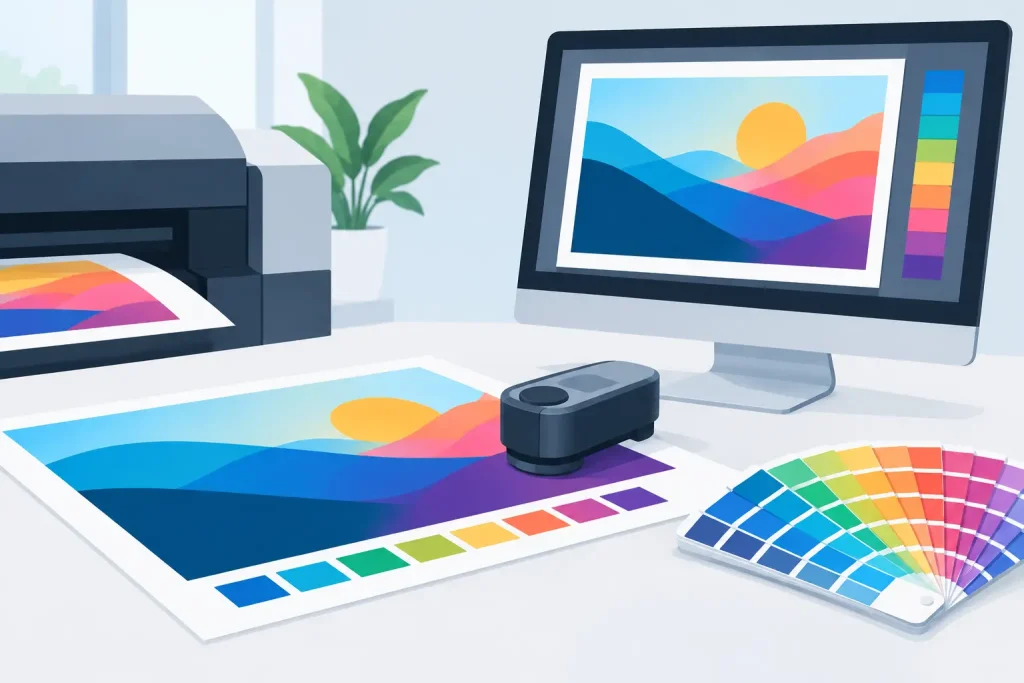
For close-viewed graphics, artwork preparation still matters more than the print label. Small text needs adequate size, images need sufficient resolution at final output dimensions, and brand colors should be supplied consistently. A bright RGB image on screen may not reproduce as expected in either process. If corporate color matching is critical, provide approved color references and allow for material-specific variation.
Sublimation can show strong color on white polyester, but the fabric base affects the result. Latex can print on a wider range of white and colored media, depending on the machine, ink configuration, and substrate. When the application needs white ink, transparency effects, metallic films, or specialty sticker materials, another process such as UV may be more appropriate than either latex or sublimation.
Durability Depends on Where the Graphic Will Work
Latex is generally the more versatile option for indoor and outdoor signage because compatible vinyl and banner substrates are designed for handling, mounting, cleaning, and exposure. Actual outdoor life depends on the media, laminate, ink set, sunlight, rain, installation method, and local conditions. A short-term event banner and a long-term storefront graphic should not be specified the same way.
Sublimated fabric is excellent for indoor display use, repeated setup, and transport when handled properly. It is lightweight, often washable or spot-cleanable depending on the fabric, and less likely to show glare. However, it is not the default choice for every outdoor job. Wind, moisture, fabric construction, hardware tension, and finishing all need to be considered. Polyester flag fabric can be sublimated effectively, but it is a specialized use case rather than a substitute for a solid PVC banner.
For a busy retail environment, consider contact and cleaning. A wall graphic near customer traffic, a counter wrap, or a promotional sticker may need the wipeable surface and adhesive options available with latex-printed media. For an indoor conference booth where staff assemble the same backdrop across multiple venues, a foldable sublimated fabric graphic can reduce bulk and present better under lighting.
Production and Finishing Considerations
Latex prints leave production ready for cutting, laminating, mounting, sewing, or installation after proper curing. The workflow suits a broad menu of commercial formats: adhesive decals, posters, roll-up inserts, PVC banners, board graphics, and window applications. It also supports campaigns that need the same artwork adapted across several non-fabric materials.
Sublimation involves additional heat-transfer or fixation steps and is tied to polyester-compatible fabric. The workflow is worthwhile when the final product benefits from textile qualities. Hemming, silicone edge beading for fabric frames, pole pockets, zippers, and hook-and-loop finishing may be part of the job. These details must match the hardware dimensions and assembly method.
Do not treat finishing as an afterthought. A fabric lightbox graphic requires the correct edge treatment and tension allowance. A roll-up banner requires the correct visible size, bleed, and bottom allowance for fitting into the cassette. A popup display needs panel or fabric dimensions that correspond to its frame. Confirm the hardware model before sending artwork to print.
When Latex Is the Better Purchase Decision
Latex is often the practical choice when a buyer needs one supplier to produce several sign types from the same campaign. It is suited to window promotions, temporary retail graphics, mounted display boards, self-adhesive decals, roll-up banners, PVC banners, posters, and many other non-textile applications.
Choose latex when the priority is substrate range, surface durability, adhesive capability, or a graphic that must be mounted to a board, glass surface, wall, or retractable display mechanism. It is also a logical choice when a campaign needs short-run signage with crisp promotional messaging and straightforward installation.
When Sublimation Is the Better Purchase Decision
Sublimation is the stronger option when the display must look and behave like fabric. Trade show backdrops, tension fabric systems, fabric popups, textile light frames, soft signage, stage graphics, and branded table covers are common examples. The material packs smaller than rigid panels, reduces glare, and has a premium finish that works well in indoor brand environments.
Choose sublimation when the graphic will be stretched over a frame, folded for transport, or viewed under strong event lighting. It is also a good fit when users will stand close to the display and may touch the material, because the print does not feel like a separate coating on the fabric surface.
A Simple Specification Check Before Ordering
Before approving a production method, confirm four practical points:
- The display hardware and its exact graphic dimensions
- The intended substrate, including whether fabric is polyester
- The installation environment, such as indoor, outdoor, window, wall, or exhibition use
- The required finishing, including hems, pockets, adhesive backing, lamination, mounting, or silicone edges
These details prevent common problems such as ordering a fabric print for incompatible hardware, selecting a glossy material for a heavily lit backdrop, or using a banner media where a washable fabric graphic is needed.
For campaigns that combine roll-up stands, board signs, stickers, counters, and fabric walls, it is normal to use more than one print process. My Inkjet can help align the printed graphic with the selected display format so the finished item performs as intended. Start with the hardware, material, and environment, then let the production method follow that specification.
Related Posts