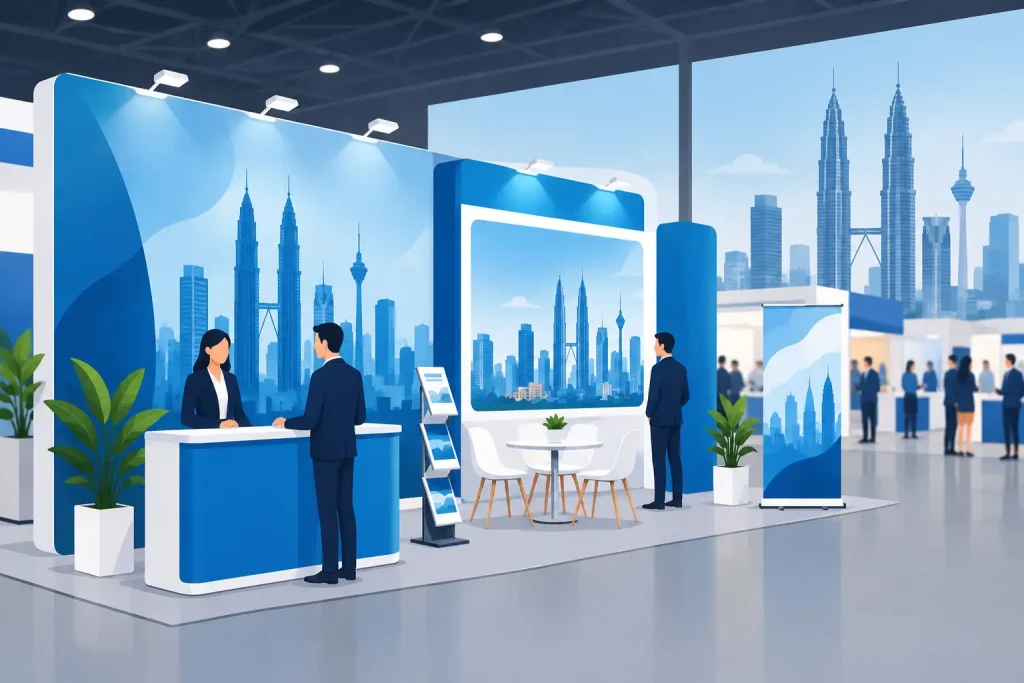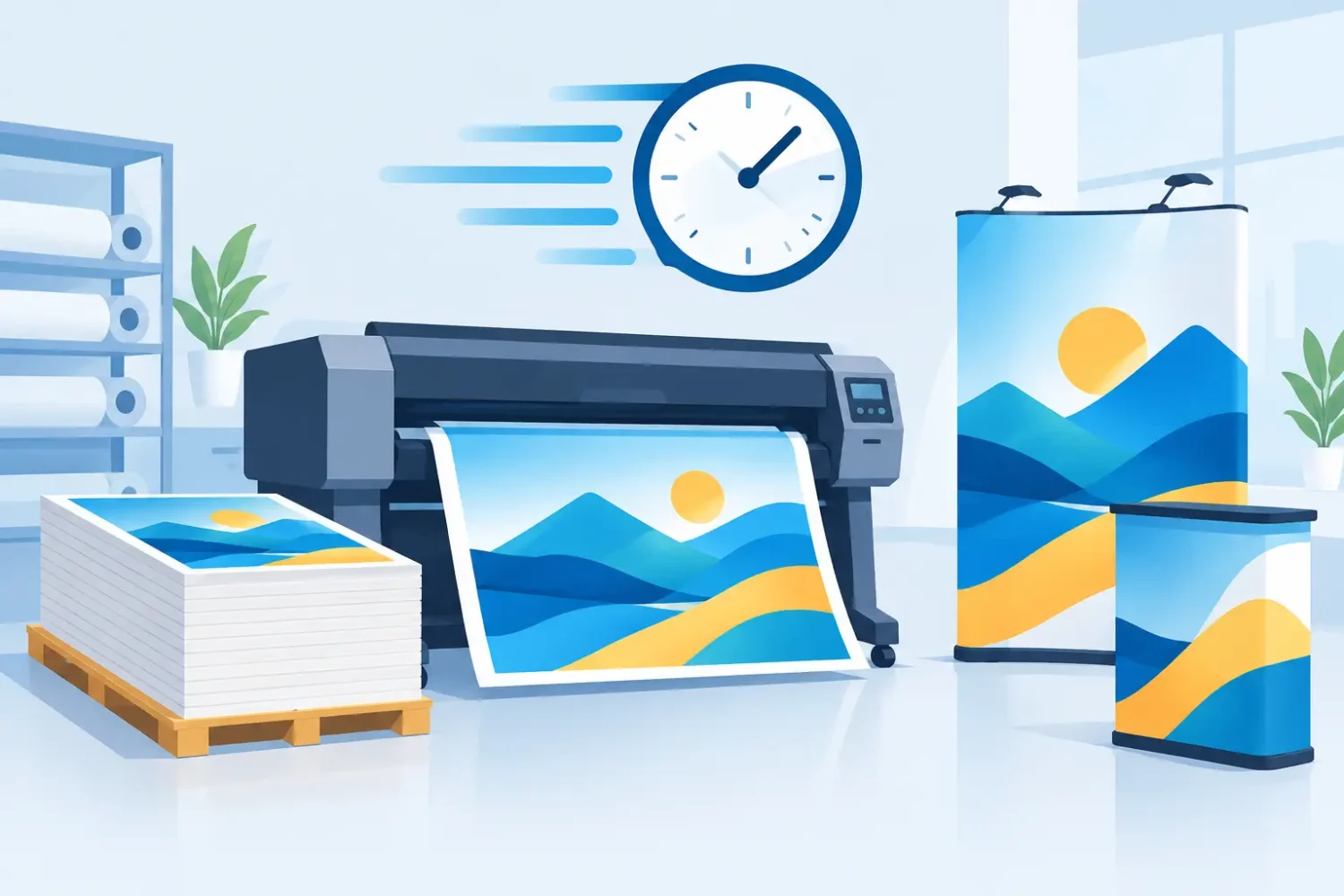
A trade show opens Monday morning. The booth space is booked, the roll-up stands have arrived, and the marketing team is still revising a product price panel on Friday afternoon. This is where printing turnaround times stop being a simple production question and become a campaign risk.
For business buyers, the usable timeline is not just the number of days required to print a banner or sticker. It includes artwork approval, material selection, machine scheduling, finishing, hardware assembly, packing, and delivery. A job can print quickly and still miss its deadline if one of the steps before or after print production is left until the last minute.
What Printing Turnaround Times Actually Include
A quoted turnaround time usually begins after final, print-ready artwork has been received and approved. It does not normally begin when an inquiry is sent, a design file is uploaded for review, or a purchase order is discussed internally. That distinction matters when a campaign involves several stakeholders, multiple display sizes, or last-minute design changes.
For a standard roll-up banner, the production sequence may include checking the PDF dimensions, printing the graphic, allowing ink to cure where required, trimming the material, fitting it to the roller mechanism, inspecting the finished unit, and packing it in its carry bag. A simple poster has fewer handling steps. A popup display, LED light frame graphic, mounted KT board, or custom counter can require more preparation and assembly.
The practical question is not, “How fast can this be printed?” It is, “When can the complete, checked, event-ready item be dispatched?”
Why Turnaround Varies by Print Method
Print method affects both output quality and production timing. The right choice depends on the display environment, viewing distance, material, durability requirement, and order quantity.
Solvent and Eco-Solvent Printing
Solvent and eco-solvent printing are common options for banners, vinyl graphics, outdoor signage, and display materials that need good durability. Depending on the media and finishing requirement, printed graphics may need adequate drying or curing time before lamination, cutting, mounting, or installation into a display system.
For an urgent banner order, this can make a difference. Printing may be completed the same day, but finishing too early can affect handling quality. If the job needs eyelets, pole pockets, contour cutting, or lamination, allow time for those steps rather than treating them as automatic extras.
UV Printing
UV printing cures ink immediately using ultraviolet light. This can reduce waiting time between printing and certain finishing processes, especially for rigid materials and specialty applications. It is well suited to items such as boards, panels, selected stickers, and display components where direct printing is required.
However, immediate curing does not mean every UV job is instant. File checks, substrate preparation, white ink layers, multiple passes, cutting, and packing still affect the schedule. Large quantities of rigid boards also take time to handle safely.
Latex and Dye Sublimation Printing
Latex printing is often selected for high-quality graphics with low odor and can be useful for indoor retail, wall graphics, and branded display output. Dye sublimation is commonly used for fabric graphics, including textile backdrops, flags, and selected exhibition displays.
Fabric work has its own production considerations. A dye-sub graphic may require transfer, heat processing, trimming, sewing, silicone edge finishing, or fitting to a frame. The result is a clean, professional display graphic, but it should be scheduled as a finished system rather than as a flat print.
The Biggest Causes of Delayed Display Orders
Most deadline problems are avoidable. They usually begin before the printer starts production.
Artwork is the most common issue. A file may be supplied at the wrong size, with low-resolution images, missing fonts, incorrect bleed, or an unsuitable color setup. A display graphic can also be technically correct but designed without allowing for the visible area, panel joins, roller base, or frame edge. Correcting these issues requires a new file, then another review cycle.
Material and hardware availability also matter. A PVC roll-up stand, beach flag base, popup frame, aluminum frame, or LED light frame is not interchangeable with another product. If the campaign needs a specific hardware model, size, or finish, confirm it before the artwork is finalized. Designing first and selecting the system later can result in expensive resizing or rework.
Finishing adds time because it is physical work. Lamination, mounting, contour cutting, eyelets, hemming, sewing, frame fitting, and assembly require operators and equipment. A large run of stickers with individual contour cuts may take longer than a single large-format banner, even when the total printed area is smaller.
Finally, shipping time is separate from production time. A display required for an event should arrive early enough to allow for receiving, site access, and installation. Do not use the event opening time as the delivery deadline.
How to Plan a Reliable Production Schedule
Start with the in-hand date, not the print date. If an exhibition opens Thursday, decide when the booth contractor or event team must physically receive the graphics. Then work backward through delivery, packing, finishing, printing, proof approval, and artwork preparation.
For a campaign with several components, group the order by production path. For example, a roll-up stand, PVC banner, and PP white sticker may each move through different materials and finishing stations. Ordering them together is efficient, but the complete order may be governed by the item with the longest lead time.
A workable schedule should include time for one correction round. Even experienced marketing teams occasionally need to update prices, product claims, QR codes, contact details, or event dates. If no revision time has been allowed, a minor copy change becomes an urgent production request.
When timing is tight, prioritize standard formats. Standard roll-up sizes, standard popup display configurations, common sticker stocks, and stocked hardware are easier to schedule than fully custom dimensions or uncommon materials. This does not mean custom work should be avoided. It means custom work should be approved earlier.
Artwork Requirements That Protect Your Deadline
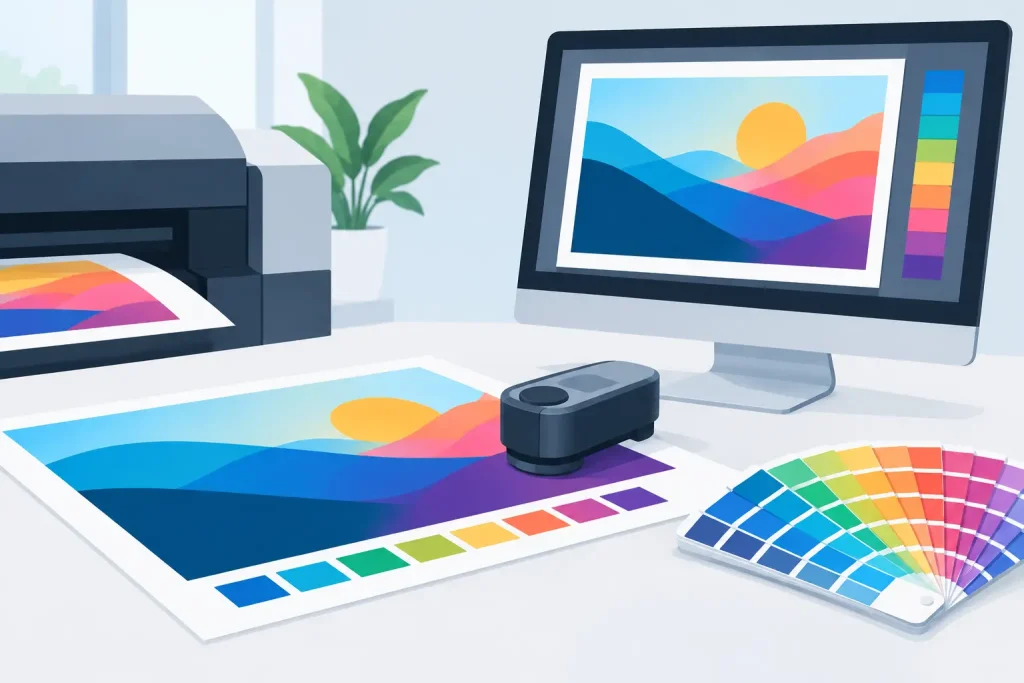
Submitting print-ready artwork is one of the fastest ways to keep an order moving. Supply files at the final production size or according to the specified scale, with adequate resolution for the viewing distance. Include bleed where the product requires it, and keep essential text, logos, and QR codes inside the safe area.
PDF files are often practical for commercial print because they preserve layout and fonts when correctly exported. For large-format graphics, images should be evaluated based on final output size, not only how sharp they appear on a laptop screen. A small image stretched across a 10-foot backdrop may look acceptable in a mockup but soft in print.
Check spelling, phone numbers, URLs, pricing, and dates before approval. Once a graphic has been printed, changing one digit on a promotional offer is not a quick edit. It is a reprint.
Fast Turnaround Has Trade-Offs
Rush production can be appropriate for an unexpected event, a replacement graphic, or a campaign that receives late approval. But speed may limit material choices, finishing options, proofing time, or delivery flexibility. It can also increase cost when production has to be moved ahead of other scheduled work.
The best urgent orders are simple, confirmed, and based on available formats. A final PDF for a standard banner is easier to expedite than a multi-piece retail rollout with custom frames, specialty hologram stickers, several artwork versions, and individual packing requirements.
For recurring promotions, keep approved artwork files organized and label each version clearly. Reordering a known roll-up banner or counter graphic is faster when dimensions, material, and finishing specifications are already established. My Inkjet can help buyers match the graphic output to the display hardware, but the earlier the full requirement is confirmed, the more production options remain available.
Build Time Into the Campaign, Not After It
Printing is often the last visible task before a launch, which is why it gets compressed. Yet printed displays carry the campaign into the showroom, retail floor, roadshow, exhibition hall, or customer meeting. They should be scheduled with the same discipline as the venue, inventory, and staff.
Set an internal artwork deadline before the real production deadline. Confirm the display format before designing. Leave room for proofing, finishing, and delivery. When the files are ready and the specifications are clear, turnaround becomes a controlled production plan instead of a last-minute gamble.
Related Posts